

The landscape of application development has undergone a seismic shift over the past few years, with artificial intelligence emerging as the catalyst for democratising software creation. App building ai has evolved from experimental prototypes into production-ready platforms that enable entrepreneurs, startups, and non-technical founders to transform their visions into functional applications with unprecedented speed and efficiency. This transformation is particularly significant for the startup ecosystem, where time-to-market and resource constraints often determine success or failure. As we navigate through 2026, understanding how to harness these intelligent tools effectively has become essential for anyone seeking to validate business ideas and build competitive products.
The journey of app building ai began with simple code generators and template-based solutions, but today's platforms represent a quantum leap in capability and sophistication. Modern AI systems can now interpret natural language descriptions, understand business logic, and generate complete application architectures that would have required months of traditional development effort.
Key capabilities that define current app building ai platforms include:
What distinguishes 2026's offerings from earlier iterations is their ability to learn from user interactions and continuously improve output quality. These systems no longer simply translate instructions into code; they understand context, anticipate requirements, and suggest optimisations based on industry best practices.
| Aspect | Traditional Development | App Building AI | Hybrid Approach |
|---|---|---|---|
| Time to MVP | 3-6 months | 2-4 weeks | 4-8 weeks |
| Technical Expertise Required | High | Minimal | Medium |
| Customisation Flexibility | Maximum | Growing | High |
| Initial Cost | £30,000-£100,000 | £500-£5,000 | £10,000-£30,000 |
| Scalability | Excellent | Good | Excellent |
The data reveals that whilst traditional development maintains advantages in highly complex scenarios, app building ai platforms excel in the crucial MVP stage where speed and cost-efficiency matter most. This is precisely why no-code web development platforms have gained tremendous traction amongst startups.
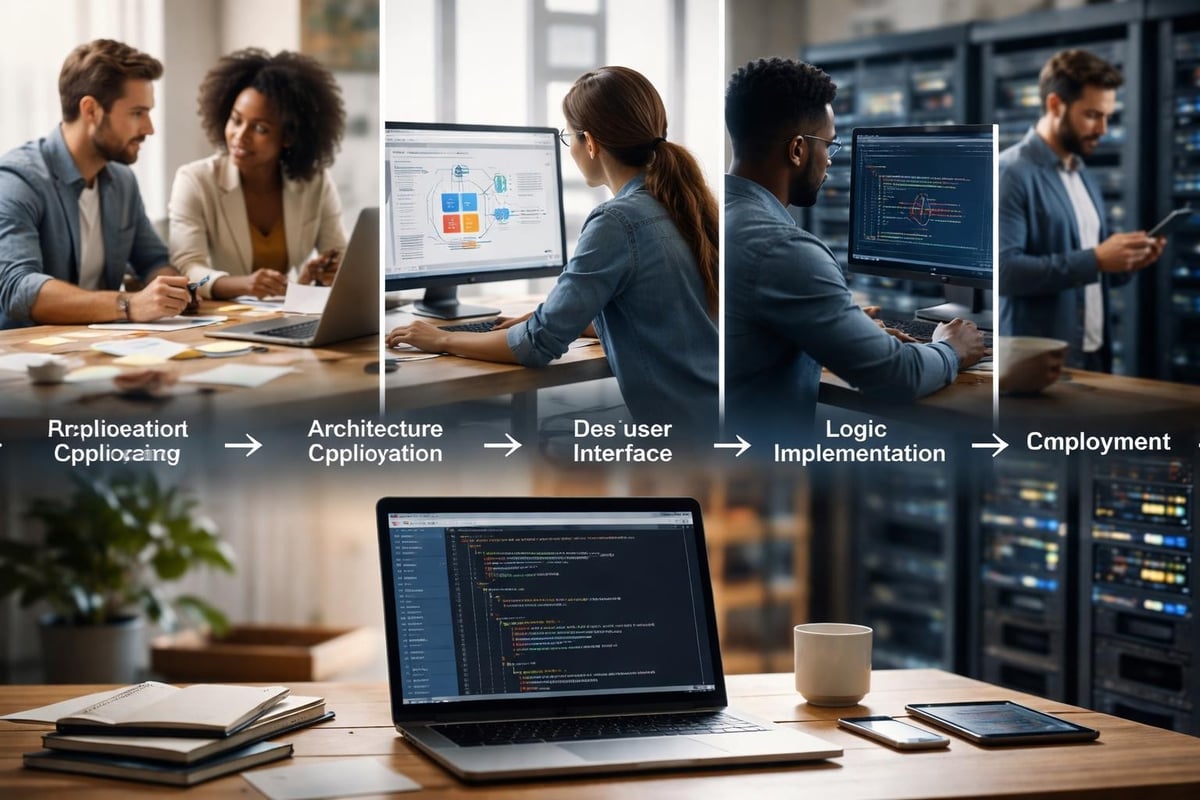
The market has consolidated around several dominant platforms, each offering distinct advantages for different use cases. Understanding these options helps founders select the right tool for their specific requirements.
Nothing's Playground enables app creation without coding knowledge, focusing on miniature Android applications tailored to specific user needs. This approach proves particularly valuable for testing features or creating companion apps to existing products.
One of the most significant innovations has been the emergence of voice-to-application platforms. Google's Stitch transforms spoken descriptions into functional UI layouts, merging design and development into a single conversational step. This capability fundamentally changes how non-technical founders approach product development.
The concept of "vibe coding" has gained momentum, where developers use AI tools for rapid weekend app builds that can reach users' devices within days rather than months. This acceleration enables unprecedented iteration speed and market testing velocity.
Popular use cases for app building ai in startup environments:
For entrepreneurs seeking to validate their concepts quickly, working with specialists in MVP Development who understand both no-code platforms and AI capabilities can accelerate timelines whilst maintaining quality standards.
Whilst app building ai has advanced remarkably, understanding its boundaries remains crucial for setting realistic expectations and planning development roadmaps effectively.
Modern platforms excel at generating standard application patterns, implementing common features, and creating responsive interfaces that adapt to various screen sizes. They handle database relationships, user authentication, and basic business logic with minimal human intervention.
The integration capabilities have expanded significantly, with most platforms now offering intelligent connectors for popular third-party services. When implementing third-party API integrations, AI systems can interpret API documentation and suggest optimal integration approaches.
Complex business logic requiring nuanced decision-making still benefits from human oversight. Custom algorithms, sophisticated data transformations, and unique user experiences often require refinement beyond what AI can generate automatically.
Areas requiring human expertise include:
| Feature Type | AI Capability Level | Human Input Required |
|---|---|---|
| CRUD Operations | Excellent | Minimal |
| User Authentication | Excellent | Low |
| Payment Processing | Very Good | Medium |
This balance between automation and expertise is why many successful startups adopt a hybrid approach, using app building ai for rapid prototyping whilst engaging experienced developers for refinement and optimisation.
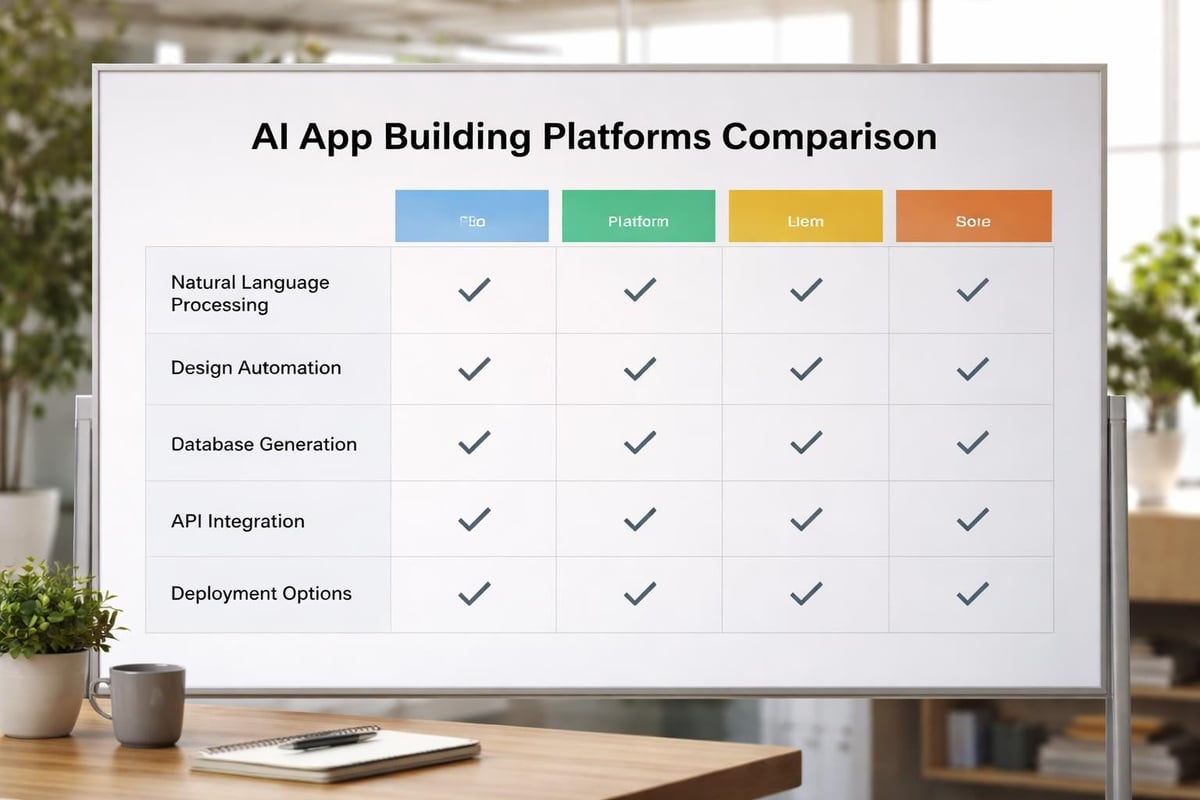
The process of creating an application using app building ai has become increasingly intuitive, but following a structured approach ensures better outcomes and reduces costly iterations.
Begin by articulating exactly what problem your application solves and for whom. AI platforms perform optimally when given clear, specific instructions about functionality and user journeys. Document your primary user stories and the essential features required to deliver value.
Different app building ai solutions cater to different application types. The Wix AI Website Builder excels for content-focused websites, whilst platforms like OnSpace.AI convert design files into cross-platform applications for iOS, Android, and web simultaneously.
Consider these selection criteria:
Focus relentlessly on core functionality that validates your primary hypothesis. App building ai tempts users with rapid feature addition, but disciplined scope management prevents bloat and maintains focus on essential user needs.
MVP development checklist:
Deploy your AI-generated application to a small group of target users and gather structured feedback. Many platforms now incorporate analytics automatically, tracking user behaviour and identifying friction points without manual instrumentation.
The beauty of app building ai lies in iteration speed. Modifications that once required days of development work can now be implemented in hours, enabling rapid response to user feedback. This agility proves invaluable when exploring the best app business models and validating market fit.
Once comfortable with basic functionality, several advanced techniques can enhance application quality and functionality whilst maintaining development velocity.
Modern app building ai platforms support complex conditional operations that enable sophisticated user experiences. Understanding how to structure conditional logic streamlines workflows and creates more responsive applications that adapt to user context and behaviour.
These conditional systems allow applications to:
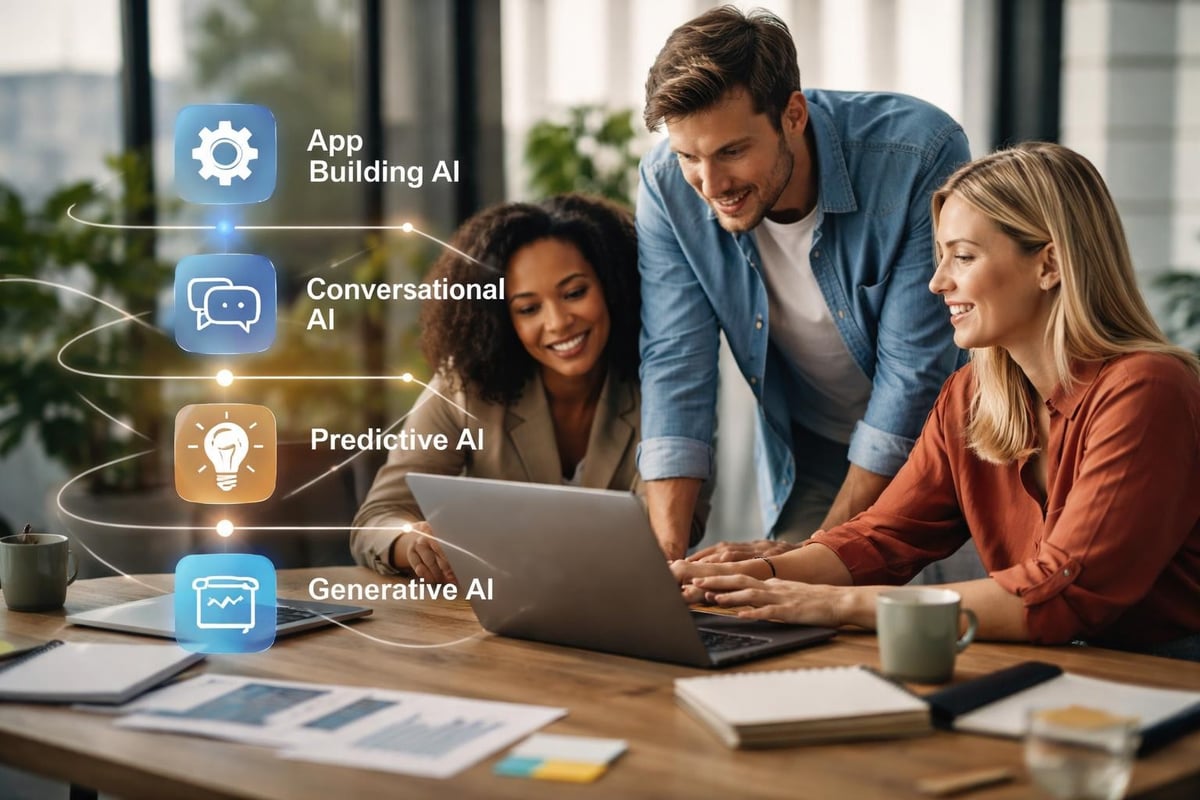
A powerful meta-approach involves embedding additional AI capabilities within applications created using app building ai platforms. Claude Code and similar AI coding tools can generate specific functionality snippets that enhance your application with intelligent features.
Whilst AI platforms handle much of the technical implementation, human guidance on performance optimisation yields significant improvements. Focus on database query efficiency, image optimisation, and lazy loading for content-heavy sections.
Performance optimisation priorities:
| Priority | Impact | Implementation Difficulty |
|---|---|---|
| Image Compression | High | Low |
| Database Indexing | High | Medium |
| Code Splitting | Medium | Medium |
| Caching Strategy | High | Medium |
| CDN Implementation | Medium | Low |
The availability of app building ai has fundamentally altered the calculus for startup founders considering how to bring their visions to market. The strategic implications extend beyond mere cost savings.
Speed often determines competitive positioning in crowded markets. App building ai platforms compress development timelines from months to weeks, enabling founders to claim market positions before competitors establish dominance. This acceleration proves particularly valuable in trend-driven markets where timing is crucial.
Traditional application development consumes significant portions of seed funding, leaving less capital for marketing, sales, and customer acquisition. By reducing development costs by 70-90%, founders extend their runway and increase the number of pivots they can afford if initial hypotheses prove incorrect.
Founders who understand both the capabilities and limitations of these tools make better decisions about when to use AI platforms versus when to invest in custom development. Some scenarios, such as building community app platforms, benefit enormously from AI-powered rapid development.
Working with app building ai platforms provides founders with practical technical literacy that proves invaluable throughout their entrepreneurial journey. This understanding enables more productive conversations with technical teams, better vendor selection, and improved product decision-making.
Skills developed through app building ai experience:
As we progress through 2026, several clear trends indicate where app building ai technology is headed and how these developments will impact startup development practices.
Next-generation platforms are moving beyond template-based generation towards truly autonomous feature creation. These systems analyse user behaviour within applications and propose new features based on usage patterns and unmet needs, creating a feedback loop between user data and product evolution.
The convergence of voice, sketch, and text inputs is creating more natural development interfaces. Founders can now sketch a user interface on paper, describe functionality verbally, and refine details through text commands-all within a single workflow.
App building ai platforms are increasingly incorporating intelligent deployment systems that monitor application performance and automatically scale resources based on demand. This removes another layer of technical complexity from the founder's responsibility matrix.
Emerging capabilities in 2026:
The trajectory clearly points towards increasingly capable systems that require less technical intervention whilst producing more sophisticated outputs. However, the fundamental importance of clear problem definition, user understanding, and strategic product thinking remains unchanged. Technology amplifies good decisions and accelerates bad ones equally.
Forward-thinking platforms are merging app building ai with business intelligence capabilities, creating applications that not only function but actively suggest business improvements based on usage data. This fusion of creation and analysis tools represents the next evolution in startup tooling.
The rise of app building ai has fundamentally democratised application development, enabling entrepreneurs to validate ideas and reach markets with unprecedented speed and efficiency. Whilst these platforms continue evolving and expanding their capabilities, the core principles of successful product development remain constant: understand your users, solve real problems, and iterate based on feedback. At Creator Concepts, we combine the efficiency of modern no-code platforms with the expertise of award-winning developers to help founders transform their visions into market-ready MVPs within weeks, not months.
© 2026 CreatorConcepts Limited
128 City Road, London EC1V 2NX