

The rise of no code web development platforms is reshaping how businesses and creators build online experiences. These tools empower anyone, regardless of technical background, to launch powerful websites and apps quickly and affordably.
In this article, we unveil the nine most essential platforms set to dominate in 2026. You will discover each platform's pricing, standout features, benefits, and ideal use cases, making it easier to select the best fit for your next digital project.
Curious how no code is democratising development, accelerating innovation, and levelling the playing field? Read on to see which leading solutions can help you turn ideas into reality—no coding required.
The Rise of No-Code Web Development in 2026
The landscape of digital creation has changed rapidly in recent years. No code web development platforms have evolved from simple website builders to sophisticated tools that enable anyone to launch full-scale web applications. This shift has made building online products more accessible, reducing the reliance on traditional programming skills.
Early no-code solutions focused on drag-and-drop interfaces for static sites. Today, platforms offer complex databases, workflow automation, and integration capabilities. This evolution means non-developers can now build, test, and deploy digital products at a pace never seen before.
Recent research highlights the explosive growth of no code web development platforms. The market is projected to surpass £40 billion globally by 2026, reflecting a major shift in how businesses approach software creation. According to No-Code Development Platforms Market Size Worth USD 44.3 Billion in 2034, demand continues to surge as organisations seek faster, more cost-effective solutions.
Driving this growth are several key factors. Digital transformation is now a top priority for companies of all sizes. The need for rapid prototyping and iteration means traditional development cycles are often too slow. Coupled with a global shortage of skilled developers, businesses are turning to no code web development platforms to bridge the gap and maintain competitiveness.
For businesses, the impact is significant. Time-to-market is accelerated, enabling organisations to launch new products or features quickly. Costs are reduced, as teams can build and maintain solutions without large developer budgets. Importantly, no code web development platforms empower non-technical staff to participate directly in digital innovation.
Accessibility is a major advantage. Startups, small and medium-sized businesses, and large enterprises alike can leverage these tools. With intuitive interfaces and pre-built components, barriers to entry are lowered, allowing more people to turn ideas into reality through no code web development platforms.
However, there are limitations to consider. While platforms offer substantial flexibility, customisation options may fall short compared to traditional coding. Scalability can be an issue for complex, high-traffic applications. Integration with legacy systems or niche tools sometimes requires additional effort. Businesses must weigh these factors when choosing a solution.
Looking ahead, the future of no code web development platforms is promising. Artificial intelligence is beginning to automate design and workflows, making development even faster. Advanced automation features are expanding what these tools can achieve. The ecosystem is growing, with more plugins, integrations, and a thriving community of creators supporting each other.
No code web development platforms are on track to become a fundamental part of digital strategy. As technology advances, their capabilities will only increase, helping close the digital skills gap and enabling innovation across industries.
9 Essential No Code Web Development Platforms for 2026
The landscape of no code web development platforms is evolving at a rapid pace. In 2026, businesses and creators have more options than ever to build sophisticated digital products without coding expertise. Each platform offers unique strengths, pricing structures, and ideal use cases, making it essential to compare them carefully. Whether you are launching a startup, modernising an enterprise tool, or designing a stunning website, understanding the strengths of each platform is the first step toward success with no code web development platforms.
Bubble
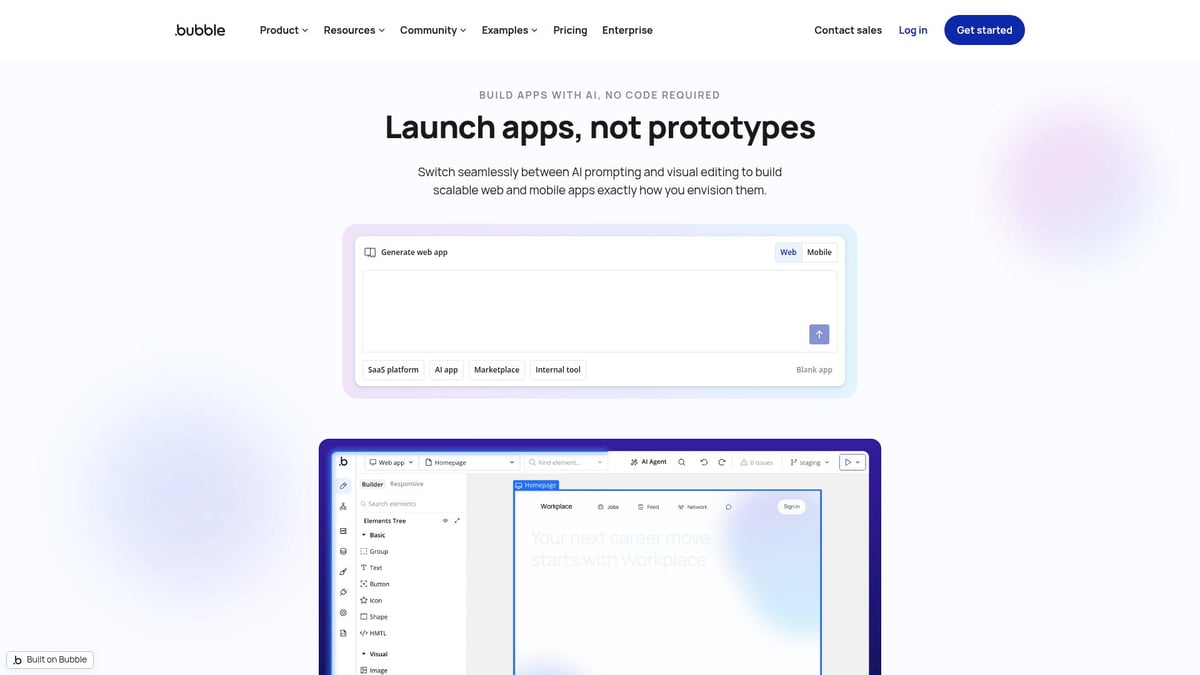
Bubble stands out among no code web development platforms for its full-stack capabilities. Pricing starts with a free plan, moving to paid tiers from $32 per month and enterprise solutions for large-scale needs.
Core features include:
- Visual drag-and-drop builder for rapid prototyping and design
- Responsive layouts and mobile optimisation
- Integrated database and workflow automation
- Access to a plugin marketplace for extended functionality
Key benefits: Bubble empowers users to create scalable MVPs, SaaS products, and complex web apps with robust customisation. Its active community and extensive resources accelerate learning and troubleshooting.
Ideal use cases:
- SaaS platforms
- Marketplaces
- Internal business tools
- Client portals
Pros:
- Powerful and flexible
- Strong community support
- Scalable from MVP to production
Cons:
- Steeper learning curve for beginners
- Performance may be affected in very large-scale apps
For those interested in crafting user-friendly and visually appealing apps, the No code app design guide provides practical tips tailored to no code web development platforms.
Webflow
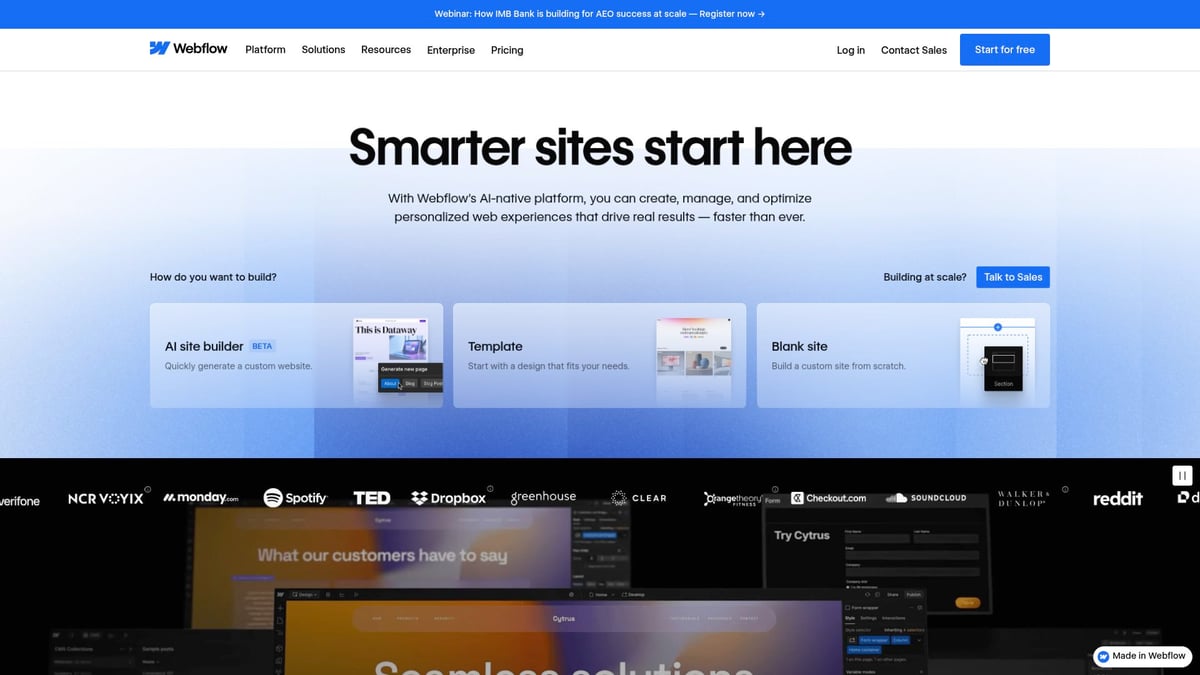
Webflow is a leader in design-centric no code web development platforms, offering a free starter plan, site plans from $14 per month, and ecommerce options starting at $29 per month.
Features:
- Visual website builder with pixel-perfect control
- Built-in CMS for dynamic content management
- Hosting, advanced animations, and SEO optimisation tools
Benefits: Webflow is ideal for users seeking design flexibility and professional-grade results. You can export clean code, making it suitable for agencies and freelancers.
Use cases:
- Marketing websites
- Blogs
- Ecommerce stores
- Landing pages
Pros:
- Granular design control
- Robust CMS
- Clean code export
Cons:
- Not suited for complex backend logic
- Limited in-app integrations for advanced workflows
Webflow’s intuitive interface makes it a top choice for visually-driven no code web development platforms.
Creator Concepts
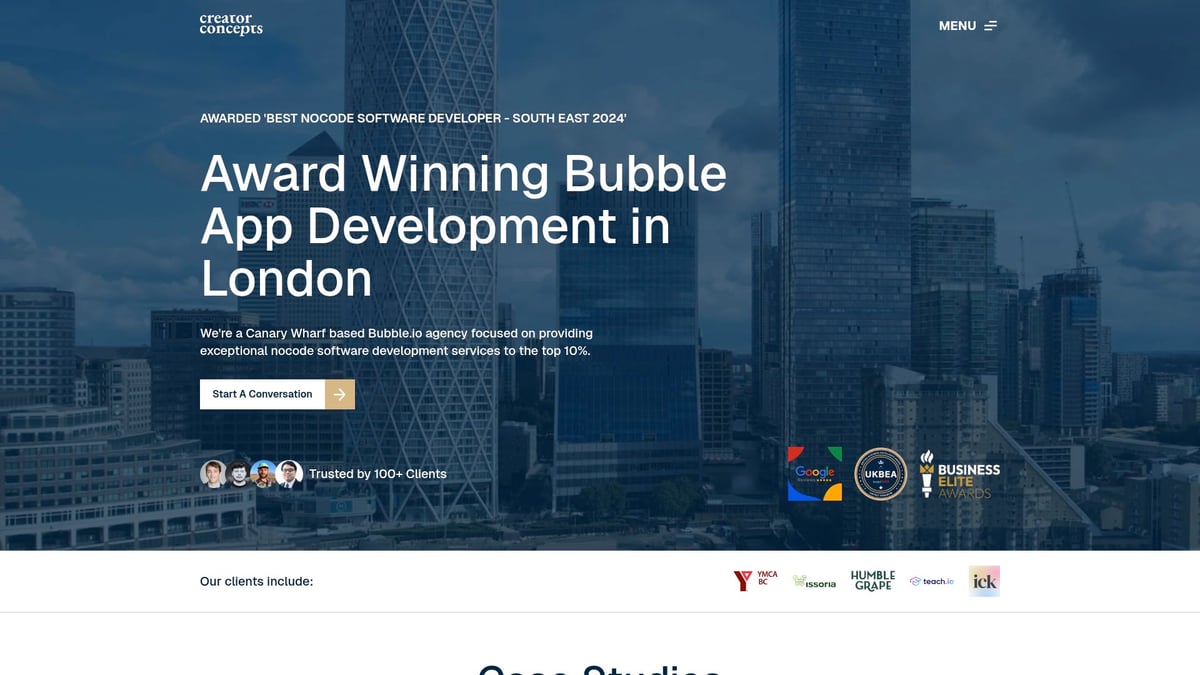
Creator Concepts is an award-winning Bubble.io agency based in Canary Wharf, London, setting itself apart among no code web development platforms by delivering tailored web and mobile app solutions.
Services:
- Custom web portals and SaaS platforms
- AI-powered solutions and event software
- Branding and end-to-end project management
Benefits: As a certified Bubble Agency Partner, Creator Concepts prioritises security and rapid prototyping, often delivering MVPs within 1 to 2 weeks. Transparent pricing and flexible payment options make it accessible for startups and SMBs.
Ideal for:
- Startups needing a fast MVP
- SMBs seeking scalable solutions
- Organisations requiring secure, custom platforms
Pros:
- Proven project success
- Security-first development
- Flexible billing
Cons:
- Custom pricing (no fixed plans)
- Agency fees may exceed DIY alternatives
For businesses needing expert guidance, Creator Concepts offers a robust route to leverage no code web development platforms for growth.
OutSystems
As one of the more enterprise-focused no code web development platforms, OutSystems delivers a hybrid low-code/no-code experience. Free editions are available, with custom pricing for enterprise use.
Features:
- Visual development and workflow automation
- Advanced integration capabilities with existing systems
- Enterprise-grade security and compliance
Benefits: OutSystems excels in handling complex workflows and large-scale deployments. Its strong support and documentation are valuable for enterprise IT teams.
Use cases:
- Enterprise web applications
- Process automation
- Modernising legacy systems
Pros:
- Highly robust and secure
- Scalable for large organisations
- Comprehensive support
Cons:
- Higher learning curve
- Primarily targets enterprise clients
OutSystems is a prime choice for businesses seeking powerful no code web development platforms for mission-critical applications.
Softr
Softr is gaining traction in the no code web development platforms space, offering a free plan and paid options starting at $49 per month.

Features:
- Build web apps, client portals, and internal tools using Airtable or Google Sheets data
- Pre-built templates for rapid deployment
- No coding required
Benefits: Softr enables quick launches with minimal technical overhead. Its template library accelerates development for common use cases.
Use cases:
- Membership sites
- Client portals and directories
- Resource sharing platforms
Pros:
- Simple and affordable
- Strong Airtable integration
- Fast go-to-market
Cons:
- Limited custom logic
- Reliant on external data sources
Softr is ideal for those who need efficient, template-driven no code web development platforms without deep customisation.
Glide
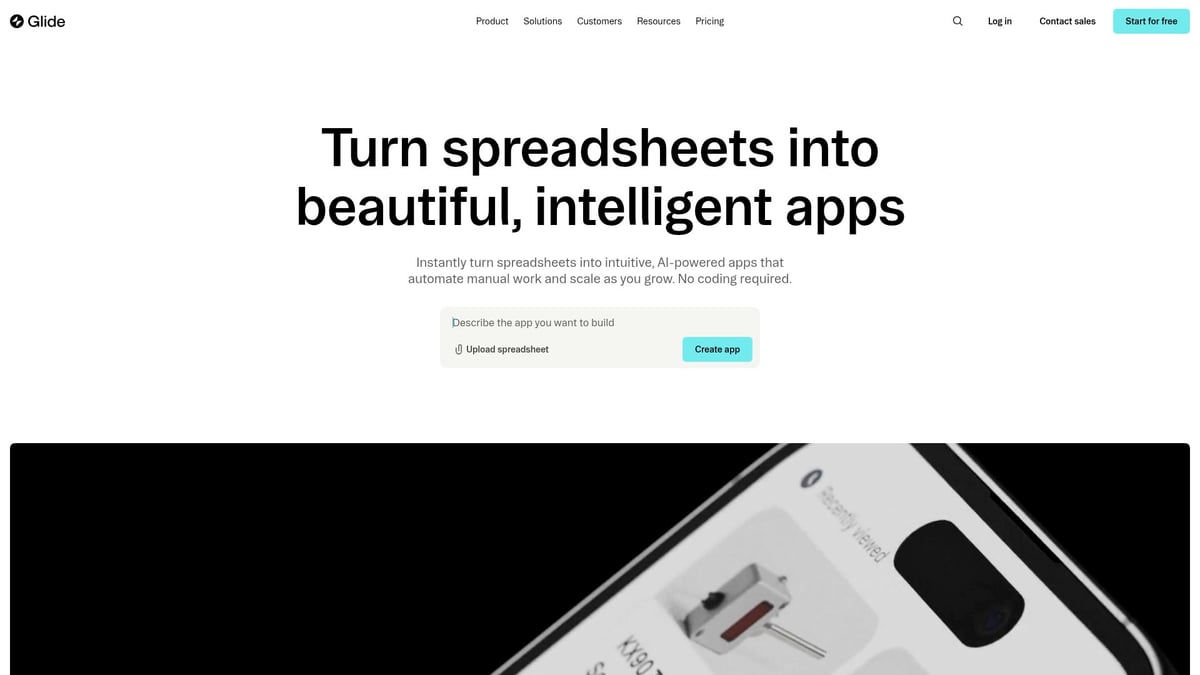
Glide transforms spreadsheets into web and mobile apps, making it unique among no code web development platforms. Pricing starts with a free plan, pro from $25 per month, and business options available.
Features:
- Drag-and-drop editor for instant app creation
- Syncs with Google Sheets or Excel
- Prebuilt components and responsive design
Benefits: Glide is exceptionally user-friendly, allowing rapid deployment and easy updates. Its interface is intuitive for non-developers.
Use cases:
- Directory and inventory apps
- Employee management tools
- Event and booking systems
Pros:
- Extremely fast setup
- Responsive by default
- Minimal learning curve
Cons:
- Data source limitations
- Less customisation for advanced requirements
Glide suits anyone needing quick, spreadsheet-based no code web development platforms.
Adalo
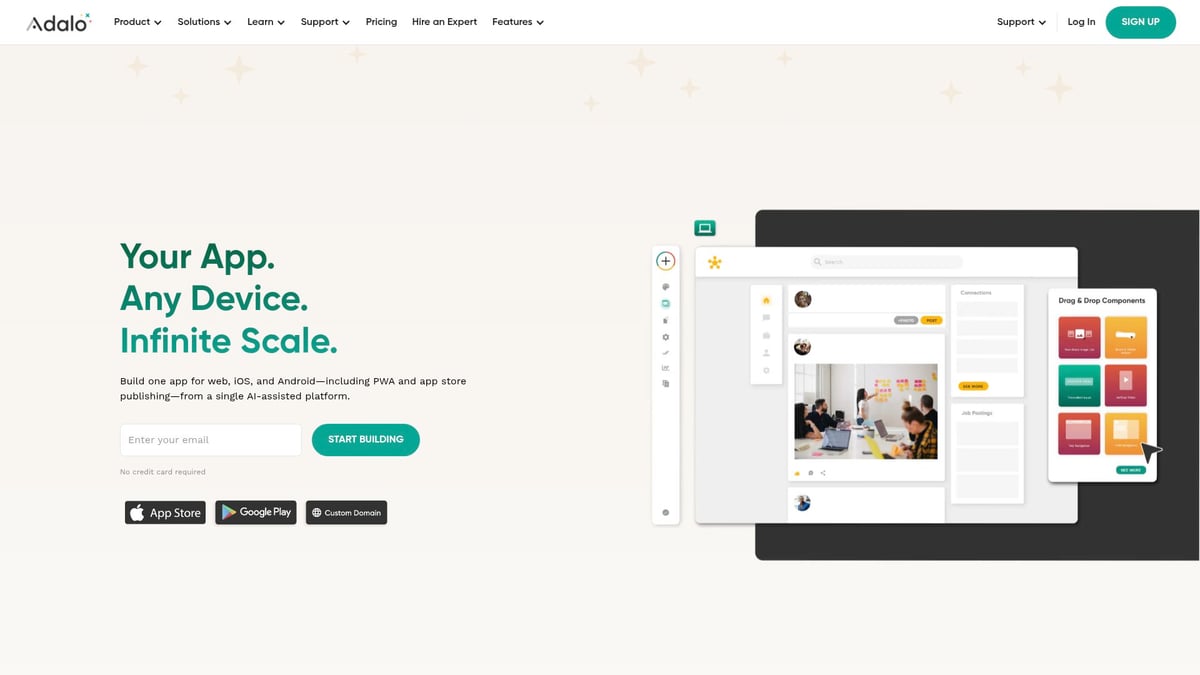
Adalo brings web and mobile app creation to the masses, offering a free plan and paid options from $45 per month.
Features:
- Visual drag-and-drop builder
- Built-in database and logic workflows
- Publish directly to app stores
Benefits: Adalo supports building both web and mobile apps, making it versatile for various projects. Publishing to app stores is streamlined.
Use cases:
- MVPs for new products
- Internal business tools
- Consumer-facing mobile apps
Pros:
- Multi-platform deployment
- Easy to learn
- Visual workflow editor
Cons:
- Performance can lag with large, complex apps
- Limited advanced integrations
Adalo is perfect for creators aiming to launch on both web and mobile no code web development platforms quickly.
Wix Studio
Wix Studio elevates the Wix ecosystem, positioning itself among the most approachable no code web development platforms. Free plans are available, with premium starting at £7.50 per month.
Features:
- Advanced editor for detailed customisation
- Built-in CMS and ecommerce capabilities
- Velo dev platform for custom scripts
Benefits: Wix Studio offers an all-in-one solution, with an extensive template library and app market for feature expansion.
Use cases:
- Small business websites
- Online shops
- Creative portfolios
Pros:
- Fast and affordable setup
- Scalable for growing needs
- Wide range of templates
Cons:
- Less suited for highly complex apps
- Template customisation has limits
Wix Studio is an accessible entry point to no code web development platforms for small businesses and freelancers.
Appgyver
Appgyver is a powerful entrant among no code web development platforms, offering a free platform for indie developers and enterprise pricing for larger organisations.
Features:
- Drag-and-drop builder with logic flows
- REST API integration
- Deploy to both web and mobile
Benefits: Appgyver blends no code and pro-code options, supporting complex logic and integrations. Its open approach appeals to developers and business users alike.
Use cases:
- Enterprise-grade applications
- Prototypes and MVPs
- Custom business tools
Pros:
- Powerful and flexible
- Free for most users
- Supports advanced integrations
Cons:
- Smaller user community
- Learning curve for advanced features
Appgyver is ideal for those seeking robust, integration-friendly no code web development platforms for complex needs.
How to Choose the Right No Code Platform for Your Needs
Selecting the best fit from the wide range of no code web development platforms is crucial for a successful project. The right platform can accelerate your launch, reduce costs, and empower your team. To make an informed choice, break down your needs and evaluate each platform in context.
Assess Your Project Requirements
Start by defining the type of digital product you want to build. Is it a simple website, a complex web app, or something in between? Consider the level of complexity, scalability, and integrations your project demands. Some no code web development platforms excel at rapid website creation, while others are designed for scalable apps with advanced logic and database needs.
Think about future growth. Will your platform need to handle increasing user loads or connect with third-party services? Mapping out these requirements early helps you shortlist platforms that align with your goals.
Budget and Ease of Use
Next, compare the costs of different no code web development platforms. Many offer free plans for basic use, but advanced features or higher usage may require a paid subscription. If you need expert support or end-to-end solutions, agency services may fit, but expect higher costs than a DIY approach.
Ease of use is another key factor. Platforms with intuitive drag-and-drop interfaces, robust documentation, and active user communities can speed up learning. Evaluate the available support resources and whether you have the internal skills to manage the platform long-term.
Customisation, Flexibility, and Security
Customisation is essential if you want full control over design, workflows, and automation. Some no code web development platforms allow deep customisation with plugins and logic editors, while others prioritise simplicity over flexibility. Security and compliance are also critical, especially when handling sensitive data or user authentication.
Before committing, review platform security features, hosting options, and compliance certifications. For practical advice on building secure and scalable solutions, explore Bubble app development best practices, which offers insights into optimising no code builds.
Compare, Trial, and Future-Proof
To make your decision, compare leading no code web development platforms against your specific use case. For example, a startup MVP might weigh Bubble vs Softr for speed and flexibility, while a marketing site could come down to Webflow or Wix Studio. Enterprises may prefer OutSystems or Appgyver for robust integrations and scalability.
Take advantage of free trials to prototype your idea, test support, and assess the platform’s learning curve. Finally, consider future-proofing: does the platform offer regular updates, export options, or risk vendor lock-in? Careful evaluation now will save time and resources as your business grows.
The Future of No Code Web Development Beyond 2026
The future of no code web development platforms is set to be even more transformative. As we look ahead, these platforms are expected to harness the power of artificial intelligence, automation, and seamless integration with emerging technologies.
Artificial intelligence will be pivotal, enabling platforms to offer features like AI-generated layouts, automated workflows, and intelligent chatbots. This will not only accelerate project delivery but also lower the barrier for non-technical users. Enhanced automation will allow businesses to manage complex tasks without the need for custom code.
Integration with technologies such as IoT, AR, VR, and blockchain will become standard. No code web development platforms will likely support modules for real-time data, immersive experiences, and secure digital transactions. This evolution positions them as the backbone for next-generation digital products.
The ecosystem around these platforms will continue to expand. Expect a surge in third-party plugins, vibrant marketplaces, and growing developer communities. These changes will further democratise software creation, closing the digital skills gap and enabling broader participation.
According to recent market trend and growth reports, adoption rates are set to rise sharply. By 2026 and beyond, no code web development platforms will become a core part of digital strategies for organisations of all sizes, shaping a future where anyone can build, innovate, and scale with confidence.
After exploring the top no code platforms for 2026 and considering how they can accelerate your digital projects, you might be wondering which solution fits your unique goals and resources best. If you’re looking for expert guidance on choosing and implementing the right platform—whether it’s building a secure web portal, launching a scalable app, or simply validating your idea—we’re here to help. At Creator Concepts, we specialise in turning ambitions into award winning digital products using the very best no code tools. Let’s discuss how we can support your next steps—Book a discovery call today.