


No-code and low-code platforms are experiencing explosive growth, making it easier than ever for anyone with an idea to build a digital product. In 2026, this trend promises to reach new heights, with each app to make your vision a reality becoming more powerful and accessible.
This article uncovers the top 7 platforms that empower creators, from solo entrepreneurs to large enterprises, to turn ideas into fully functional apps quickly and affordably.
You will find a clear breakdown of each platform’s key features, pricing, standout benefits, and best use cases. Whether you are looking to launch a startup MVP or streamline your business processes, there is a solution for every ambition.
Ready to discover which platform will help you bring your next big idea to life? Explore the list and find the right tool to transform your concept into a digital success.
Why No-Code and Low-Code Apps Are Game-Changers in 2026
No-code and low-code platforms have revolutionised the way businesses and individuals approach digital creation. In 2026, the demand for an app to make ideas a reality has never been higher. These platforms empower users to build apps quickly, affordably, and without deep technical expertise. Let us explore why they are transforming the landscape of app development.
The Democratization of App Development
No-code and low-code platforms have made it possible for anyone to use an app to make their ideas come alive, regardless of their technical background. The barriers that once limited app creation to skilled developers have fallen. With visual interfaces and pre-built logic, non-technical founders and SMEs can launch prototypes in weeks, not months.
The trend is accelerating. According to No-Code Adoption Statistics, it is projected that by 2026, 70% of new enterprise applications will be built using no-code or low-code tools. This shift enables startups to test MVPs rapidly, saving both time and resources. The approach is also cost-effective, making digital innovation accessible to solo founders and small businesses.
Key Features Powering Modern App Builders
The core features of today’s app to make platforms are designed for speed, flexibility, and user empowerment. Visual drag-and-drop interfaces replace complex coding, while pre-built templates help users start quickly. Most platforms integrate seamlessly with popular databases, payment systems, and automation tools like Stripe and Zapier.
Real-time previews allow users to see changes instantly, and cross-platform deployment ensures apps work on web and mobile. Many builders now offer AI-driven app generation, where users describe what they want and the platform creates the structure. Built-in authentication, analytics, and workflow automation further streamline the journey from idea to launch.
Market Trends and User Needs in 2026
The appetite for an app to make business processes more efficient continues to surge. In 2026, organisations seek solutions for internal tools, customer portals, and mobile-first applications. The post-pandemic digital transformation has led to a dramatic rise in app usage across industries.
AI and automation play a bigger role than ever, helping users build smarter, more adaptive apps. Security, scalability, and regulatory compliance are now top priorities. Enterprises are adopting no-code to drive rapid innovation and address evolving user demands, ensuring they remain competitive in a fast-changing market.
How to Choose the Right App Platform for Your Idea
Selecting the right app to make your vision a reality depends on clear project goals. Are you building a prototype, an internal tool, or a public-facing product? Consider each platform’s ease of use, scalability, integration capabilities, and pricing.
Support resources and community engagement are essential for ongoing success. Assess platform limitations, such as data or user caps, and explore upgrade paths if your app grows. Ultimately, match the complexity of your idea with the features and flexibility offered by each platform, ensuring your choice supports both current needs and future ambitions.
Top 7 Apps to Make Your Ideas Reality in 2026
Turning your vision into a working digital product has never been easier. The right app to make your ideas come alive in 2026 will depend on your goals, budget, and technical comfort level. Below, explore the seven platforms leading the way for creators, entrepreneurs, and businesses eager to transform concepts into reality—quickly, securely, and affordably.
Creator Concepts
If you are searching for an app to make custom digital solutions with maximum flexibility, Creator Concepts stands out as a leader in 2026. Their pricing model is project-based, offering a free initial consultation and tailored quotes rather than rigid subscription tiers. This approach ensures you only pay for what you need.
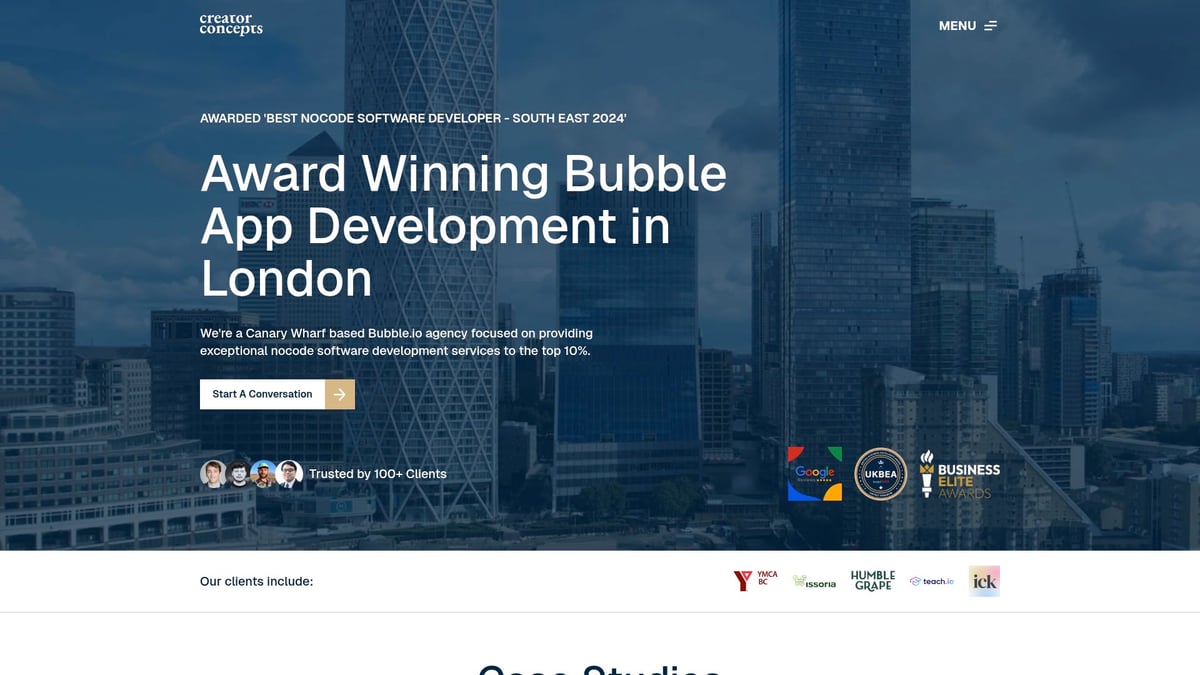
Core features include bespoke web and mobile app development, SaaS platforms, membership portals, event management tools, and marketing software, all expertly crafted on Bubble.io. As an award-winning, certified Bubble Agency Partner, Creator Concepts delivers rapid prototyping, secure AWS and Cloudflare hosting, and a transparent, end-to-end process from idea to launch.
What makes them unique is their rapid delivery—expect a prototype in as little as one to two weeks. The process is collaborative, with a strong focus on client needs and education. Free resources help non-technical founders understand every stage, making it the ideal app to make your first or next big digital product.
Typical clients include SMEs, startups, and organisations demanding custom, scalable, and secure solutions. Use cases range from internal business tools to SaaS MVPs and customer portals.
Pros:
- Certified Bubble expertise
- Robust AWS security
- Fast turnaround
- Transparent, client-focused process
- Free learning materials
Cons:
- No off-the-shelf product
- Requires client engagement for bespoke builds
Curious about the advantages of using Bubble for your app to make? Discover more in 9 advantages of using Bubble.
Glide
Glide is the go-to app to make simple, powerful tools directly from your spreadsheets. With a generous free plan supporting one published app, up to 25,000 data rows, and ten users, Glide also offers affordable paid tiers starting at $19 per month.
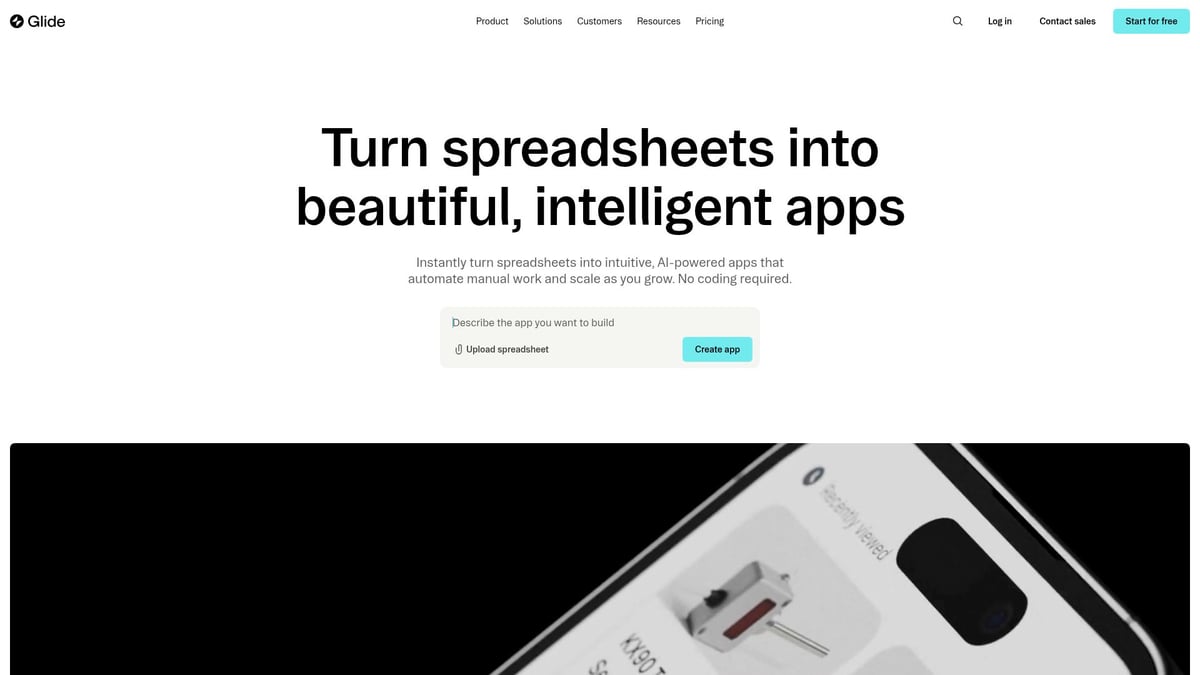
Its core strength lies in transforming Google Sheets or Excel data into sleek, mobile-friendly apps within minutes. Glide’s template-based UI, real-time two-way data sync, workflow automation, and computed columns create a seamless path from data to deployment.
Role-based access, user authentication, and instant deployment make Glide popular with teams managing operations through spreadsheets. If you need an app to make quick internal tools, employee directories, asset tracking, or simple CRMs, Glide excels.
Pros:
- Extremely fast learning curve
- Real-time data updates
- Simple, spreadsheet-driven setup
Cons:
- Design flexibility is limited
- Apps run as web PWAs, not fully native
Glide enables you to launch an app to make your workflows smoother, all without writing code.
Appy Pie
Appy Pie is the app to make for those who want to go from idea to app store in record time. With a free trial and paid plans from around $16 per month (Android) or $60 per month (iOS & Android), it is accessible for entrepreneurs and small businesses.
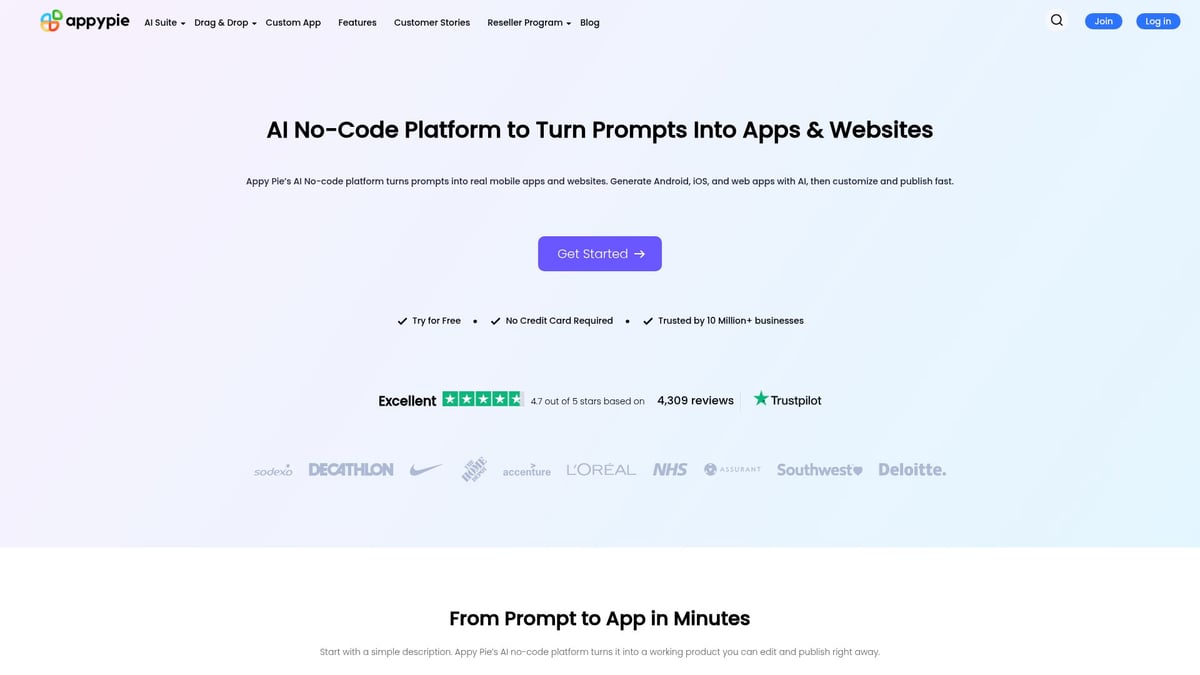
The platform leverages AI to help users describe their app to make, then generates a working prototype instantly. The editor offers templates, multi-platform output, push notifications, and analytics. App store publishing support is included, simplifying your journey.
What sets Appy Pie apart is its AI-powered suggestions for layouts and content, built-in backend, and app store submission service. It is the ideal app to make service booking platforms, e-commerce apps, or content portals for local businesses.
Pros:
- Extremely beginner-friendly
- Rapid setup
- All-in-one publishing support
Cons:
- Customisation options are limited
- No access to source code
- Template constraints restrict design
For anyone wanting an app to make their business visible quickly, Appy Pie is a compelling choice.
Thunkable
Thunkable is the app to make native mobile experiences accessible for everyone, including educators and startups. Its free plan allows up to three public projects, with paid tiers beginning at $19 per month.
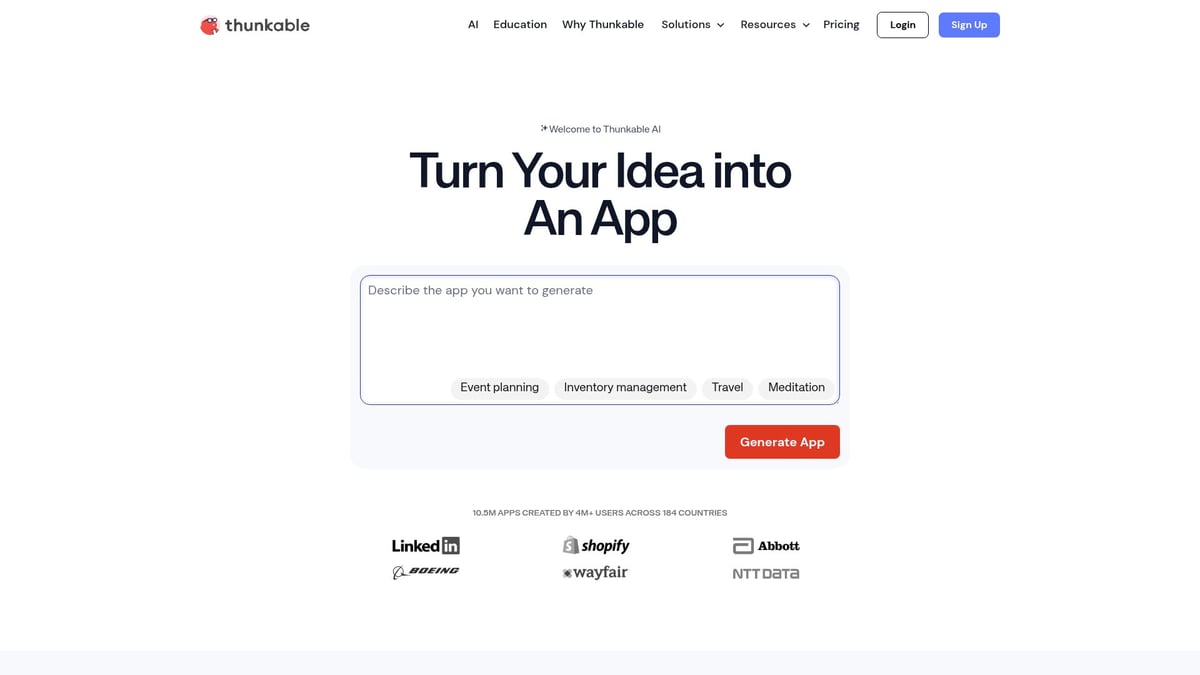
Thunkable’s strengths lie in its visual, block-based programming, enabling users to build native iOS and Android apps without any coding knowledge. Device integrations like camera, GPS, and notifications are easy to implement, and live previews let you test instantly.
Unique features include cloud variables, offline storage, and Firebase authentication. For those needing an app to make utility tools, MVPs, or educational apps, Thunkable offers both speed and power.
Pros:
- Beginner-friendly visual editor
- Cross-platform native output
- Real-time device testing
Cons:
- Logic can become complex in larger projects
- Design responsiveness is limited
Thunkable’s approach means anyone can use an app to make tangible, device-centric solutions without a steep learning curve.
SAP Build Apps
SAP Build Apps is the enterprise-grade app to make robust, scalable solutions for business professionals and teams. With a free community edition and tiered pricing for advanced features, it is accessible for both testing and large deployments.

The platform supports cross-platform deployment (web, iOS, Android, desktop) and features a visual logic canvas, responsive layouts, and REST API integrations. Deep integration within the SAP ecosystem makes it the app to make for organisations already invested in SAP infrastructure.
Its flexible variable system, absence of platform branding, and robust logic builder make SAP Build Apps ideal for internal business tools, workflow automation, and data-driven applications.
Pros:
- Highly customisable and scalable
- Powerful enterprise integrations
- No usage caps
Cons:
- Steep learning curve for beginners
- Free tier limits team collaboration
SAP Build Apps is the app to make your enterprise-level digital transformation projects a reality.
AppMachine
AppMachine is designed as the app to make client projects and agency workflows more efficient. With a 30-day free trial and paid plans starting at $15 per month, it suits freelancers, agencies, and businesses managing multiple apps.
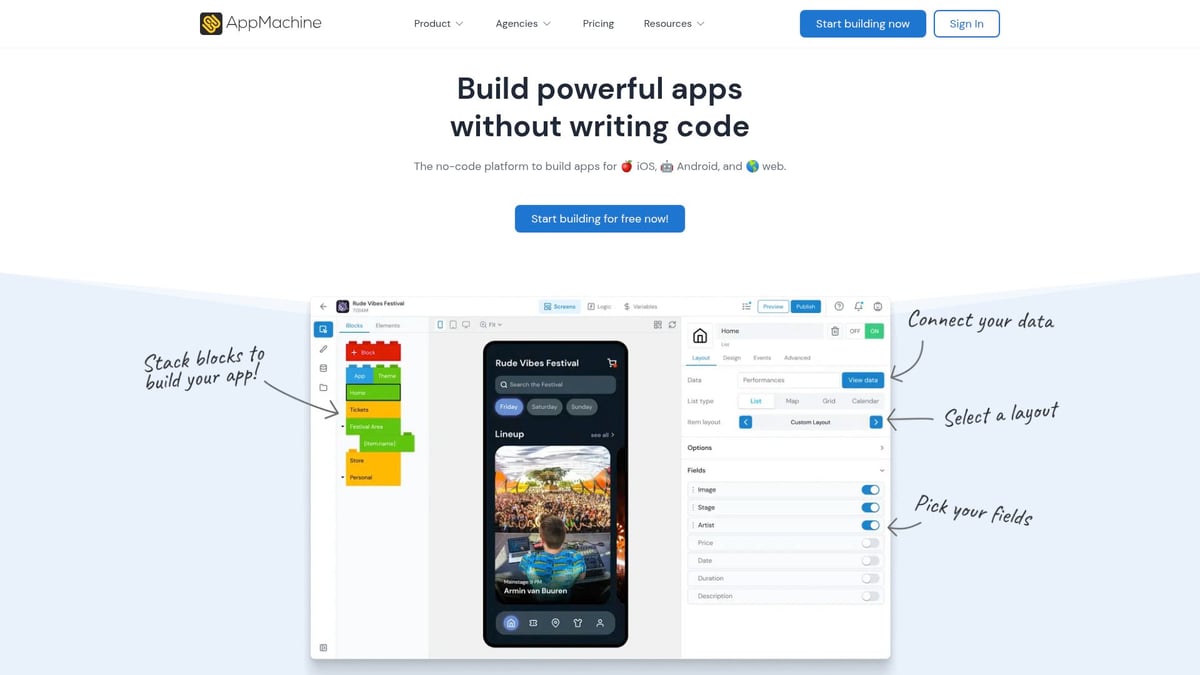
The block-based builder streamlines the process, offering white-labeling, multi-app management, publishing tools, and a website scanner for easy content import. The agency-focused dashboard supports client and team access, making AppMachine the app to make branded portals or event apps with minimal fuss.
Key use cases include content delivery, branded client apps, and event management tools.
Pros:
- White-label options for agencies
- Simple learning curve
- Multi-app management
Cons:
- Design flexibility is limited by templates
- No code access
- Templates may feel generic
AppMachine is the practical app to make agency services scalable and efficient.
Jotform Apps
Jotform Apps is the app to make data collection and workflow management streamlined for teams and organisations. The free plan includes unlimited apps, five forms, and 100 monthly submissions, with paid plans starting at $34 per month.
You can bundle multiple forms into a single mobile-friendly app, apply custom branding, and use conditional logic and analytics. Built on Jotform’s established forms engine, it is easy to share apps as PWAs for surveys, HR onboarding, or internal requests.
Real-time form updates and flexible access control make Jotform Apps the app to make internal processes more efficient.
Pros:
- Quick and easy setup
- Robust form features
- Flexible user access
Cons:
- Limited navigation and layout options
- Web-only (PWA)
- Focused on forms, not general app building
Jotform Apps is the perfect app to make your team’s data collection and workflow tasks mobile and efficient.
Quick Comparison Table
| Platform | Ideal For | Key Features | Pricing (from) | Notable Limitation |
|---|---|---|---|---|
| Creator Concepts | Custom, scalable apps | Bespoke dev, security, Bubble.io | Project-based | No off-the-shelf solutions |
| Glide | Internal tools | Spreadsheet-driven, live sync | $19/month | Web apps only |
| Appy Pie | Fast app store launch | AI generation, templates | $16/month | Limited customisation |
| Thunkable | Device-centric apps | Block-based, native builds | $19/month | Limited design flexibility |
| SAP Build Apps | Enterprise, SAP users | Cross-platform, API integration | Free/paid | Steep learning curve |
| AppMachine | Agencies, freelancers | White-label, block builder | $15/month | Generic templates |
| Jotform Apps | Data collection, forms | Form bundling, analytics | $34/month | Form-centric only |
Each app to make on this list brings unique strengths. Whether you are building a complex SaaS platform or a simple internal tool, these options ensure your ideas can move from concept to launch with minimal friction. Choose the app to make your next innovation stand out.
Essential Criteria for Evaluating App Builders in 2026
Choosing the right app to make your vision a reality in 2026 means evaluating platforms with a critical eye. The landscape is diverse, but the fundamental criteria remain universal. Let's explore the pillars that matter most when selecting an app to make your project succeed.
Scalability and Security
When you choose an app to make your ideas real, scalability is paramount. Your platform must handle a surge in users or data without performance loss. Look for robust user management, flexible data storage, and reliable backup systems. Security is equally crucial, especially if your app to make will manage sensitive information.
Consider platforms offering data encryption, compliance with regulations like GDPR, and regular security audits. Hosting on trusted services such as AWS or utilising Cloudflare for DDoS protection can provide peace of mind. Compare how each app to make solution manages user limits, data caps, and backup protocols.
| Platform | User/Data Limits | Security Features | Hosting |
|---|---|---|---|
| Creator Concepts | Customisable | Encryption, AWS, Cloudflare | AWS/Cloudflare |
| Glide | Up to 25k rows | Role-based access | Cloud-based |
| SAP Build Apps | No usage caps | Enterprise compliance | SAP Cloud |
Integration and Extensibility
A modern app to make must connect seamlessly with your existing tools and grow alongside your needs. Prioritise platforms with strong API support, third-party integrations, and plugin marketplaces. For example, Stripe can enable payments, while Zapier automates workflows between apps.
Check if the app to make provides SDKs or allows you to build custom plugins. Extensibility ensures your project will not hit a wall as your business evolves. Evaluate whether the platform integrates with your CRM, analytics, or marketing tools, enabling your app to make to deliver maximum value from day one.
- API and webhooks for custom workflows
- Plugins for payments, analytics, and notifications
- Marketplace for community-built add-ons
User Experience and Design Flexibility
User experience is a decisive factor for any app to make, impacting adoption and engagement. Platforms differ in their approach: some offer template-driven builders for speed, while others enable free-form design for full customisation. Assess how easily you can adjust layouts, branding, and navigation to suit your audience.
A good app to make should provide drag-and-drop editors, theme options, and preview tools. Design limitations can restrict creativity or leave your app feeling generic. For best practices and deeper insights, see the guide on No-code app design fundamentals.
Pricing Transparency and Value
Understanding the true cost of your app to make is essential, especially for startups and SMEs. Scrutinise free versus paid plans, checking for feature access, publishing options, and user or data caps. Be wary of hidden costs, such as fees for removing platform branding or accessing priority support.
Some platforms restrict key features like app store publishing to higher tiers. Flexible pricing, transparent billing, and generous trial periods are signs of a platform invested in your long-term success. Always align the value offered with your project’s scale and ambitions.
Success Stories: Real-World Impact of No-Code App Platforms
No-code and low-code platforms have redefined what it means to bring an idea to life in the digital age. Across industries, innovators are leveraging an app to make their vision a reality, regardless of technical background. The transformative effect is evident in both rapid prototyping and scalable enterprise solutions.
Startups Launching MVPs Rapidly
Startups today are using an app to make their minimum viable products in record time. With no-code tools, founders can validate ideas, get feedback, and attract investors within weeks instead of months.
A recent market report revealed that MVP development cycles have shrunk by over 60 percent for teams adopting no-code platforms. This speed means more time for refinement and user engagement. Rapid iterations allow startups to pivot quickly, reducing the risk of large upfront investments.
Key benefits for startups include:
- Fast go-to-market with limited resources
- Direct feedback loops from real users
- Easier access to funding through working prototypes
By choosing the right app to make their MVPs, founders are levelling the playing field and accelerating innovation across sectors.
Enterprises Accelerating Digital Transformation
Large organisations are turning to an app to make internal tools and automate workflows at scale. The post-pandemic era has driven digital transformation, with enterprises seeking efficiency and adaptability.
According to Low-Code Market Growth Projections, enterprise adoption of no-code platforms is set to double by 2026. These platforms enable IT and business teams to collaborate, reducing bottlenecks and improving project delivery times.
Notable advantages for enterprises:
- Rapid deployment of department-specific solutions
- Improved compliance and security controls
- Lower development and maintenance costs
Choosing the right app to make complex business processes digital is increasingly a strategic imperative for large organisations.
Non-Technical Creators Making a Mark
Visual app builders are empowering educators, freelancers, and small businesses to use an app to make custom solutions on their own. No longer limited by coding expertise, these creators are launching tools for classrooms, managing bookings, and automating admin tasks.
Community forums and learning resources play a crucial role in this empowerment. For those just beginning, guides like App development for non-technical founders provide step-by-step support in navigating the no-code landscape.
Success stories in this space include:
- Teachers building educational apps for remote learning
- Freelancers automating client onboarding
- Local businesses managing appointments with bespoke apps
The right app to make these projects possible is now within reach for anyone with a creative spark.
Agencies and Freelancers Scaling Client Services
Agencies and solo professionals are increasingly adopting an app to make client deliverables faster and more efficiently. White-label solutions and multi-app management features help agencies expand offerings and manage multiple projects with ease.
Using app to make platforms, agencies can:
- Prototype client concepts in real time
- Customise branding for each project
- Scale operations by managing several apps from one dashboard
This approach has enabled freelancers and agencies to increase revenue, reduce turnaround times, and offer ongoing support. The app to make business model is now a core part of modern digital services, transforming how professionals deliver value to their clients.
The Future of Idea-to-App Platforms: What to Expect Beyond 2026
The landscape of digital creation is evolving at breakneck speed. As we look beyond 2026, the next generation of app to make platforms is set to transform how individuals and organisations bring their ideas to life. The following trends signal a new era of creativity, accessibility, and security, making it easier than ever for anyone to launch an app to make a difference.
AI-Driven App Generation
Artificial intelligence is rapidly changing the way we approach app to make solutions. By 2026, AI will not only suggest layouts or features, but will also construct app logic, user flows, and even design elements from a simple prompt. Platforms like Appy Pie are already integrating AI-driven suggestions, allowing users to describe their idea and see it come to life instantly.
Industry experts predict that up to 73 percent of apps will incorporate AI by 2026, with natural language processing enabling users to instruct platforms in plain English. For a deeper dive, explore AI-Powered Mobile App Development Trends to see how generative AI is shaping the future of app to make technology.
Enhanced Collaboration and Team Features
The need for real-time teamwork is driving innovation in every app to make platform. Modern builders are introducing live editing, shared project dashboards, and integrated feedback tools, ensuring teams can co-create from anywhere in the world. These features are especially valuable for agencies and enterprises, where distributed teams must move quickly.
Expect future platforms to offer built-in project management, version control, and seamless handoff between designers and developers. Collaboration is no longer a luxury, but a core feature for any app to make platform aiming to meet the demands of dynamic, modern workplaces.
Greater Emphasis on Security and Compliance
With growing cyber threats and tighter regulations, security is now a top priority for every app to make platform. Platforms are investing heavily in encryption, audit trails, and automated compliance checks for GDPR, SOC2, and other standards.
Businesses, especially those handling sensitive data, are looking for robust security features as a key differentiator. In the coming years, expect platforms to offer more automated compliance tools, giving peace of mind to anyone using an app to make for business-critical functions.
Expanding Ecosystems and Marketplace Integrations
The future of app to make solutions lies in vibrant ecosystems and seamless integrations. Plugin marketplaces are expanding, allowing users to extend functionality with community-built add-ons. Platforms like Buildfire showcase how plugin architectures can create endless possibilities.
Cross-platform compatibility will become standard, letting users build once and deploy everywhere, from web to mobile and desktop. Ultimately, the vision is for a unified app to make platform that meets every digital product need, supported by a thriving developer and user community.
As you’ve seen throughout this guide, turning your ideas into reality in 2026 is more accessible than ever, whether you’re a founder, business leader, or creative thinker. The right app platform can accelerate your journey from concept to market, with solutions that fit your ambitions, timeline, and budget. If you’d like tailored guidance or want to explore how modern no code development can help your business innovate, I invite you to Book a discovery call. Let’s discuss your goals and start shaping your next digital success together.