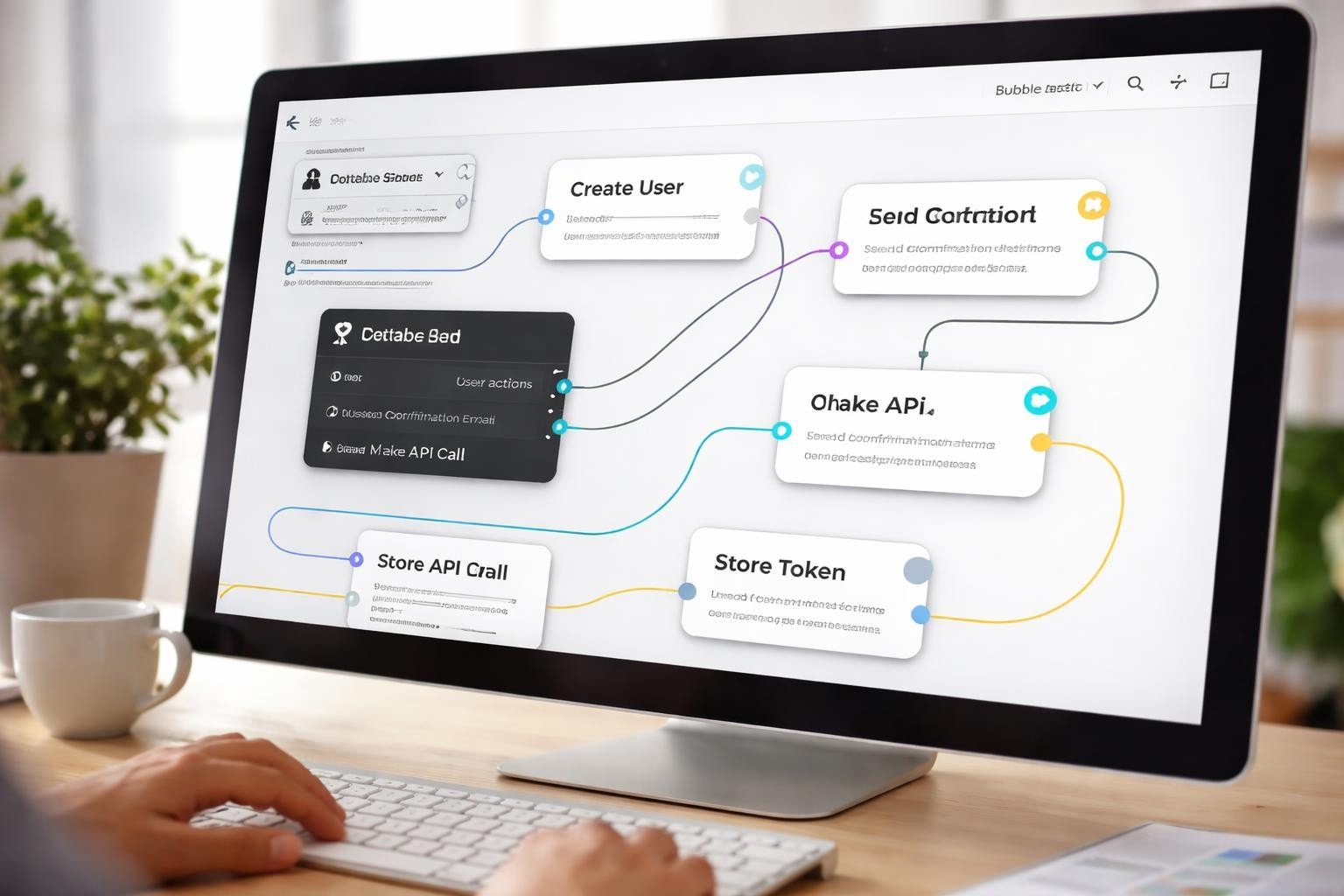

The term "bubble code" represents a fundamental shift in how modern entrepreneurs and startups approach application development. Rather than writing traditional programming languages like JavaScript or Python, bubble code refers to the visual programming methodology employed within Bubble.io, where logic, workflows, and database structures are created through an intuitive drag-and-drop interface. This paradigm has democratised software development, enabling founders to validate business ideas and launch minimum viable products in weeks rather than months, all whilst maintaining professional-grade functionality and scalability.
Bubble code operates on a fundamentally different principle than traditional programming. Instead of writing lines of syntax, developers construct applications by arranging visual elements that represent data operations, user interactions, and business logic.
The core components of bubble code include elements, workflows, and database structures that communicate through a visual canvas. Each element on a page can trigger workflows based on user actions, whilst the underlying database manages information flow throughout the application. This visual approach to programming enables rapid prototyping whilst maintaining the complexity needed for sophisticated business applications.
Traditional code requires developers to memorise syntax, manage dependencies, and debug cryptic error messages. Bubble code eliminates these barriers by presenting programming concepts visually. When a user clicks a button, the workflow appears as a connected series of actions rather than lines of code.
Key advantages of visual programming include:
The official Bubble documentation provides comprehensive guidance on structuring these visual programming elements, making it accessible for founders at any technical level.
Database architecture forms the backbone of any application, and bubble code approaches this through an intuitive data type system. Rather than writing SQL queries or managing ORM frameworks, developers create data types through a visual interface that automatically handles relationships and constraints.
Each data type in bubble code represents a collection of information with specific fields. A "User" type might contain email, name, and subscription status, whilst a "Project" type could include title, description, and owner. These types connect through relationship fields, creating a web of interconnected data that powers application functionality.
The power of bubble code becomes evident when managing complex data relationships. Consider a marketplace application where users can be both buyers and sellers, products belong to categories, and orders connect users to multiple products.
| Relationship Type | Bubble Code Implementation | Traditional Code Equivalent |
|---|---|---|
| One-to-Many | User has list of Projects | Foreign key reference |
| Many-to-Many | Project has list of Users | Junction table required |
| Parent-Child | Comment belongs to Post | Parent ID field |
Creating these relationships in bubble code requires selecting field types from a dropdown menu, whereas traditional development demands careful schema planning and migration management. The visual interface handles referential integrity automatically, reducing the risk of orphaned records or broken relationships.
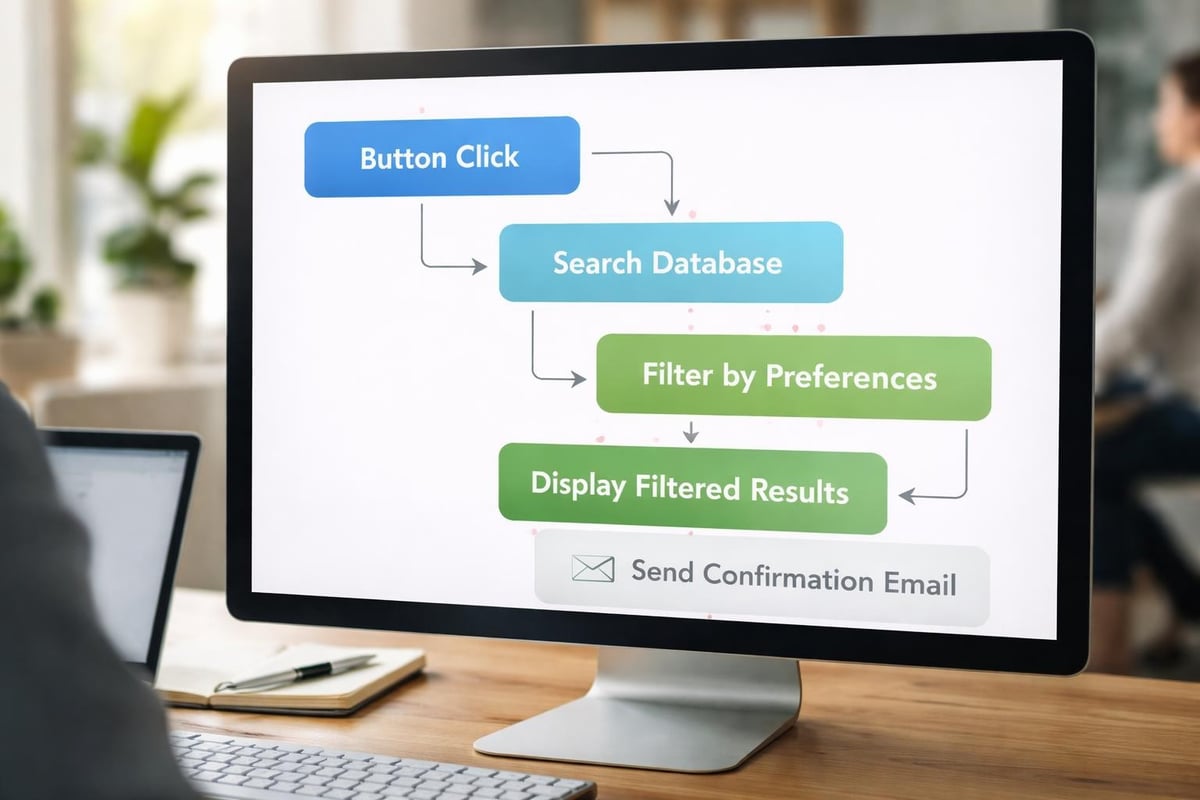
Workflows represent the heart of bubble code, transforming static pages into dynamic applications. Every user interaction-clicking buttons, submitting forms, scrolling pages-can trigger a sequence of actions that manipulate data, navigate between pages, or integrate with external services.
A typical workflow in bubble code might involve multiple conditional branches based on user permissions, data states, or external API responses. For instance, a payment processing workflow could verify user credentials, check inventory availability, process the transaction, update multiple database records, and send confirmation emails-all without writing a single line of traditional code.
Conditional logic in Bubble enables sophisticated decision-making within workflows. The "Only when" condition determines whether an action executes, allowing developers to create branching logic that responds to specific scenarios.
Professional bubble code applications employ sophisticated workflow patterns that rival traditionally coded systems. Custom events allow developers to create reusable workflow sequences, whilst recursive workflows enable complex data processing operations.
Common workflow patterns include:
These patterns demonstrate how bubble code scales beyond simple prototypes to production-grade applications serving thousands of users. When properly structured, bubble code workflows maintain clarity even in complex business logic scenarios.
The visual nature of bubble code extends to interface design, where responsive layouts adapt automatically to different screen sizes. Elements snap to containers, which define how content reflows on mobile devices, tablets, and desktop monitors.
Unlike traditional CSS frameworks that require media queries and breakpoint management, bubble code uses a container-based system. Developers set minimum and maximum widths, alignment rules, and collapse conditions that automatically adjust layouts. This approach significantly reduces the complexity of creating responsive applications whilst maintaining design fidelity across devices.
Reusable elements in bubble code function similarly to components in React or Vue, but without requiring JavaScript knowledge. A navigation header created once becomes available throughout the application, with changes propagating automatically to all instances.
Custom elements can accept parameters, enabling dynamic behaviour based on context. A product card element might display different information depending on whether it appears in a search results page or a user's favourites list, all controlled through bubble code logic rather than traditional component props.
Professional bubble code applications require careful attention to performance optimisation. Whilst the platform handles server infrastructure and scaling automatically, developers must structure their applications efficiently to ensure responsive user experiences.
Database queries represent the most common performance bottleneck. Bubble code applications that search entire database tables or load unnecessary fields create slower experiences than those employing strategic constraints and selective field loading.
| Optimisation Technique | Impact | Implementation Difficulty |
|---|---|---|
| Database indexing | High | Low |
| Conditional formatting | Medium | Low |
| Custom states for temporary data | High | Medium |
| Privacy rules optimisation | Medium | High |
| External API caching | High | Medium |
The platform's capacity planning tools help developers understand resource consumption patterns, but proper bubble code structure prevents issues before they impact users. Limiting search results, implementing pagination, and using custom states for client-side data manipulation all contribute to faster application performance.
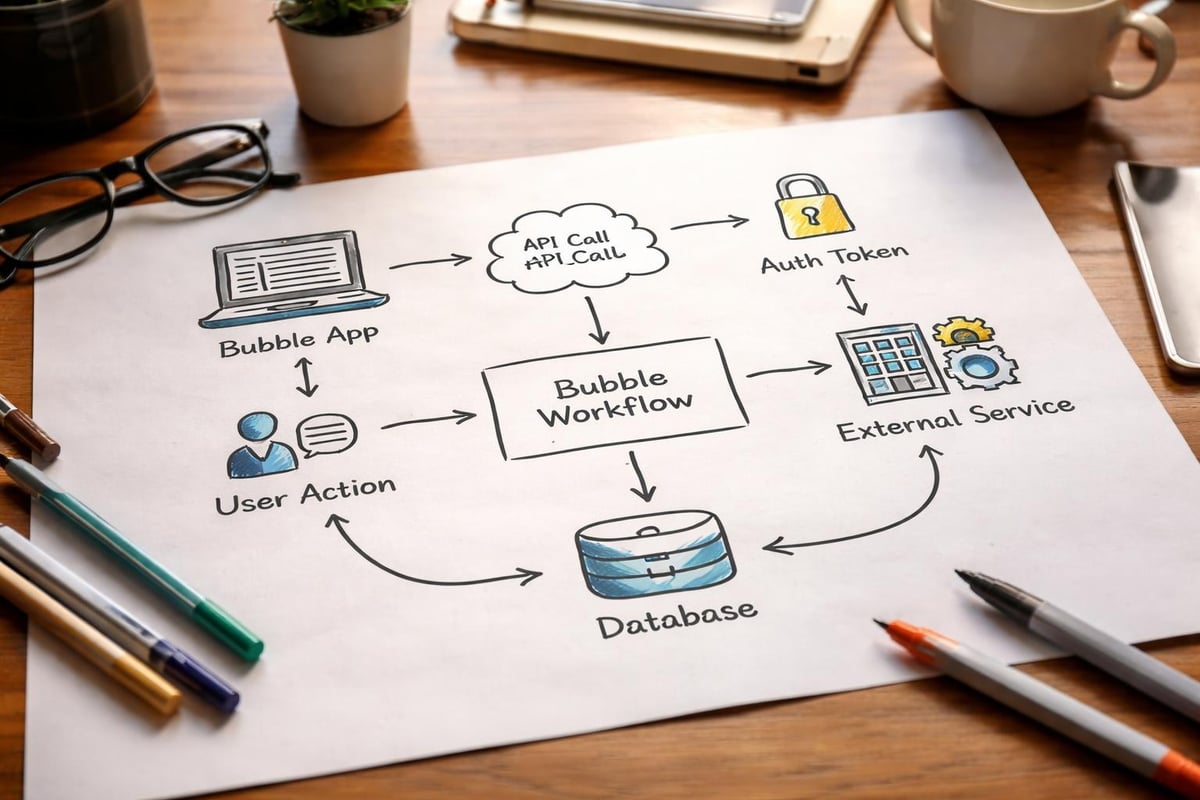
Modern applications rarely operate in isolation, and bubble code excels at implementing third-party API integrations. The API Connector plugin enables connections to payment processors, communication platforms, data enrichment services, and countless other external systems.
Configuring API connections in bubble code involves defining endpoints, authentication methods, and data structures through a visual interface. Once configured, API calls become available as actions within workflows or as data sources for dynamic content, seamlessly blending external functionality into applications.
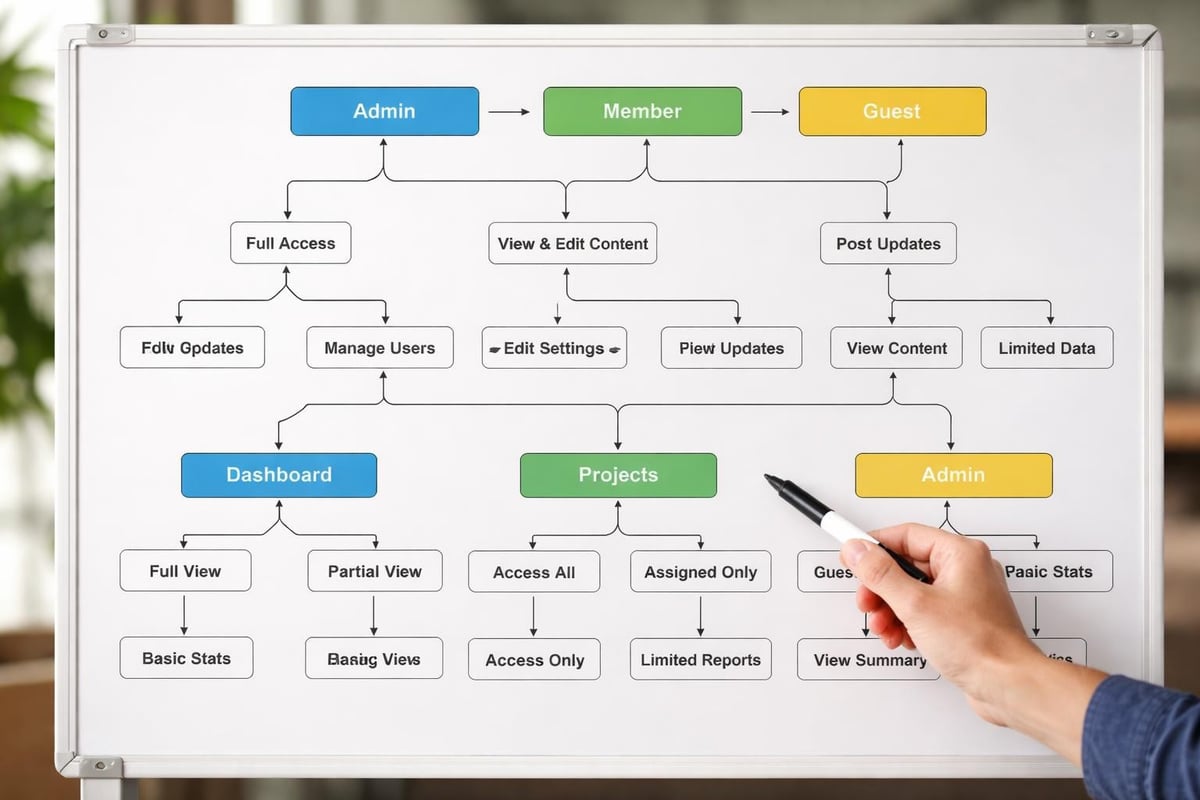
Security considerations in bubble code applications mirror those of traditionally coded systems. Privacy rules control data access at the database level, ensuring users only view information they're authorised to see. Server-side workflows process sensitive operations without exposing logic to client-side inspection.
Authentication flows support multiple strategies, from traditional email/password combinations to OAuth providers and single sign-on systems. These security measures integrate directly into bubble code workflows, enabling developers to implement enterprise-grade security without deep cryptography knowledge.
Professional bubble code development involves version control, testing environments, and collaborative workflows that ensure quality whilst maintaining velocity. The platform provides development and production versions, allowing teams to build and test features without affecting live users.
Collaboration within bubble code projects requires coordination around shared elements and database structures. Teams typically designate ownership of specific features or pages, merging changes through the platform's version control system. This approach works particularly well for MVP development projects where speed to market balances with code quality requirements.
Quality assurance in bubble code applications combines manual testing with systematic workflow validation. Developers test each user journey, verifying that workflows execute correctly under various conditions and edge cases produce appropriate responses.
Testing checklist for bubble code applications:
Many no-code web development platforms now support automated testing tools, though manual testing remains crucial for validating user experience aspects that automated systems might miss.
Bubble code applications can scale to serve substantial user bases when properly architected. The platform handles infrastructure scaling automatically, but application structure determines how efficiently resources convert to user capacity.
Database query optimisation becomes critical at scale. Applications that repeatedly search large datasets or perform complex calculations during page loads struggle under heavy traffic. Strategic use of saved states, scheduled workflows for data processing, and efficient database structures all contribute to scalable bubble code applications.
The platform offers dedicated server options for applications requiring guaranteed capacity and reduced latency. These configurations provide consistent performance even during traffic spikes, though proper application architecture remains essential regardless of hosting tier.
Developers transitioning to bubble code often encounter challenges stemming from traditional programming assumptions. The visual paradigm requires different mental models, particularly around state management and data flow.
Frequent mistakes include:
Experienced bubble code developers establish conventions early, documenting database structures and workflow patterns that team members can follow. This discipline becomes increasingly important as applications grow in complexity and team size expands.
Professional bubble code development benefits from documented standards around naming, structure, and patterns. Teams might establish prefixes for different element types, standardise workflow naming conventions, or create template pages that enforce consistent layouts.
These standards accelerate development whilst reducing technical debt. New team members onboard faster when applications follow predictable patterns, and maintenance becomes simpler when elements follow consistent naming schemes.
Bubble code has powered thousands of successful startups, from marketplace platforms to SaaS applications and community portals. The diverse applications built using Bubble demonstrate the platform's versatility across industries and use cases.
Startups choosing bubble code for initial development often reach market faster than competitors building with traditional code. This speed advantage enables earlier user feedback, faster iteration cycles, and more efficient capital deployment. Many founders validate business models entirely within bubble code before considering migration to custom development stacks.
The platform particularly excels for database-driven applications with complex user interactions. Booking systems, project management tools, educational platforms, and social networks all map naturally to bubble code's visual programming model.
The bubble code ecosystem includes extensive learning resources for developers at all levels. Beginner-friendly tutorials cover fundamental concepts, whilst advanced courses explore sophisticated patterns and optimisation techniques.
Community forums provide invaluable support, with experienced developers sharing solutions to common challenges. This collaborative environment accelerates learning and problem-solving, particularly for founders building their first applications without technical cofounders.
Platform documentation continues expanding, covering new features and best practices as the bubble code ecosystem evolves. Regular platform updates introduce capabilities that previously required custom code, further expanding what's possible within the visual programming paradigm.
Visual programming platforms like Bubble represent a significant evolution in software development accessibility. As these tools mature, the distinction between "coded" and "bubble code" applications continues blurring, with visual platforms handling increasingly complex scenarios.
Artificial intelligence integration promises to further accelerate bubble code development. AI-assisted workflow creation, automated optimisation suggestions, and intelligent debugging tools will enable even faster development cycles whilst maintaining code quality.
The success of bubble code applications in production environments validates visual programming as a legitimate approach for serious business applications, not merely prototyping tools. This shift empowers a new generation of technical founders who can build sophisticated products without traditional programming skills.
Mastering bubble code enables entrepreneurs to transform ideas into functioning applications with unprecedented speed and efficiency. Whether building a marketplace, SaaS platform, or community portal, visual programming provides the tools needed to validate concepts and serve real users. If you're ready to turn your startup vision into reality, Creator Concepts combines bubble code expertise with award-winning MVP development to launch your product in weeks, not months.
© 2026 CreatorConcepts Limited
128 City Road, London EC1V 2NX