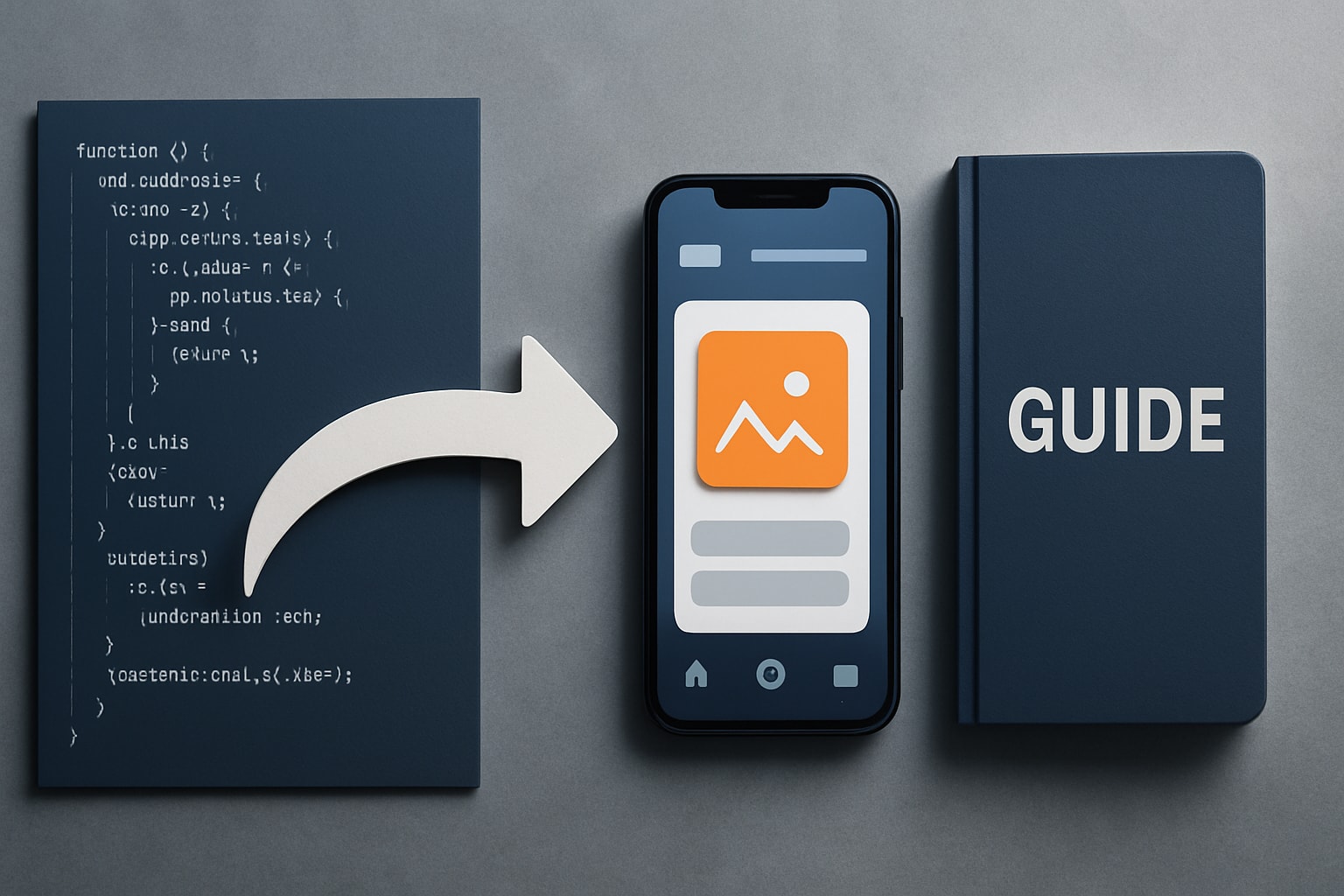

Imagine having the power to turn your next big idea into a functional app, even if you are not a coding expert. The demand for new digital solutions keeps rising, but the path from concept to reality can feel overwhelming.
This code to app guide is designed to break down each step, making app creation accessible for entrepreneurs, business leaders, and passionate hobbyists alike. You will explore how to move from ideation and planning to design, development, testing, launch, and future-proofing.
By demystifying the process, this guide helps you confidently take action, transforming your ideas into real apps for 2026 and beyond.
Turning your concept into reality starts with a solid foundation. The code to app journey is more than just coding, it is about understanding your users, market, and what makes your idea special. Let us break down the essential first steps to set your project up for success.

Every successful code to app transformation begins with identifying a genuine problem or unmet need. Start by researching your target users. What challenges do they face? Conduct surveys, run interviews, or use analytics tools to gather insights. This early research will help you avoid building an app that no one wants.
Next, analyse the competition. Statista reports that over 2 million apps are launched each year, so finding a unique angle is vital. Examine top competitors, read their reviews, and spot gaps in their offerings. This process can reveal opportunities for your own unique value proposition (UVP).
A real-world example: one entrepreneur noticed friends struggling to manage shared expenses. By solving this simple problem, their app reached a million downloads. For market validation, use tools like Google Trends, App Annie, and online surveys. If you are a beginner, consider reading the App development for non-technical founders guide to help you move from code to app with confidence.
Setting clear objectives is crucial in the code to app process. Use the SMART framework: Specific, Measurable, Achievable, Relevant, and Time-bound goals keep your project focused. For example, "Reach 5,000 downloads in three months" is more effective than "Get users."
Distinguish between must-have features and nice-to-haves. Adopting a Minimum Viable Product (MVP) approach lets you launch faster and gather feedback sooner. Consider the journey of a startup that focused solely on core features, quickly iterated with user input, and then expanded their app. This method reduces risk and development time.
Always prioritise user-centric design and accessibility. Make sure your app is easy to use for everyone, including people with disabilities. Common pitfalls include feature creep and vague objectives, which can derail your code to app efforts. Stay disciplined, revisit your goals often, and keep the user experience front of mind.
With your goals in place, it is time to translate your ideas into actionable user stories. Each user story should describe a specific task or interaction, such as "As a user, I want to set reminders so I never miss a task." This approach keeps the code to app process grounded in real user needs.
Visualising workflows with wireframes helps bring your concept to life before development begins. Tools like Figma and Balsamiq allow you to sketch out screens and interactions quickly. For example, a basic task manager app wireframe might show a simple dashboard, task creation screen, and notification panel.
Early visual prototyping offers significant benefits. It uncovers design issues, aligns your team, and provides a tangible reference for developers and stakeholders. By starting with user stories and wireframes, you lay a clear, user-focused blueprint that guides your entire code to app journey.
Choosing the right route from code to app is the cornerstone of any successful digital project in 2026. Developers and entrepreneurs now face more options than ever, each with unique strengths and trade-offs. Whether you are building your first product or scaling a new venture, understanding these paths is key to making informed decisions.
In 2026, the landscape for moving from code to app is more varied than ever. You can choose between traditional coding, low-code, and no-code platforms, each offering different levels of flexibility and accessibility.
Traditional coding provides full control and the ability to customise every detail. This approach is ideal for complex applications that require bespoke functionality. However, it demands significant expertise, longer timelines, and larger budgets.
Low-code platforms bridge the gap. They offer a visual development environment with the option to insert custom code. This speeds up delivery while maintaining a degree of flexibility. According to industry analysts, up to 75% of apps could be built on low-code platforms by 2026.
No-code solutions have revolutionised the code to app journey for non-technical founders. These platforms use intuitive drag-and-drop interfaces, enabling rapid prototyping and deployment without writing a single line of code. They are perfect for MVPs, internal tools, and even full-scale commercial products.
Here is a comparison of the three approaches:
| Approach | Speed | Flexibility | Cost | Skill Level |
|---|---|---|---|---|
| Traditional Code | Slow | High | High | Advanced |
| Low-Code | Fast | Medium | Moderate | Intermediate |
| No-Code | Fastest | Moderate | Low | Beginner |
No matter your background, there is a code to app solution that fits your needs.
When deciding the best path from code to app, several factors must be weighed. Budget is often the starting point. Traditional development can be costly, while no-code and low-code platforms reduce upfront investment.
Timeline is another crucial consideration. No-code tools enable you to launch functional prototypes in days rather than months. This is invaluable for validating ideas quickly and staying ahead of competitors.
Your technical skill set will also influence your choice. If you lack coding experience, no-code platforms are ideal. For more complex requirements, low-code allows some customisation without full-scale development.
Security and scalability are vital for long-term success. While traditional coding offers the highest level of control, many low-code and no-code solutions now provide enterprise-grade security and robust scalability.
Real-world example: A tech startup needed to bring their code to app vision to market quickly. They chose a no-code tool and launched their MVP in two weeks, outperforming a competitor still developing with traditional methods.
Hybrid approaches are increasingly popular. Teams often combine no-code for rapid prototyping with traditional code for scaling or unique features. This blend delivers speed without sacrificing quality.
Creator Concepts is an award-winning agency specialising in no-code solutions using Bubble.io. Their expertise helps clients transform ideas from code to app with remarkable speed and reliability.
Rapid prototyping is a hallmark of their service. Clients can see their vision take shape as an MVP in as little as one to two weeks. This approach greatly reduces risk and allows for early user feedback.
Security, scalability, and compliance are at the core of every project. Creator Concepts supports SaaS platforms and mobile applications, ensuring each product is robust and future-proof.
You can explore their No-code platforms for app development guide to understand the practical advantages of no-code for different industries.
Success stories include launching SaaS products, community platforms, and mobile apps for businesses of all sizes. For entrepreneurs and enterprises alike, no-code is a game-changer in the code to app journey.
A successful code to app journey in 2026 begins with thoughtful design. The right approach to UX, UI, and prototyping can mean the difference between a thriving app and one that users abandon. Understanding the latest trends and user expectations will help you create applications that stand out and deliver true value.

User experience is a core pillar in any code to app process. Research shows that 88 percent of users are less likely to return after a poor experience, highlighting the need for seamless, intuitive design. Mapping the user journey helps identify pain points and moments of delight, ensuring every interaction adds value.
Accessibility and inclusivity are no longer optional. By incorporating features like larger tap targets, high-contrast visuals, and screen reader support, your app can reach a wider audience. For example, a simple UX tweak such as streamlining the onboarding flow once doubled user retention for a productivity app.
Best practices for UX in 2026 include:
Focusing on UX at every stage turns your code to app vision into an experience users love.
A modern code to app project relies on fresh UI trends and robust design tools. In 2026, popular frameworks such as Material Design and Fluent UI are paired with AI-powered assistants to speed up design iterations and maintain consistency.
Design systems play a pivotal role. They offer reusable components, style guides, and pre-built templates to ensure your app looks professional across platforms. Leveraging tools like Figma and Bubble allows rapid prototyping and easy handoff to developers.
For practical advice tailored to UI/UX design, you can explore Bubble app design best practices to see how top creators approach layout, colour, and navigation.
A case study from 2025 illustrates this well: after a UI overhaul based on user feedback, a mobile app saw its download rate increase by 30 percent, confirming the direct impact of effective interface design on code to app success.
Prototyping is the bridge from code to app concept to tangible product. Tools like Figma, Proto.io, and Bubble make it simple to create interactive prototypes without writing code. These prototypes allow teams to visualise workflows, test ideas, and gather early feedback.
User testing should start early and continue throughout development. Techniques include:
For example, a fintech startup used iterative prototyping to refine its dashboard, resulting in smoother navigation and increased user satisfaction. Embedding user feedback at every stage ensures your code to app project meets real needs and adapts quickly to change.
A design system is essential for transforming your code to app project into a scalable, cohesive product. By standardising UI elements and brand guidelines, you can streamline updates, reduce development time, and maintain a consistent look across all screens.
Benefits of a robust design system include:
Tools like Figma Libraries and Zeroheight help manage your design assets centrally, making it easier to update styles or roll out new features. In the fast-paced world of code to app development, a well-built design system is your blueprint for long-term success.
Bringing your code to app journey to life involves a deliberate and structured approach. Each stage, from setting up your environment to testing, plays a vital role in shaping the final product. Let us walk through the essential steps that will turn your vision into a robust, user-ready application.

The first decision in your code to app process is choosing the right development environment. This sets the tone for efficiency and collaboration. You’ll likely choose between cloud-based and local setups.
| Environment | Pros | Cons |
|---|---|---|
| Cloud-Based | Accessible anywhere, easy backups | Dependent on internet, monthly cost |
| Local | Full control, no recurring fees | Hardware limits, challenging backup |
Cloud platforms like Bubble.io have gained popularity for their intuitive interfaces and rapid deployment. For instance, starting a Bubble.io project involves:
1. Sign up and create a new app project.
2. Choose a template or start from scratch.
3. Set up your database and initial workflows.
Essential tools:
By establishing a strong foundation, you ensure your code to app workflow is smooth and adaptable.
With your environment ready, focus on the core architecture that brings your code to app idea to life. Begin by mapping out the main features and essential integrations.
Prioritise the most impactful features for your minimum viable product (MVP). Integrate third-party APIs for services like payment processing, notifications, or analytics. For example, integrating payment can be as straightforward as connecting Stripe or PayPal through pre-built plugins or API calls.
Remember:
A thoughtful approach to integrations ensures your app is both functional and ready for future growth.
Security is non-negotiable in any code to app project. Protecting user data and adhering to regulations such as GDPR and CCPA must be top priorities.
Key practices include:
For a comprehensive overview, explore this Beginner's guide to app security, which breaks down practical steps for safeguarding your application.
A real-world case study shows how early attention to compliance prevented costly breaches and reputational damage. Ensuring security at every stage of your code to app journey builds trust with users and partners alike.
Collaboration is the heartbeat of successful code to app development. Modern teams rely on tools that streamline feedback, track changes, and enable real-time interaction.
Key collaborative tools:
For remote projects, these platforms make it easy to manage feedback and keep everyone aligned. For instance, a global team launching an app used Figma and Git to iterate on features in real time, ensuring seamless progress despite time zones.
Emphasising teamwork in your code to app process leads to higher-quality outcomes and faster delivery.
Quality assurance is the final safeguard in your code to app transformation. Testing ensures your app functions as intended and delivers a consistent user experience.
Types of testing:
Automated tools like Selenium and manual testing platforms help catch bugs early. In a healthcare app project, thorough QA checks prevented critical issues before launch.
Investing in robust testing processes confirms your code to app journey results in a stable, reliable product.
Turning your code to app vision into a market-ready product is an exciting milestone. Launching, scaling, and marketing your app in 2026 requires a strategic approach, blending technical readiness with smart promotion. Let us explore the essential steps to ensure your app stands out, grows steadily, and reaches its full potential.
Before releasing your code to app project to the public, beta testing is crucial. Building a beta user community allows you to gather early feedback, uncover usability issues, and validate your core features.
Invite a select group of users to test your app in real-world conditions. Use surveys, interviews, and analytics to collect actionable insights. Address any bugs or pain points promptly.
A successful beta launch often involves exclusive invitations, clear feedback channels, and meaningful incentives. For example, a productivity app that offered early access to power users and integrated their suggestions saw 10,000 signups before its official launch. This process transforms your code to app effort into a robust, user-approved solution.
Getting your app noticed in crowded app stores is a science. App Store Optimisation (ASO) ensures your code to app solution ranks higher and attracts more downloads.
Focus on keyword research to select terms your target audience uses. Optimise your app’s title, description, and metadata. High-quality screenshots, compelling app icons, and engaging preview videos increase conversion rates.
A recent case study showed that by refining metadata and updating screenshots, a mobile app increased its downloads by 40 percent. Regularly monitor your ASO performance and adapt to trends for sustained visibility. Distribute your app across multiple platforms to maximise reach.
Fast growth is essential for your code to app journey. Growth hacking combines creative marketing with data-driven tactics to accelerate user acquisition.
Leverage social media campaigns, influencer partnerships, and targeted PR. Referral programmes and viral features can turn users into advocates. Top acquisition channels in 2026 include micro-influencers, short-form video content, and community-driven platforms.
AI-powered marketing tools are also gaining traction, enabling automated A/B testing and personalised campaigns. According to AI-Powered No-Code and Low-Code Development, AI integration is rapidly transforming how apps attract and retain users. Monitor key metrics, adjust your strategy, and stay agile to outpace competitors.
As your code to app project gains traction, robust infrastructure becomes vital. Cloud-based solutions like AWS and Azure allow seamless scaling to handle spikes in user growth.
Plan for technical support and customer service from day one. Set up monitoring tools to track performance, uptime, and user behaviour. Rapid scaling is often supported by the expanding market for no-code and low-code platforms, as highlighted in No-Code and Low-Code Development Platforms Market Growth. This trend enables startups and enterprises to scale without extensive development resources.
A real-world example: a SaaS app scaled from 1,000 to 100,000 users by leveraging auto-scaling infrastructure and proactive user support. Prioritise reliability and responsiveness to keep users satisfied as you grow.
Choosing the right monetisation strategy is key to turning your code to app investment into a sustainable business. The main models include:
In 2025, subscription apps generated 58 billion dollars in revenue, reflecting the popularity of recurring models. Consider your target market’s preferences and willingness to pay.
A/B test pricing and features to optimise revenue. AI-driven analytics can help identify the most profitable segments and refine your offerings. Select a model that aligns with your goals and delivers lasting value to users.
Staying ahead in app development means looking beyond launch day. To ensure your code to app project remains competitive in 2026 and beyond, you must anticipate emerging technologies, evolving user needs, and regulatory changes. Let us explore the top trends and approaches to future-proof your app from the start.
Artificial intelligence has become essential for creating smart, user-focused experiences. Integrating AI into your code to app journey enables powerful features such as personalisation, predictive analytics, and automated support.
For example, using AI-driven chatbots can resolve user queries instantly, reducing support costs and improving satisfaction. Automation tools also streamline repetitive tasks, such as onboarding or notifications, freeing up your team for higher-value work.
To get started:
AI and automation are no longer optional. They are fundamental to building apps that adapt and scale with your audience.
Immersive technologies are transforming user engagement. Incorporating AR, VR, and IoT features into your code to app workflow opens new possibilities for education, retail, and beyond. For example, AR overlays can enhance shopping apps, while VR training modules revolutionise learning.
According to Augmented Reality and Virtual Reality Market Projections, the AR and VR markets are set for rapid growth, making them valuable additions for future-proofing your application.
Consider these strategies:
Staying current with these technologies keeps your app innovative and relevant.
Security is paramount in any code to app project. Regulations such as GDPR and CCPA continue to evolve, requiring developers to adopt robust data protection measures.
Key steps include:
Continuous monitoring tools can alert you to vulnerabilities before they become threats. Prioritising compliance not only protects your users, it also builds trust and reduces legal risks for your business.
Reaching a wider audience means designing your code to app solution for multiple platforms and languages. Progressive Web Apps (PWAs) and cross-platform frameworks like Flutter or React Native allow you to deploy across devices efficiently.
To expand globally:
By planning for cross-platform compatibility and localisation from day one, your app will be ready to scale and succeed worldwide.
Analytics are vital for understanding how users interact with your app. By embedding analytics tools early in your code to app process, you gain actionable insights for data-driven updates.
Best practices:
For example, many successful apps pivot their features post-launch based on analytics, ensuring they continue to meet user needs. Continuous improvement keeps your app competitive and aligned with market demands.
As you think about bringing your app idea to life in 2026, remember that you do not have to navigate the entire journey alone. Whether you are refining your concept, exploring no code platforms, or planning for scalability and security, having expert guidance can make all the difference. At Creator Concepts, we specialise in helping innovators like you transform visions into secure, scalable apps—on time and within budget. If you are ready to take the next step or simply want to explore what is possible for your project, Book a discovery call with our team today.
© 2026 CreatorConcepts Limited
128 City Road, London EC1V 2NX