

The iPhone continues to dominate premium smartphone markets worldwide, representing a critical platform for startups and entrepreneurs seeking to reach high-value users. iPhone app development services have evolved significantly since the App Store's launch, now encompassing everything from native Swift development to progressive web applications and no-code alternatives. Understanding the landscape of professional development services helps founders make informed decisions about building their mobile presence, particularly when validating new business concepts or launching minimum viable products.
Professional iPhone app development services extend far beyond simple coding tasks. These comprehensive offerings typically include strategic planning, user experience design, technical development, quality assurance, and ongoing maintenance. Service providers range from traditional agencies employing iOS developers to specialized studios focusing on rapid prototyping and validation.
The scope of services varies considerably based on project requirements and business objectives. Some agencies concentrate exclusively on Apple's iOS development ecosystem, whilst others offer cross-platform capabilities or alternative development approaches. Founders must evaluate which service model aligns with their timeline, budget, and long-term product vision.
The iPhone app development landscape includes several distinct provider categories, each offering unique advantages:
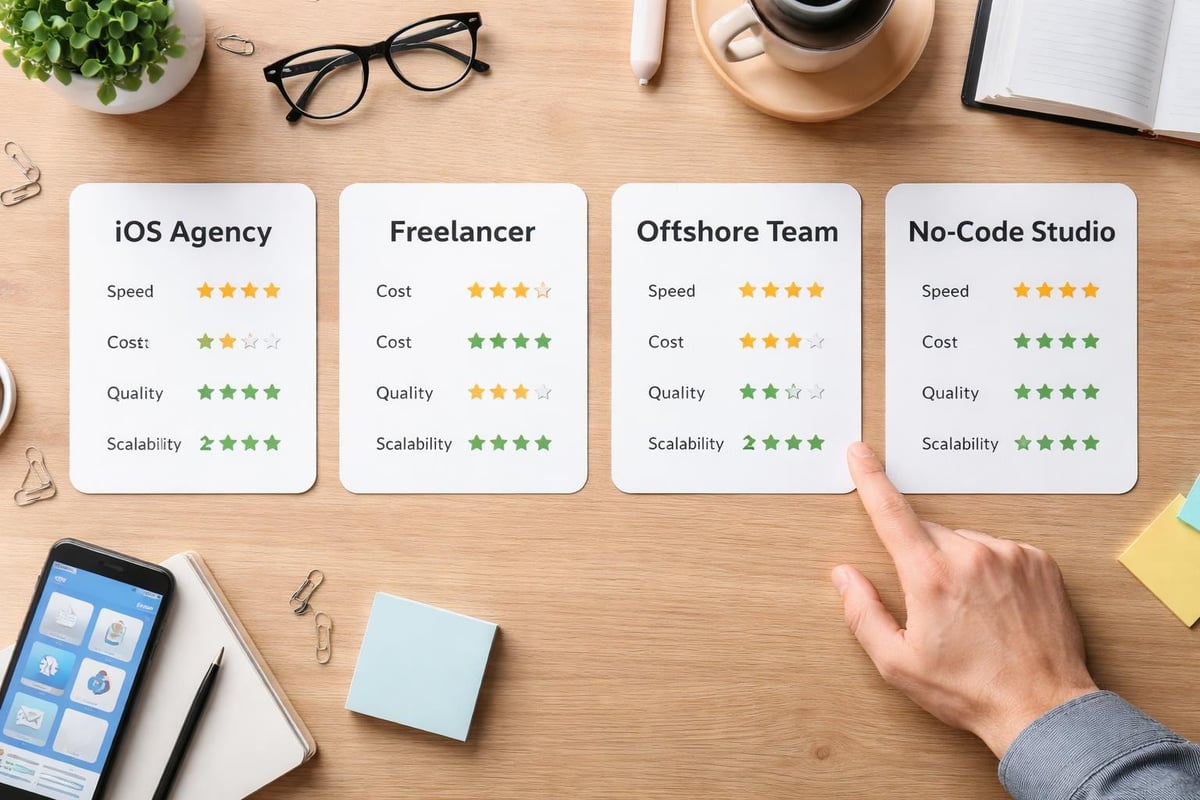
Selecting the appropriate provider depends on multiple factors including project complexity, available budget, and time constraints. Startups often benefit from agile partners who prioritize rapid validation over perfect execution, whilst established businesses may require enterprise-grade solutions with comprehensive testing protocols.
Professional iPhone app development services deliver structured processes that transform concepts into functional applications. Understanding these components helps founders evaluate proposals and manage expectations throughout the development journey.
Every successful iPhone application begins with thorough discovery work. Service providers conduct market research, competitive analysis, and user persona development to inform design decisions. This phase establishes technical requirements, identifies potential challenges, and creates realistic timelines.
Strategic planning sessions define the application's core value proposition and feature prioritization. Development teams work with founders to distinguish between essential launch features and nice-to-have enhancements that can follow initial deployment. This discipline proves particularly valuable for startups with limited resources.
Visual design and user experience represent critical differentiators in the competitive App Store environment. Professional services follow Apple's Human Interface Guidelines to create applications that feel native to the iOS ecosystem whilst maintaining brand identity.
Design deliverables typically include:
The design phase often reveals opportunities for simplification and improved user engagement. Experienced designers challenge assumptions about feature necessity, helping founders focus on delivering exceptional experiences rather than feature bloat.
The development phase transforms approved designs into functional code. Traditional iPhone app development services typically utilize Swift programming language and Apple's native development frameworks. Developers structure applications to leverage iOS capabilities whilst maintaining performance and security standards.
| Development Aspect | Traditional Approach | Alternative Approach |
|---|---|---|
| Programming Language | Swift or Objective-C | JavaScript, Dart, or No-Code |
| Development Environment | Xcode | Various IDEs or Visual Builders |
| UI Framework | UIKit or SwiftUI | React Native, Flutter, or Platform Tools |
| Typical Timeline | 3-6 months | 2-8 weeks |
| Cost Range | £50,000-£250,000+ | £10,000-£50,000 |
Modern development practices incorporate continuous integration and automated testing to maintain code quality. Version control systems enable collaboration whilst protecting against accidental regressions or data loss.
Understanding the financial implications of iPhone app development services enables better budgeting and resource allocation. Pricing models vary significantly based on provider type, project scope, and engagement structure.
iPhone app development services typically operate under one of several commercial arrangements:
Fixed price arrangements provide budget certainty but require comprehensive upfront scoping. Time and materials models offer flexibility for evolving requirements but demand active project management to control costs. For non-technical founders, understanding these commercial structures proves essential for successful vendor relationships.
Multiple variables affect the final investment required for iPhone app development services. Complexity represents the primary cost driver, with sophisticated features like augmented reality, machine learning integration, or extensive backend infrastructure requiring substantial development effort.
Application category significantly impacts pricing. Simple information apps or content platforms typically cost less than marketplace applications, social networks, or on-demand service platforms. Real-time functionality, complex data relationships, and third-party integrations all increase development requirements.
Geographic location influences rates considerably. London-based agencies command premium prices compared to regional UK providers or offshore development teams. However, proximity often facilitates better communication and cultural alignment, potentially reducing project risks.
The emergence of sophisticated no-code platforms has democratized application development, enabling founders to build functional iPhone applications without traditional programming expertise. These no-code web development platforms offer compelling advantages for certain use cases, particularly MVP validation.
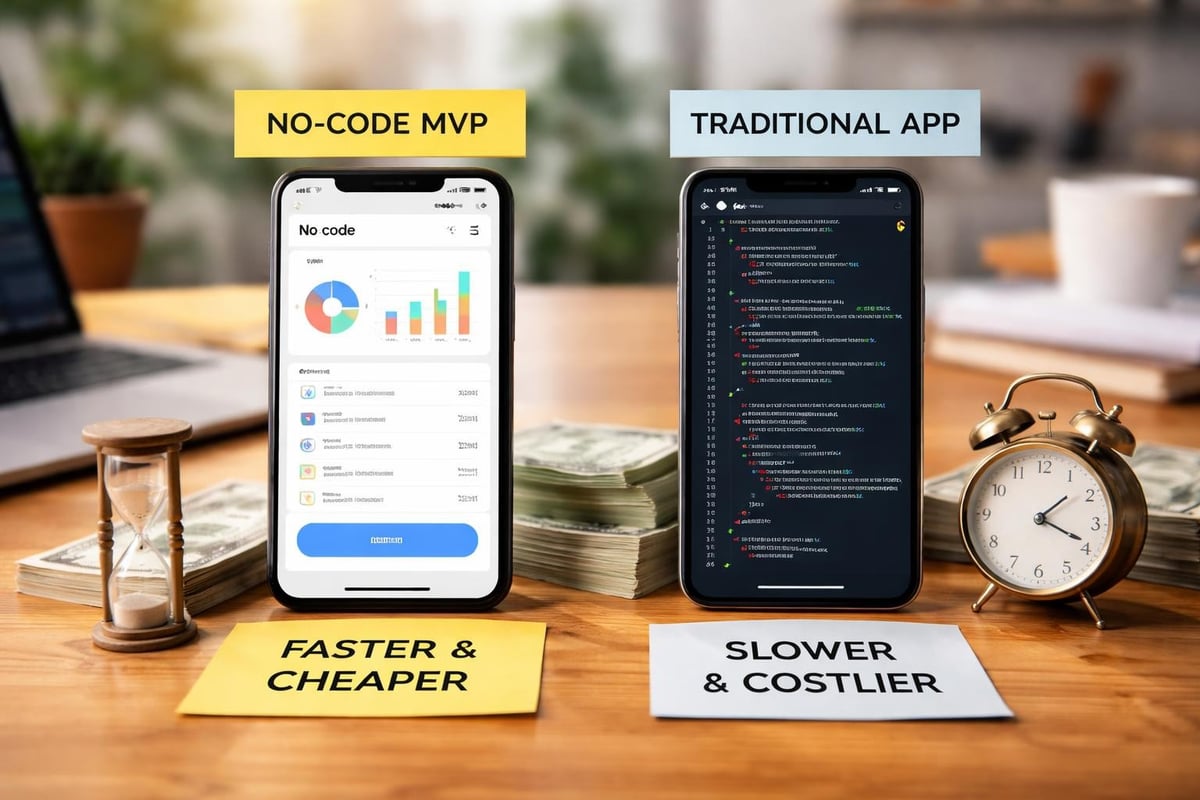
Progressive web applications built on platforms like Bubble.io can deliver iPhone-compatible experiences without native development. These solutions excel for:
Founders working with MVP Development services can launch sophisticated applications in weeks rather than months. This acceleration enables faster learning cycles and more efficient capital deployment, particularly valuable in competitive markets.
No-code approaches involve trade-offs that founders must evaluate carefully. Performance limitations may emerge with highly complex applications or those requiring intensive real-time processing. Access to certain native iOS features like ARKit or SiriKit remains restricted.
Platform dependency represents another consideration. Applications built on proprietary no-code platforms may face migration challenges if future requirements demand traditional development. However, for validation purposes, these constraints rarely impact the ability to test core business hypotheses.
Professional iPhone app development services incorporate rigorous testing procedures to ensure applications meet quality standards before deployment. Comprehensive quality assurance identifies bugs, performance issues, and user experience problems that could undermine product success.
Effective testing strategies employ multiple approaches throughout the development lifecycle:
Automated testing frameworks reduce the manual effort required whilst improving consistency. Development teams utilizing Xcode's testing tools can run comprehensive test suites with each code change, catching regressions before they reach production.
iPhone diversity creates testing challenges that professional services must address. Applications must function correctly across different device sizes, from iPhone SE to Pro Max variants, and across multiple iOS versions. Service providers typically test on physical devices representing the most popular configurations amongst target users.
iOS version support decisions balance reach versus development complexity. Supporting older operating systems expands potential users but may require workarounds for features only available in recent releases. Most agencies recommend supporting the current iOS version and two previous major releases, typically covering over 95% of active devices.
Launching an iPhone application involves more than technical deployment. Professional iPhone app development services guide founders through Apple's review process and implement strategies maximizing discovery and downloads.
Apple maintains strict quality standards for applications distributed through the official App Store. The review process evaluates functionality, design, content, and compliance with platform policies. Professional services prepare applications for submission by:
Understanding the App Store Connect API enables automated management of app metadata, pricing, and availability across different territories. This automation proves particularly valuable for applications launching in multiple markets simultaneously.

Application deployment represents a beginning rather than an endpoint. Successful iPhone app development services include post-launch support covering performance monitoring, crash reporting analysis, and iterative improvements based on user feedback.
Analytics integration provides insights into user behaviour, feature adoption, and retention patterns. This data informs product roadmap decisions and helps prioritize development efforts. Regular updates addressing bugs and introducing enhancements maintain user engagement whilst signalling to Apple's algorithms that the application receives active support.
Selecting appropriate iPhone app development services requires evaluating multiple factors beyond quoted prices. The right partnership accelerates product development whilst minimizing risks and maximizing learning opportunities.
Founders should assess potential development partners across several dimensions:
| Criterion | Evaluation Approach | Red Flags |
|---|---|---|
| Portfolio Quality | Review previous work for similar projects | Generic templates, limited diversity |
| Communication Skills | Assess responsiveness and clarity | Delayed replies, vague answers |
| Technical Expertise | Verify platform knowledge and best practices | Outdated methods, limited testing |
| Process Maturity | Understand project management approaches | Lack of structure, no documentation |
| Cultural Fit | Evaluate alignment with startup values | Rigid thinking, poor collaboration |
References from previous clients provide valuable perspectives on working relationships and delivery consistency. Speaking directly with founders who have completed projects reveals insights rarely captured in formal case studies or testimonials.
Effective due diligence involves asking targeted questions that reveal provider capabilities and working styles. Enquire about their approach to scope changes, how they handle technical challenges, and their policy on intellectual property ownership. Understanding who will actually perform the work-senior developers or junior resources-helps set appropriate expectations.
Ask about their experience with applications similar to yours. Whilst every product is unique, relevant domain expertise accelerates development and reduces the likelihood of fundamental design mistakes. Providers familiar with your industry understand common user expectations and regulatory requirements.
iPhone app development services extend beyond initial launch to encompass ongoing maintenance, feature enhancements, and technical updates. Planning for these continuing requirements prevents unpleasant surprises and ensures applications remain functional as iOS evolves.
Applications require regular attention to maintain quality and security standards:
Most iPhone app development services offer maintenance packages providing predictable monthly costs for ongoing support. These arrangements typically include allowances for minor updates and priority access to development resources when urgent issues arise.
Successful applications often require expansion beyond initial functionality. Professional services support growth through phased development roadmaps that align feature releases with business objectives and user demand. This staged approach prevents over-investment in untested features whilst maintaining development momentum.
Technical architecture decisions made during initial development significantly impact scaling costs. Applications built with UIKit using modern design patterns accommodate growth more efficiently than those with tightly coupled components or technical debt accumulation.
iPhone users expect robust security and respect for personal data. Professional iPhone app development services implement comprehensive protection measures that safeguard user information whilst complying with regulatory requirements like GDPR.
Security implementation begins during architecture planning rather than being retrofitted after development. Proper encryption of data both in transit and at rest protects against unauthorized access. Authentication mechanisms verify user identity whilst authorization controls ensure users only access appropriate information.
Secure backend infrastructure proves equally critical. APIs must validate all requests, sanitize inputs to prevent injection attacks, and implement rate limiting to prevent abuse. Regular security audits identify vulnerabilities before malicious actors can exploit them.
Apple's privacy requirements have intensified significantly in recent years. Applications must clearly communicate what data they collect, how it's used, and with whom it's shared. The App Privacy section in App Store listings requires detailed disclosure of tracking and data practices.
Professional services ensure applications request permissions appropriately, using them only for stated purposes. Implementing privacy-preserving alternatives to invasive tracking maintains user trust whilst meeting business intelligence requirements. Transparency about data practices increasingly differentiates successful applications from those generating user skepticism.
Enterprise applications and B2B products often require integration with existing business systems. iPhone app development services handling these requirements must navigate various APIs, authentication protocols, and data synchronization challenges.
Professional services connect iPhone applications with diverse backend systems:
Each integration introduces dependencies that require ongoing maintenance as external services evolve. Choosing the best mobile app development agency means finding partners experienced with your required integrations who can anticipate potential challenges.
Applications serving as platforms for other systems require well-designed APIs that third parties can consume reliably. RESTful API design following industry conventions ensures developers can integrate easily whilst comprehensive documentation reduces support burden.
Version management proves critical for API stability. Professional services implement versioning strategies that allow introducing improvements without breaking existing integrations. Deprecated endpoints receive adequate sunset periods, giving dependent systems time to migrate.
The iPhone app development landscape continues evolving as new technologies mature and user expectations shift. Professional services staying current with emerging capabilities position their clients for competitive advantage.
Machine learning capabilities integrated into iOS enable sophisticated features previously requiring server-side processing. Core ML allows on-device model execution for tasks like image recognition, natural language processing, and predictive analytics. This local processing preserves privacy whilst delivering responsive experiences.
iPhone app development services increasingly incorporate AI features that personalize user experiences, automate repetitive tasks, and provide intelligent recommendations. However, implementing these capabilities effectively requires specialized expertise beyond traditional mobile development skills.
Apple's investment in augmented reality positions the iPhone as a leading AR platform. Professional services leveraging these capabilities create immersive experiences for sectors including retail, education, real estate, and entertainment. However, AR development demands additional design considerations around physical space interaction and user comfort.
Siri capabilities continue expanding, enabling more sophisticated voice interactions. Applications implementing SiriKit allow users to complete tasks through voice commands, reducing friction for common actions. This hands-free interaction proves particularly valuable for applications used whilst driving or during physical activities.
iPhone app development services offer multiple pathways for transforming startup concepts into market-ready applications, each with distinct advantages depending on your objectives and constraints. Whether pursuing native development for maximum performance or exploring no-code alternatives for rapid validation, selecting the right approach and partner fundamentally influences product success. If you're ready to validate your mobile app concept quickly and cost-effectively, Creator Concepts specializes in building sophisticated MVPs that help founders test their ideas in weeks rather than months, using proven no-code development expertise from our Canary Wharf studio.
© 2026 CreatorConcepts Limited
128 City Road, London EC1V 2NX