

Application building has evolved dramatically over the past decade, transforming from a lengthy, code-intensive process into an accessible discipline where founders can validate ideas rapidly. In 2026, the landscape offers unprecedented opportunities for entrepreneurs to bring digital products to market without the traditional barriers of extensive technical expertise or substantial capital investment. Whether you're building a marketplace, SaaS platform, or mobile application, understanding the fundamentals of application building ensures your product resonates with users whilst maintaining scalability and performance. This comprehensive guide explores the methodologies, best practices, and strategic considerations that separate successful applications from those that fail to gain traction.
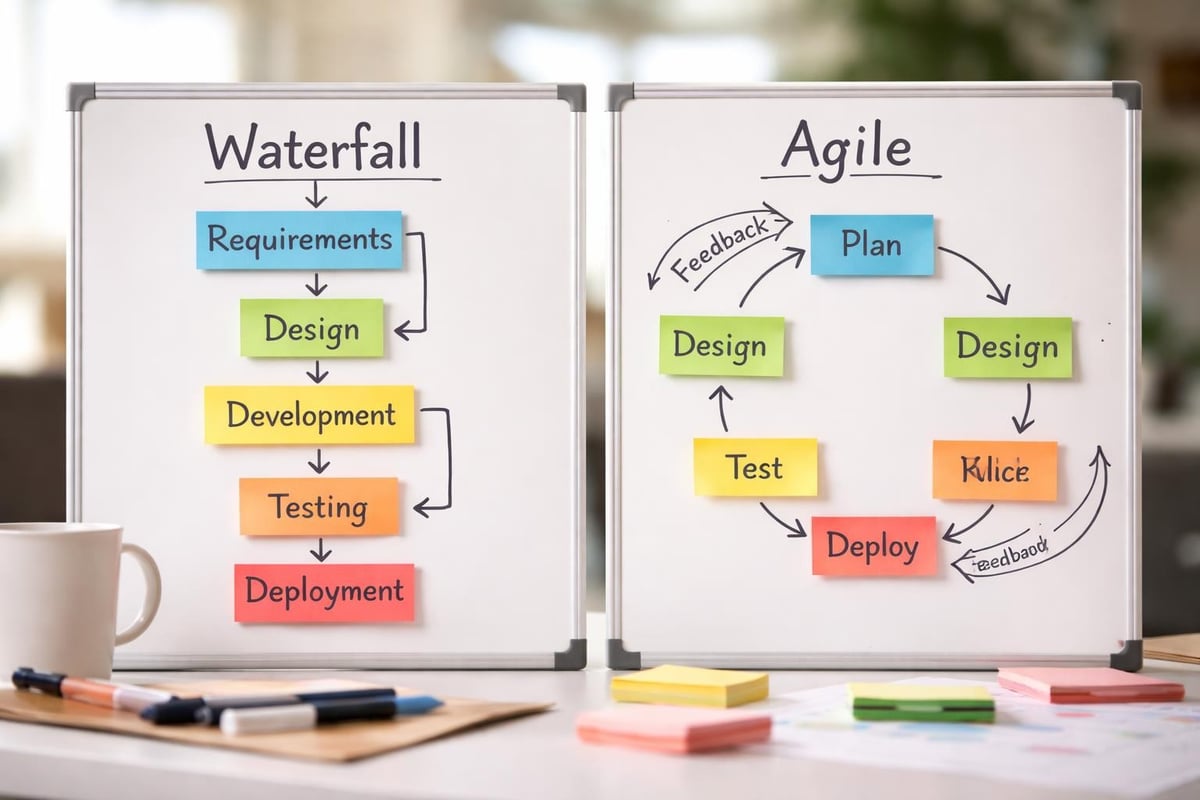
The approach you choose for application building fundamentally shapes your timeline, budget, and ultimate product quality. Traditional waterfall methodologies involve sequential phases where each stage must complete before the next begins, creating a rigid structure that can extend development timelines significantly.
Modern startups increasingly embrace Rapid Application Development (RAD), which prioritizes iterative prototyping and user feedback over extensive upfront planning. This methodology proves particularly valuable when market validation remains uncertain, allowing founders to test assumptions quickly and pivot based on real user behaviour.
Application building demands strategic decisions about methodology based on your specific circumstances:
The application development methodologies you select should align with your team's capabilities, timeline constraints, and budget parameters. Many successful startups combine elements from multiple approaches, creating hybrid methodologies tailored to their unique needs.
Before committing significant resources to application building, validation proves essential. This process involves testing whether your proposed solution addresses a genuine market need worth solving. Creating low-fidelity prototypes, conducting user interviews, and analysing competitor offerings provide valuable insights that shape your development priorities.
| Validation Method | Timeline | Cost | Reliability |
|---|---|---|---|
| User Interviews | 1-2 weeks | Low | High |
| Landing Page Tests | 2-3 weeks | Low | Medium |
| Prototype Testing | 3-4 weeks | Medium | Very High |
| Beta Launch | 6-8 weeks | High | Highest |
For founders looking to move quickly, MVP Development services can accelerate this validation phase whilst ensuring technical foundations remain solid. Working with experienced teams helps avoid common pitfalls that derail first-time builders.
Application building requires thoughtful architectural decisions that impact long-term scalability. Your technology stack, database structure, and integration approach collectively determine how easily you can adapt as user demands evolve.
Modern application building increasingly favours modular architectures where components function independently yet communicate seamlessly. This approach allows teams to update specific features without disrupting the entire system, reducing deployment risks and enabling faster iteration cycles.
The technologies powering your application influence development speed, ongoing maintenance costs, and your ability to attract technical talent. Traditional coding approaches offer maximum flexibility but demand substantial expertise and time investment.
Key considerations when choosing technologies:
No-code platforms have emerged as compelling alternatives for startups prioritizing rapid deployment. If you're weighing options, understanding no-code versus traditional development helps clarify which approach suits your specific situation.
Following best practices for application development ensures your codebase remains maintainable as complexity increases. Proper error handling, comprehensive logging, and clear documentation create foundations that support future growth.
Application building extends far beyond technical implementation. The most robust backend systems fail without intuitive interfaces that guide users naturally towards value. User experience design shapes retention rates, conversion metrics, and ultimately your application's commercial viability.
Successful application building places user needs at the centre of every design decision. This philosophy manifests through extensive user research, journey mapping, and usability testing throughout development cycles.
Start by identifying your primary user personas and their core objectives within your application. Each interface element should facilitate these goals with minimal friction. Navigation patterns must feel intuitive, information hierarchies should reflect user priorities, and interactive elements need clear affordances that communicate functionality.

Essential design principles include:
The practicallogix guide to digital application development emphasizes selecting appropriate technology stacks that support design ambitions whilst maintaining technical feasibility. Your design vision means little if implementation constraints compromise the intended experience.
Mobile devices now represent the primary access point for most digital products. Application building in 2026 demands mobile-first thinking, whether you're creating native applications, progressive web apps, or responsive web platforms. Understanding software for mobile contexts helps inform architectural decisions early in the planning phase.
Touch interactions require larger hit areas than mouse-based interfaces. Screen real estate limitations demand ruthless prioritization of features and information. Network variability necessitates offline-capable designs that gracefully handle connectivity interruptions.
Actual application building involves countless micro-decisions that collectively determine product quality. Establishing robust processes from the outset prevents technical debt accumulation that hampers future development velocity.
Version control systems provide essential infrastructure for collaborative development. They enable multiple team members to work simultaneously whilst maintaining code integrity, facilitate rollback capabilities when issues emerge, and create detailed histories documenting every change.
Comprehensive testing separates professional application building from amateur efforts. Automated testing suites catch regressions before they reach users, whilst manual testing uncovers edge cases that automated systems miss.
| Testing Type | Purpose | Frequency | Automation Potential |
|---|---|---|---|
| Unit Tests | Verify individual components | Continuous | Very High |
| Integration Tests | Validate component interactions | Daily | High |
| User Acceptance | Confirm business requirements | Weekly | Low |
| Performance Tests | Assess speed and scalability | Sprint-end | Medium |
| Security Audits | Identify vulnerabilities | Monthly | Medium |
The software development best practices outlined by industry leaders emphasize continuous integration approaches where testing occurs automatically with each code commit. This methodology catches issues immediately rather than discovering them during pre-launch stress when fixes prove most expensive.
Application building carries significant responsibility regarding user data protection. Regulatory frameworks like GDPR impose strict requirements on data handling, storage, and user consent mechanisms. Even if your initial launch targets limited markets, building compliance into foundational architecture proves far easier than retrofitting later.
Windows application development best practices highlight security as a primary concern throughout the development lifecycle. These principles apply broadly across platforms and application types, emphasizing encrypted data transmission, secure authentication mechanisms, and regular security updates.
Critical security measures include:
For non-technical founders concerned about implementing these practices effectively, resources on app development for non-technical founders provide accessible guidance on ensuring your development partners prioritize security appropriately.
Application building must balance feature richness against performance constraints. Users expect near-instantaneous response times regardless of device capabilities or network conditions. Applications that frustrate users through sluggish interactions rarely achieve sustainable growth.

Database query optimization represents one of the most impactful performance improvements. Poorly structured queries create bottlenecks that compound as data volumes grow. Implementing proper indexing, denormalization where appropriate, and query result caching dramatically reduces server response times.
Client-side performance depends heavily on asset optimization and render strategies. Images frequently constitute the largest portion of page weight, making compression and appropriate format selection essential. Modern image formats like WebP offer superior compression whilst maintaining visual quality.
Code splitting allows applications to load only necessary JavaScript initially, deferring non-critical functionality until required. This approach dramatically improves perceived performance, getting interactive content before users within seconds rather than forcing them to wait for complete application downloads.
The mobile app development best practices from industry leaders emphasize performance optimization as a continuous process rather than a one-time effort. Regular performance audits identify degradation as features accumulate, maintaining user experience quality throughout your application's evolution.
Application building culminates in deployment, yet this milestone represents a beginning rather than an ending. Successful launches require careful orchestration of technical deployment, user communication, and support infrastructure activation.
Staging environments that mirror production configurations allow final validation before exposing real users to new releases. This practice catches environment-specific issues that development and testing environments miss, reducing post-launch firefighting.
Rather than launching to your entire target audience simultaneously, phased rollouts mitigate risk whilst gathering valuable feedback. Initial releases to small user segments allow monitoring of real-world performance metrics and bug reports before broader exposure.
Effective launch phases:
Understanding app launch strategies helps founders navigate this critical transition from development to market presence. The technical aspects of deployment represent only one component of successful launches that also demand marketing coordination, customer support preparation, and analytics implementation.
Application building never truly completes. User expectations evolve, competitive landscapes shift, and technical dependencies require updates to maintain security and compatibility. Establishing systematic maintenance processes ensures your application remains viable long-term.
Analytics implementation provides essential visibility into actual user behaviour versus assumed usage patterns. Tracking feature adoption, user flows, and conversion funnels reveals optimization opportunities that product intuition alone misses. These insights inform development prioritization, ensuring resources focus on enhancements delivering maximum impact.
Feedback loops connecting users directly to your product roadmap create competitive advantages. Users who see their suggestions implemented develop loyalty exceeding what marketing campaigns achieve. Application building that incorporates systematic user input mechanisms builds communities rather than mere customer bases.
Regular dependency updates address security vulnerabilities whilst incorporating performance improvements from underlying technologies. Neglecting these updates creates technical debt that compounds over time, eventually forcing expensive remediation or complete rebuilds.
Applications that succeed face the enviable challenge of supporting rapidly expanding user bases. Application building must anticipate scaling requirements even when initial launches target modest audiences. Architectural decisions that simplify early development sometimes create scaling bottlenecks that prove expensive to address retroactively.
Database scaling strategies typically involve either vertical scaling (more powerful servers) or horizontal scaling (distributed databases). Each approach carries trade-offs regarding complexity, cost, and consistency guarantees. Modern application building increasingly favours horizontal approaches that distribute load across multiple servers, providing near-limitless growth capacity.
Caching layers dramatically reduce database load by serving frequently accessed data from memory rather than executing expensive queries repeatedly. Strategic caching implementation can reduce infrastructure costs substantially whilst improving response times for users.
| Scaling Challenge | Solution Approach | Complexity | Cost Impact |
|---|---|---|---|
| Database Performance | Read replicas + caching | Medium | Medium |
| Server Capacity | Load balancing | Low | High |
| Asset Delivery | CDN implementation | Low | Low |
| Processing Power | Background job queues | Medium | Medium |
| Search Functionality | Dedicated search service | High | Medium |
The app development best practices for 2026 emphasize modular architecture and microservices approaches that facilitate independent scaling of different application components. This granularity allows cost optimization by scaling only bottleneck services rather than entire applications.
Application building in 2026 offers unprecedented opportunities for entrepreneurs to validate ideas and reach markets rapidly. By embracing modern methodologies, prioritizing user experience, and implementing robust technical practices, founders can create applications that resonate with users whilst maintaining scalability for growth. Whether you're navigating these challenges independently or seeking expert guidance, Creator Concepts specializes in transforming visions into validated products through award-winning MVP development that gets startups to market in weeks rather than months.
© 2026 CreatorConcepts Limited
128 City Road, London EC1V 2NX