

Bubble development has transformed how entrepreneurs and startups approach building digital products in 2026. Rather than spending months recruiting development teams and managing complex codebases, founders can now create sophisticated web applications through visual programming. This shift towards no-code development hasn't just accelerated timelines; it's fundamentally changed how businesses validate ideas, iterate on feedback, and scale their products. For those unfamiliar with the platform, understanding what Bubble is provides essential context for appreciating its capabilities.
Bubble development centres on a visual programming approach that replaces traditional coding with intuitive drag-and-drop interfaces. The platform enables users to design interfaces, define workflows, and manage databases without writing a single line of code.
At its core, bubble development operates through several interconnected systems. The design editor allows you to build responsive interfaces using elements like buttons, text fields, and custom components. Workflows define the logic behind user interactions, such as what happens when someone submits a form or clicks a navigation link. The database system manages how information is stored, retrieved, and displayed throughout your application.
Every bubble development project relies on fundamental building blocks that work together seamlessly:
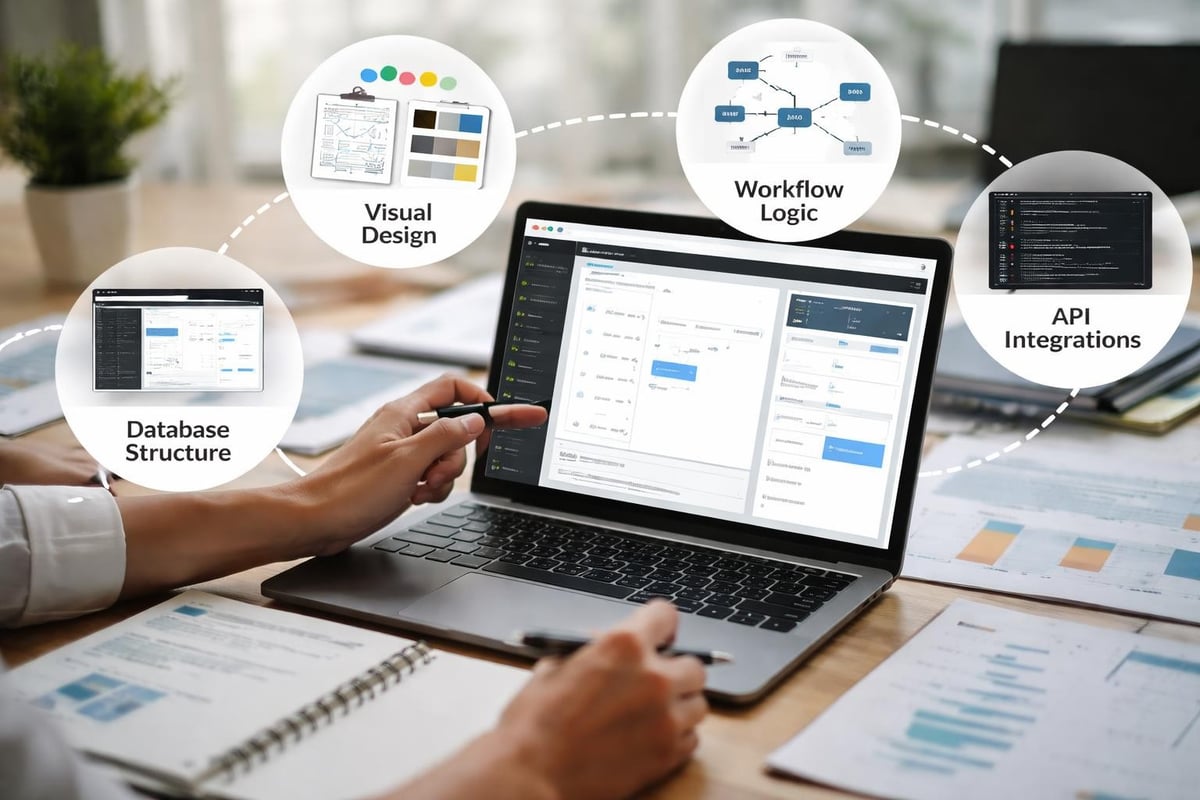
The official Bubble documentation provides comprehensive coverage of these components, but understanding how they interconnect proves more valuable than memorising individual features. Each element you place on a page can trigger workflows, display database content, and respond to user interactions dynamically.
Starting with bubble development requires a strategic approach rather than diving straight into design. Successful projects begin with clear planning and systematic execution.
Before opening the Bubble editor, define your application's core purpose and user journeys. Map out which actions users need to complete and what data your application must store. This planning prevents scope creep and keeps development focused on essential features.
Create a simple data structure diagram showing your main data types and their relationships. For instance, a project management application might have Users, Projects, and Tasks, with clear connections between them. Understanding these relationships before building saves significant restructuring time later.
| Planning Element | Purpose | Time Investment |
|---|---|---|
| User journey mapping | Identify critical paths | 2-3 hours |
| Data structure design | Define relationships | 1-2 hours |
| Feature prioritisation | Separate MVP from future | 1 hour |
| Visual wireframes | Guide design decisions | 2-4 hours |
Begin bubble development with your database structure, creating data types and fields before building interfaces. This approach ensures your pages can immediately connect to real data rather than placeholder content.
Build one complete user flow from start to finish before adding secondary features. For example, construct the entire registration, login, and dashboard sequence before developing advanced profile customisation. This methodology produces a testable application quickly and reveals integration issues early.
When designing workflows, keep actions simple and modular. Rather than creating one massive workflow with dozens of steps, break complex processes into smaller, reusable workflows. This practice improves debugging and makes future modifications straightforward.
Experienced bubble development practitioners employ sophisticated strategies that dramatically improve application performance and maintainability. These techniques separate functional prototypes from production-ready applications.
Database design in bubble development extends beyond creating data types and fields. Implement calculated fields sparingly, as they recalculate on every page load. Instead, use workflows to update values when underlying data changes.
Privacy rules form the foundation of secure bubble development. Define exactly which users can view, modify, or delete each data type. Structure these rules before launching any application to production, as retrofitting security proves considerably more difficult than building it from inception.
Consider data relationships carefully:
Bubble development applications can serve thousands of concurrent users when built with performance in mind. The platform's infrastructure scales automatically, but your application's architecture determines whether it scales efficiently.
Reduce database searches by caching frequently accessed data in custom states. When displaying large datasets, implement pagination or infinite scroll rather than loading everything simultaneously. Each unnecessary database call adds latency and consumes server capacity.
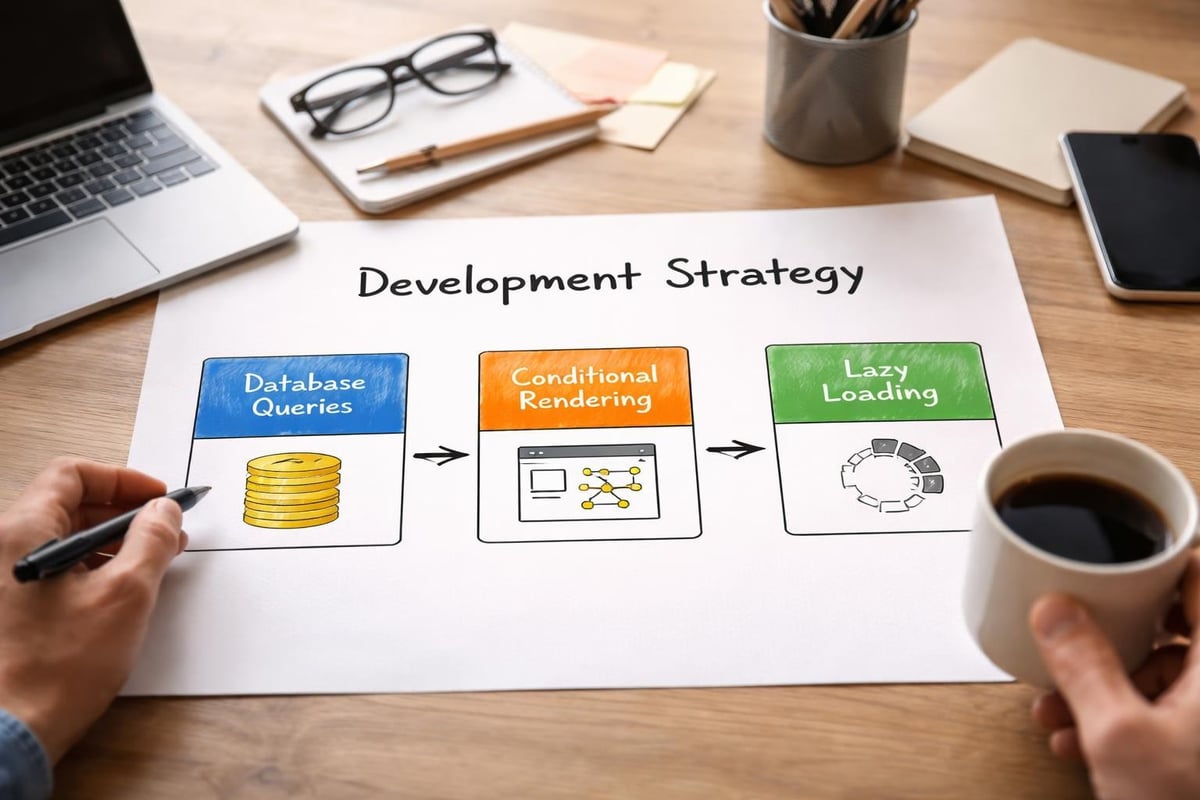
Mastering responsive design becomes crucial as your user base grows across different devices. Responsive layouts in bubble development use flexible containers and conditional visibility to adapt seamlessly. Test your application on actual mobile devices rather than relying solely on browser preview modes.
Modern bubble development rarely exists in isolation. Most applications integrate with payment processors, communication services, analytics platforms, and industry-specific APIs.
Bubble's plugin marketplace offers pre-built integrations for common services like Stripe, SendGrid, and Google Maps. These plugins accelerate bubble development by handling authentication and API complexity behind simple visual actions.
When marketplace plugins don't meet your needs, the API Connector plugin enables custom integrations. This powerful tool allows bubble development projects to communicate with virtually any REST or GraphQL API. Define your API calls once, then use them throughout your application like native Bubble actions.
Building custom plugins becomes necessary when sharing functionality across multiple applications or when requiring client-side JavaScript. This advanced bubble development technique requires JavaScript knowledge but unlocks capabilities beyond standard platform features.
User authentication in bubble development balances security with user experience. The platform includes built-in authentication handling signup, login, password resets, and session management.
Implement social login options strategically. While convenient, they require additional privacy considerations and dependency on external platforms. For many applications, email-based authentication with strong password requirements provides adequate security without external dependencies.
Consider these authentication strategies:
The workflow system forms the brain of bubble development applications, translating user actions into application behaviour. Mastering workflows separates functional applications from exceptional ones.
Bubble development workflows respond to events ranging from user clicks to scheduled triggers. Design workflows that handle one clear purpose rather than attempting multiple unrelated actions. This modularity improves debugging and enables workflow reuse across your application.
Backend workflows execute server-side without user interface interaction. Use these for scheduled tasks, bulk operations, or sensitive processes that shouldn't expose logic to browsers. Backend workflows also enable recursive operations that process large datasets incrementally.
Custom events provide powerful workflow organisation, allowing you to trigger reusable sequences from multiple locations. When several pages need identical behaviour after specific actions, custom events eliminate redundant workflow creation.
| Workflow Type | Use Case | Execution Location |
|---|---|---|
| Page workflows | User interactions | Client browser |
| Reusable element workflows | Component-specific logic | Client browser |
| Backend workflows | Scheduled tasks, bulk operations | Server-side |
| Custom events | Reusable sequences | Context-dependent |
Conditional statements in bubble development determine which actions execute based on current application state. Structure conditions clearly, testing the most likely scenarios first for optimal performance.
Dynamic expressions pull data from various sources including the current user, database searches, custom states, and URL parameters. Understanding expression evaluation order prevents unexpected results and reduces debugging time.
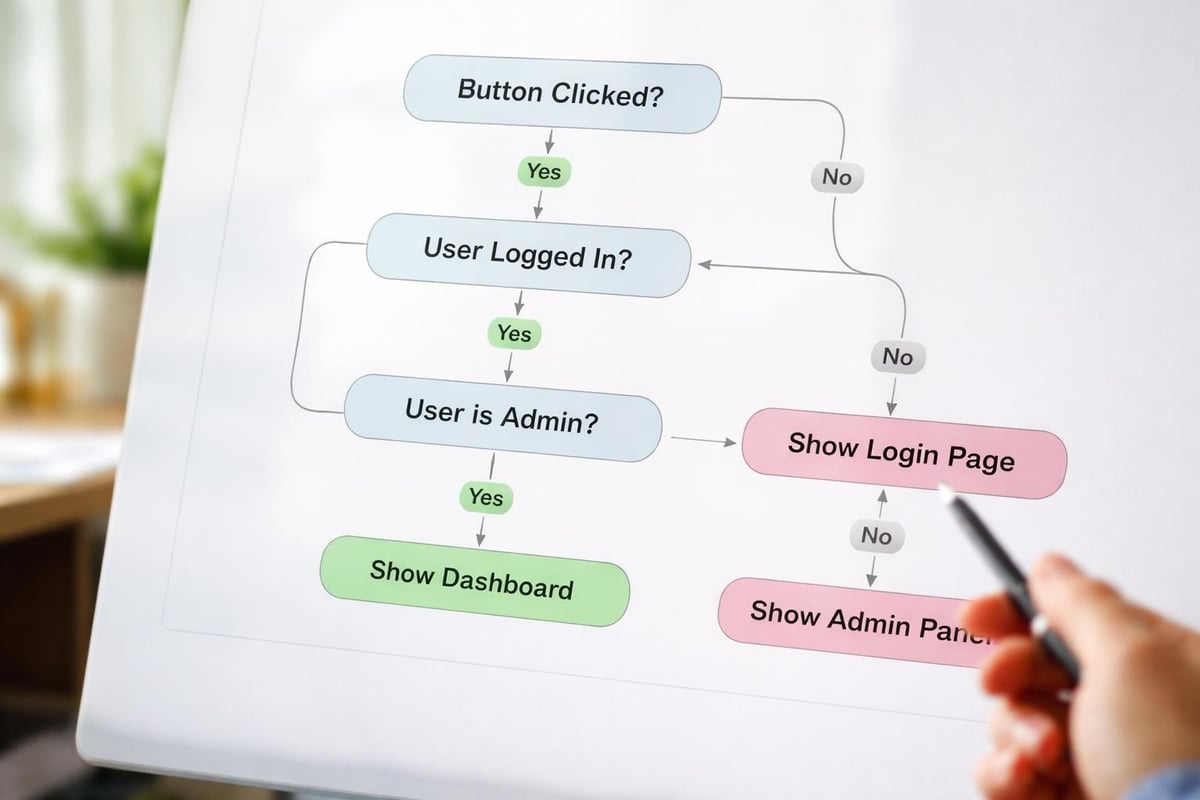
When building complex conditions, break them into smaller, named custom states or database fields with descriptive titles. Rather than writing lengthy conditional expressions directly in workflows, reference clearly named values that explain their purpose.
Professional bubble development includes rigorous testing before launch. The platform's development and live environments enable safe testing without affecting production users.
Create test user accounts representing different permission levels and user types. Walk through every user journey systematically, checking both happy paths and error scenarios. Document unexpected behaviour immediately, as reproducing issues later often proves difficult.
Testing bubble development applications extends beyond functionality to performance, security, and user experience. Use Bubble's debugger to identify slow database queries, inefficient workflows, and privacy rule gaps.
Implement these testing practices:
Launching a bubble development application marks the beginning of its lifecycle rather than the endpoint. Successful deployment requires planning for ongoing maintenance, updates, and scaling.
Bubble's version control system allows saving application snapshots before major changes. Establish a routine of creating versions before implementing significant modifications, providing rollback options if updates cause issues.
Deploy changes during low-traffic periods when possible. Test all modifications thoroughly in development before pushing to live. Even small workflow adjustments can have unexpected consequences across complex applications.
Monitor application performance through Bubble's logs and external analytics. Identify patterns in errors, slow pages, and user drop-off points. This data guides optimisation priorities and feature development decisions.
For entrepreneurs seeking to validate ideas quickly, MVP development using bubble development provides a proven path from concept to market. The platform's speed and flexibility enable iteration based on real user feedback rather than assumptions.
As your bubble development application gains users, scaling considerations shift from "will it work" to "will it work efficiently for thousands." The platform handles infrastructure scaling, but application architecture determines cost efficiency.
Database structure becomes increasingly important at scale. Denormalising certain data (storing calculated values rather than computing them repeatedly) can dramatically improve performance. However, this creates data synchronisation challenges requiring careful workflow planning.
Consider implementing caching strategies for frequently accessed, rarely changing data. Custom states can store information that updates periodically rather than querying databases constantly. This approach reduces server load whilst maintaining current information.
For applications requiring no-code web development platforms beyond Bubble's capabilities, evaluate whether specific features warrant custom development while maintaining the core application in Bubble. This hybrid approach balances speed with specialised functionality.
Bubble development has expanded into native mobile applications, enabling creation of iOS and Android apps alongside web applications. The platform's mobile development capabilities unify development across platforms.
Building mobile applications with bubble development requires consideration of mobile-specific patterns and user expectations. Navigation paradigms differ from web applications, with bottom tab bars and hamburger menus replacing traditional navigation bars.
Mobile applications access device features like cameras, location services, and push notifications. Bubble's mobile plugins provide these capabilities, though implementing them requires understanding mobile permission models and user privacy expectations.
Performance optimisation matters even more on mobile devices with variable network connections and limited processing power. Minimise initial load requirements, implement effective loading states, and cache critical data locally when possible.
The bubble development community provides extensive resources for solving problems and learning advanced techniques. Active forums, YouTube channels, and educational platforms offer guidance for developers at every level.
Transitioning to Bubble from traditional development requires adjusting mental models from code-based thinking to visual logic. Experienced developers sometimes struggle initially, as bubble development's approach differs fundamentally from traditional programming paradigms.
Engaging with the community accelerates learning considerably. Many experienced bubble developers share templates, plugins, and detailed tutorials. Contributing your own discoveries strengthens the ecosystem whilst building your reputation within the community.
Stay current with platform updates and new features. Bubble continuously evolves, adding capabilities that might solve problems you've worked around. Regular review of release notes and beta features provides competitive advantages through early adoption of powerful tools.
Bubble development represents a fundamental shift in how entrepreneurs and startups build digital products, enabling rapid validation and iteration without extensive development teams. The platform's visual programming approach, combined with powerful database management and workflow automation, creates production-ready applications in weeks rather than months. Whether you're validating your first startup idea or scaling an established product, partnering with experienced professionals accelerates your journey from concept to market. Creator Concepts specialises in transforming entrepreneurial visions into award-winning MVPs through expert bubble development, combining technical excellence with deep understanding of startup needs.
© 2026 CreatorConcepts Limited
128 City Road, London EC1V 2NX