

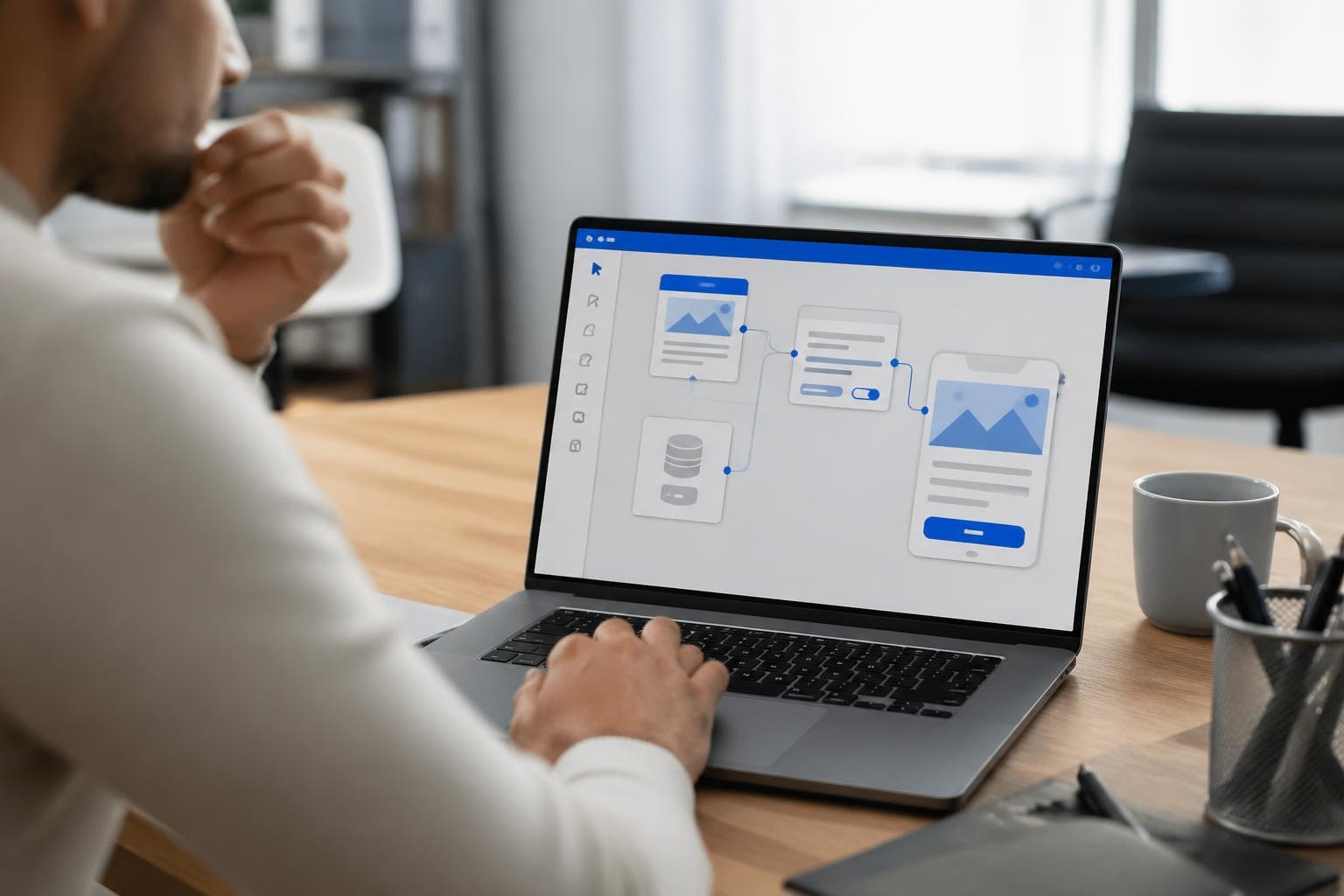
Building a web application traditionally required extensive coding knowledge, significant financial investment, and months of development time. The emergence of no-code platforms has fundamentally changed this landscape, enabling entrepreneurs and startups to transform ideas into functional products rapidly. A bubble web app represents one of the most powerful approaches to this transformation, offering visual development capabilities that make professional web application creation accessible to non-technical founders.
Understanding the Bubble Web App Platform
A bubble web app is built using Bubble's visual programming interface, which replaces traditional coding with drag-and-drop elements and logic flows. What is Bubble introduces the platform as a comprehensive solution for building responsive, database-driven applications without writing a single line of code.
The platform operates on a fundamentally different paradigm than traditional development. Instead of writing JavaScript, HTML, and CSS, creators arrange visual elements on a canvas and define their behaviour through workflows. This approach democratises web development whilst maintaining the sophistication required for production-grade applications.
Core Components of Bubble Architecture
Every bubble web app consists of several interconnected systems working together:
- Design interface: Visual canvas for arranging UI elements
- Database structure: Built-in relational database with privacy rules
- Workflow engine: Logic builder for defining application behaviour
- API connector: Integration framework for external services
- Responsive editor: Tools for mobile and tablet optimisation
The database component deserves particular attention. Unlike traditional development where database design requires SQL knowledge, Bubble provides a visual interface for creating data types, fields, and relationships. This abstraction enables founders to focus on business logic rather than technical implementation details.

Building Your First Bubble Web App
The development process for a bubble web app follows a structured approach that balances speed with scalability. Successful projects begin with clear planning rather than jumping immediately into visual development.
Planning Phase Essentials
Before touching Bubble's editor, define your core user flows and data structure. Map out who uses your application, what actions they perform, and what information needs to be stored and retrieved. This foundation prevents costly restructuring later in development.
Consider a project management application as an example. Your data types might include Users, Projects, Tasks, and Comments. Users belong to Projects, Projects contain Tasks, and Tasks have Comments. This relational structure forms the backbone of your bubble web app and should be documented before implementation.
| Development Stage | Time Investment | Key Deliverables |
|---|---|---|
| Planning | 1-2 weeks | User flows, data model, feature list |
| Design | 1-2 weeks | Wireframes, component library, style guide |
| Core Development | 3-4 weeks | MVP functionality, database structure |
| Testing & Refinement | 1-2 weeks | Bug fixes, performance optimisation |
The step-by-step guide to building a web app provides detailed workflows for each development phase. This resource proves invaluable for founders tackling their first bubble web app project.
Design and Responsiveness
Modern web applications must function flawlessly across devices. Bubble's responsive engine enables creators to define how elements behave on different screen sizes. Elements can be set to fixed widths, percentage-based widths, or configured to align relative to parent containers.
Professional bubble web app development requires attention to visual hierarchy and user experience principles. Consistent spacing, thoughtful colour palettes, and clear call-to-action buttons separate amateur projects from professional products. Many successful startups benefit from partnering with experienced teams for no-code web development platforms expertise.
Advanced Functionality and Integrations
A common misconception suggests bubble web app projects are limited to simple applications. In reality, the platform supports sophisticated functionality through native features and external integrations.
Database Operations and Privacy
Bubble's database includes robust privacy rules that control data access at the field level. These rules execute server-side, ensuring security even if a user attempts to manipulate client-side code. For a marketplace application, you might configure rules ensuring users only view their own orders whilst allowing administrators to access all data.
Key privacy rule strategies:
- Define default privacy settings that deny access unless explicitly granted
- Create conditional rules based on user roles or relationships
- Test privacy rules thoroughly using Bubble's inspection tools
- Document rule logic for future maintenance
Privacy rules operate independently from workflow logic, providing a security layer that prevents unauthorised data access regardless of application flow.
API Connections and Third-Party Services
No application exists in isolation. Payment processing, email delivery, SMS notifications, and analytics all require external service integration. The bubble web app API connector enables RESTful API connections with authentication support.
For entrepreneurs building digital product businesses, platforms like CreateSell demonstrate how comprehensive web applications can be built to sell knowledge and digital products. These platforms often combine Bubble's native functionality with payment processors like Stripe, email services like SendGrid, and analytics tools like Mixpanel.

Performance Optimisation for Production
Launching a bubble web app requires attention to performance metrics that affect user experience and search engine rankings. Page load times, database query efficiency, and asset optimisation all contribute to application success.
Database Query Optimisation
Inefficient searches constitute the primary performance bottleneck in bubble web apps. Every search operation queries the database, and poorly structured searches can slow page loads dramatically. Optimisation strategies include:
- Using constraints to limit search results
- Implementing pagination for large datasets
- Creating custom states to store frequently accessed data
- Leveraging server-side workflows for heavy operations
The Bubble interactive tutorials include specific modules on performance optimisation, demonstrating practical techniques for improving application speed.
Caching and Content Delivery
Static assets like images, documents, and media files should be optimised before upload. Large file sizes increase page load times and consume bandwidth unnecessarily. Compress images to appropriate resolutions, use modern formats like WebP where supported, and consider CDN integration for global audiences.
| Performance Metric | Target Range | Optimisation Impact |
|---|---|---|
| First Contentful Paint | Under 1.8s | Critical for engagement |
| Page Load Time | Under 3s | Affects bounce rate |
| Database Response | Under 200ms | Improves interactivity |
| Image Load Time | Under 1s | Visual performance |
Security Considerations for Bubble Web Apps
Building on a no-code platform doesn't eliminate security responsibilities. Recent incidents highlighted in reports about security concerns in popular app builders emphasise the importance of implementing proper security measures regardless of development approach.
Authentication and User Management
Every bubble web app handling user data must implement robust authentication. Bubble provides built-in user management with password encryption, email verification, and session management. However, developers must configure these features appropriately.
Essential security practices:
- Enable email verification for new user signups
- Implement password strength requirements
- Configure session timeout durations appropriately
- Use two-factor authentication for sensitive applications
- Review and test all privacy rules before launch
For applications handling sensitive information, additional security layers become critical. Custom authentication flows, IP allowlisting, and audit logging provide enhanced protection beyond standard configurations.
Data Validation and Sanitisation
User inputs represent potential vulnerabilities if not properly validated. A bubble web app must validate data types, length constraints, and format requirements on both client and server sides. Never trust client-side validation alone, as users can manipulate browser-based checks.
Research into web application security tutorials reveals common vulnerabilities that affect applications regardless of development platform. Understanding these patterns helps developers anticipate and prevent security issues during bubble web app development.
Scaling Your Bubble Web App
As your user base grows, your bubble web app must scale to accommodate increased traffic and data volumes. Bubble provides several hosting tiers with different performance characteristics and capacity limits.
Hosting Plans and Capacity
The platform offers dedicated hosting plans that provide increased capacity and performance guarantees. Higher-tier plans include additional server capacity, faster processing speeds, and priority support. Evaluate your hosting needs based on concurrent users, database size, and workflow complexity.
Many entrepreneurs launching their bubble no-code app begin with starter plans and upgrade as traction validates their concept. This approach minimises initial investment whilst maintaining scalability for growth.
Database Scaling Strategies
Large datasets require thoughtful database architecture. Implement data archiving strategies for historical records that don't require immediate access. Use scheduled workflows to perform maintenance tasks during low-traffic periods. Consider data pagination and lazy loading to reduce initial page load requirements.

Mobile Considerations and Progressive Web Apps
Modern users expect seamless experiences across devices. Whilst Bubble provides native mobile app development capabilities, many bubble web app projects succeed as progressive web applications (PWAs) that function like native apps whilst remaining web-based.
PWAs combine the reach of web applications with mobile-like features including offline functionality, push notifications, and home screen installation. This approach often proves more cost-effective than developing separate native applications, particularly for early-stage startups validating product-market fit.
Responsive Mobile Design
Creating mobile-optimised interfaces within your bubble web app requires attention to touch targets, navigation patterns, and content hierarchy. Mobile screens offer limited space, demanding thoughtful prioritisation of information and functionality.
- Design with mobile-first principles
- Test extensively on actual devices, not just simulators
- Optimise images and assets for mobile bandwidth
- Implement appropriate touch target sizes (minimum 44x44 pixels)
- Simplify navigation for smaller screens
Many founders developing comprehensive platforms benefit from professional guidance on mobile app branding to ensure consistent experiences across devices.
Real-World Success Stories
The viability of bubble web app development extends beyond theoretical capabilities. Numerous successful businesses operate production applications serving thousands of users daily.
Enterprise and Marketplace Applications
Platforms like Verlof.io demonstrate how bubble web apps can serve specific business needs with professional-grade functionality. This leave management platform handles complex workflows including approval processes, team scheduling, and administrative reporting.
Marketing technology companies leverage Bubble for sophisticated tools. AdsRaw enables businesses to create AI-generated video advertisements through a bubble web app interface, processing user inputs and delivering professional video content. Similarly, RankPill automates SEO content creation through an AI-powered bubble web app that generates blog posts and performs competitor analysis.
MVP Development for Startups
The platform excels for minimum viable product development, enabling founders to test market hypotheses without extensive technical investment. This approach aligns with lean startup methodologies that prioritise learning over premature scaling.
For entrepreneurs seeking to validate business ideas quickly, partnering with specialists in MVP development can accelerate the journey from concept to market-ready product. These partnerships combine technical expertise with business understanding to build scaleable solutions in weeks rather than months.
Common Challenges and Solutions
Despite its accessibility, bubble web app development presents challenges that benefit from awareness and preparation.
Performance Bottlenecks
Applications with complex workflows or large datasets may experience performance issues if not optimised properly. Common culprits include:
- Recursive workflows that trigger multiple database operations
- Searches without sufficient constraints
- Large repeating groups loading excessive data
- Unoptimised images and media files
Addressing these issues requires understanding Bubble's execution model. The platform processes workflows sequentially, meaning inefficient operations delay subsequent actions. Visual programming tutorials from design education resources explain how designers can leverage Bubble's capabilities whilst avoiding common pitfalls.
Learning Curve Management
Whilst bubble web app development eliminates coding requirements, it introduces new concepts requiring study and practice. Visual programming logic differs from traditional development, and database design principles remain relevant regardless of platform.
Structured learning resources accelerate competency development. The official getting started guide covers fundamental concepts, whilst advanced courses dive into specific functionality areas. Allocate time for education alongside development to build sustainable expertise.
Choosing Between DIY and Professional Development
Founders face an important decision: build independently or engage professional developers. Each approach offers distinct advantages depending on circumstances.
When to Build Yourself
Entrepreneurs with time availability and interest in learning the platform can successfully build bubble web apps independently. This approach works well for:
- Simple applications with straightforward functionality
- Projects where speed to market is less critical than cost minimisation
- Founders who enjoy technical problem-solving
- Concepts requiring extensive iteration and experimentation
Independent development provides intimate product knowledge and eliminates dependency on external teams. However, it requires significant time investment and may result in technical debt if not approached systematically.
Professional Development Advantages
Complex applications, tight timelines, or resource-constrained teams often benefit from professional bubble web app development. Agencies bring experience with comprehensive web development approaches that ensure scalability and maintainability.
Professional teams implement best practices from project inception, avoiding architectural decisions that limit future growth. They navigate performance optimisation, security configuration, and integration challenges efficiently, reducing time to market whilst delivering production-ready solutions.
Future-Proofing Your Bubble Application
Technology evolves rapidly, and applications must adapt to remain competitive. Building sustainability into your bubble web app from the beginning facilitates future enhancements.
Modular Architecture Principles
Design your application with modularity in mind. Create reusable elements, standardised workflows, and consistent naming conventions. This approach simplifies maintenance and enables team collaboration as your project grows.
Document your application architecture, including data relationships, key workflows, and integration configurations. This documentation proves invaluable when onboarding team members or troubleshooting issues months after initial development.
Staying Current with Platform Evolution
Bubble continuously releases new features and improvements. Staying informed about platform updates enables you to leverage new capabilities as they become available. Subscribe to official announcements, participate in community forums, and periodically review your application for optimisation opportunities.
The no-code landscape evolves alongside traditional development, with platforms continuously expanding capabilities. Applications built today will have access to significantly enhanced functionality in coming years, making strategic platform selection important for long-term success.
A bubble web app offers entrepreneurs and startups a powerful pathway to transforming ideas into functional, scalable products without traditional coding requirements. Success requires understanding the platform's capabilities, implementing best practices, and maintaining focus on user value over technical complexity. Whether you choose independent development or professional partnership, Bubble provides the foundation for rapid market validation and sustainable growth. Creator Concepts specialises in helping founders navigate this journey, delivering award-winning MVPs that turn concepts into market-ready products through expert Bubble development from our Canary Wharf studio.