

Building a successful application in 2026 requires more than just technical know-how. Founders and entrepreneurs must navigate a complex landscape of planning, development methodologies, user experience design, and market validation. Whether you're creating a SaaS product, mobile app, or web platform, understanding the fundamental principles that underpin successful application development will dramatically increase your chances of creating something users genuinely need and love. This comprehensive guide explores the critical steps, best practices, and strategic considerations that will help you build your application effectively whilst avoiding common pitfalls that derail many promising projects.
Before writing a single line of code or selecting a development platform, you must establish a solid foundation for your application. This foundation begins with thorough market research and user validation.
The most successful applications solve genuine problems for specific audiences. Your value proposition should articulate exactly what problem you're solving, for whom, and why your solution is superior to existing alternatives. Start by conducting customer interviews, analysing competitor offerings, and identifying gaps in the current market landscape.
Key questions to answer include:
When you build your application with a clear value proposition, every design decision and feature prioritisation becomes significantly easier. You'll have a north star guiding your development efforts rather than building features speculatively.
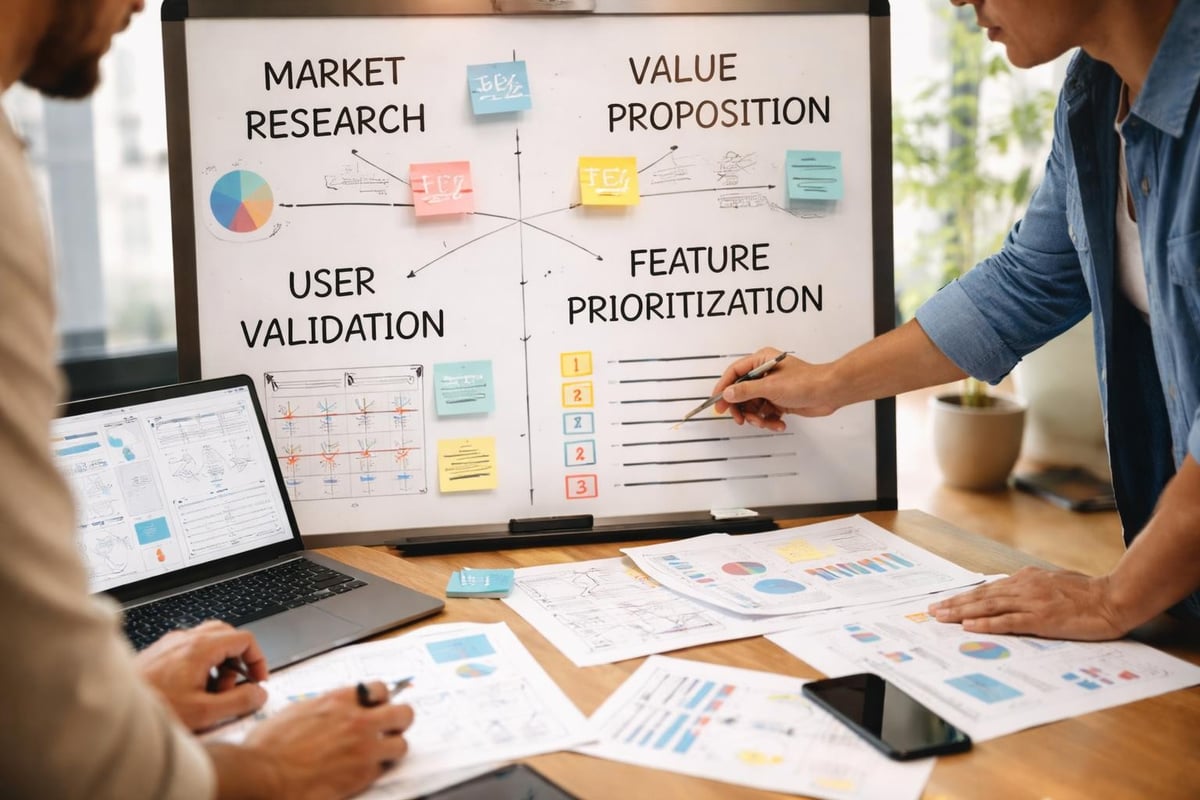
Your development approach significantly impacts speed to market, costs, and future scalability. Traditional coded development, low-code platforms, and no-code solutions each offer distinct advantages depending on your specific circumstances.
| Development Approach | Time to Market | Initial Cost | Scalability | Technical Expertise Required |
|---|---|---|---|---|
| Traditional Code | 6-12 months | £50,000-£200,000+ | Excellent | High |
| Low-Code Platforms | 3-6 months | £20,000-£80,000 | Good | Medium |
| No-Code Solutions | 2-8 weeks | £5,000-£30,000 | Good | Low |
For startups and entrepreneurs focused on rapid validation, MVP development using no-code platforms has emerged as the preferred approach. This methodology allows founders to test their hypotheses quickly without burning through limited capital or waiting months for a coded solution.
Effective application architecture balances current requirements with future growth potential. Over-engineering early can waste resources, whilst under-planning creates technical debt that becomes increasingly expensive to address.
Before designing interfaces or selecting technologies, map the complete user journey through your application. This exercise helps identify necessary features, potential friction points, and opportunities for delightful experiences.
Start with your primary user persona and document their journey from first awareness through to becoming a loyal user. Consider creating journey maps for different user types if your application serves multiple audiences. Understanding SaaS app development principles can help structure these journeys effectively, particularly for subscription-based models.
Essential user journey components:
Feature creep destroys more applications than poor execution. When you build your application, resist the temptation to include every possible feature in your initial release. Instead, identify the absolute minimum feature set that delivers your core value proposition.
The MoSCoW method provides an effective framework for feature prioritisation:
This disciplined approach ensures you can launch quickly, gather real user feedback, and iterate based on actual usage patterns rather than assumptions. Following coding best practices from the outset ensures your codebase remains maintainable as you add features post-launch.
Application success depends heavily on how users experience your product. Poor user experience drives abandonment, whilst exceptional design creates advocates who enthusiastically recommend your solution.
Your interface should feel natural and require minimal learning. Users judge applications within seconds of first interaction, making first impressions critical. Apply established design patterns that users recognise from other applications rather than reinventing interaction paradigms unnecessarily.
Core UX principles to implement:
When exploring how to build an app, pay particular attention to interface design best practices that improve usability and reduce user frustration.
In 2026, users expect seamless experiences across desktop, tablet, and mobile devices. Responsive design isn't optional; it's fundamental. Your application architecture must account for varying screen sizes, input methods, and usage contexts.
Mobile-first design often produces superior outcomes by forcing prioritisation of essential features and content. Start with the most constrained environment (mobile), then progressively enhance for larger screens rather than attempting to squeeze desktop designs into mobile viewports.

How you build your application determines long-term maintainability, performance, and ability to scale. Cutting corners during development creates technical debt that compounds over time.
Whether building with traditional code or no-code platforms, maintain high standards for organisation and documentation. Future developers (including future you) will thank you for clear naming conventions, logical structure, and comprehensive comments.
The University at Buffalo's development guidelines emphasise proper error handling, logging, and testing practices that significantly improve software quality and reduce debugging time later.
Code quality essentials include:
Security cannot be an afterthought. From initial development, implement robust authentication, authorisation, and data protection measures. Users increasingly demand transparency about data usage and expect applications to protect their information diligently.
| Security Layer | Implementation Considerations | Best Practices |
|---|---|---|
| Authentication | User identity verification | Multi-factor authentication, secure password requirements |
| Authorisation | Access control and permissions | Role-based access, principle of least privilege |
| Data Encryption | Information protection | HTTPS, encrypted storage for sensitive data |
| Input Validation | Preventing malicious inputs | Server-side validation, sanitisation routines |
Following Microsoft's application development best practices ensures robust security foundations that protect both your users and your business reputation.
Thorough testing separates professional applications from amateur projects. When you build your application, allocate significant time and resources to testing across multiple dimensions.
Effective testing combines automated and manual approaches across different testing types. Unit tests verify individual components function correctly, integration tests ensure components work together properly, and user acceptance testing validates that real users can accomplish their goals.
Testing pyramid priorities:
Automated testing catches regressions quickly and provides confidence when making changes. However, manual testing by actual users reveals usability issues and edge cases that automated tests miss. Beta testing programmes give invaluable insights before full launch.
Users abandon slow applications ruthlessly. Performance directly impacts user satisfaction, conversion rates, and search engine rankings. Monitor load times, database query efficiency, and API response times throughout development.
Establish performance budgets early and refuse to compromise them without compelling justification. Best practices for application development emphasise continuous performance monitoring and optimisation throughout the development lifecycle, not just before launch.
Launching your application marks a beginning, not an ending. Successful founders view launch as the start of an iterative improvement process guided by real user data and feedback.
Your launch strategy should generate initial traction whilst collecting feedback for rapid iteration. Identify early adopters willing to provide honest feedback in exchange for early access or preferential pricing.
Launch preparation checklist:
The seven rules for building an application emphasise thorough testing and preparation before release to ensure a smooth launch experience that creates positive first impressions.

Post-launch, your primary focus should be collecting and acting on user feedback. Implement multiple feedback channels including in-app mechanisms, customer support interactions, usage analytics, and direct user interviews.
| Feedback Type | Collection Method | Frequency | Primary Use |
|---|---|---|---|
| Quantitative | Analytics dashboards | Continuous | Usage patterns, conversion metrics |
| Qualitative | User interviews | Monthly | Deep insights, pain points |
| Support Data | Ticket analysis | Weekly | Common issues, feature requests |
| Surveys | Periodic questionnaires | Quarterly | Satisfaction, feature priorities |
Analyse this data regularly and establish clear processes for translating insights into prioritised improvements. When exploring top tools for community app development, consider how different platforms support ongoing iteration and feature additions.
As user numbers grow, your application must scale efficiently without degrading performance or user experience. Planning for scale from the beginning prevents painful and expensive rebuilds later.
Your hosting infrastructure and database architecture significantly impact scalability. Cloud platforms offer flexibility to scale resources dynamically based on demand, whilst proper database design prevents bottlenecks as data volumes increase.
Consider implementing caching strategies to reduce database load, optimising queries for efficiency, and establishing backup and disaster recovery procedures. Understanding implementing third-party API integrations helps you leverage existing services for functionality like payments, communications, and authentication rather than building everything from scratch.
All applications accumulate technical debt over time. The key is managing it proactively rather than letting it compound until major refactoring becomes unavoidable. Allocate regular development time to addressing technical debt, updating dependencies, and refactoring problematic code.
Technical debt management strategies:
Define clear success metrics before launch and track them rigorously afterwards. What gets measured gets improved, so establish comprehensive analytics that capture both business outcomes and user behaviour.
Different applications require different metrics, but certain KPIs apply universally. User acquisition, activation, retention, revenue, and referral (the AARRR framework) provide comprehensive insight into application health.
Essential metrics for most applications:
Monitor these metrics through dashboards that make trends immediately visible. When metrics decline, investigate quickly to identify causes and implement solutions. The best practices for web application development include establishing comprehensive monitoring and alert systems that notify you of issues before they impact significant user numbers.
Once you build your application and achieve initial traction, optimise through systematic testing rather than gut feeling. A/B testing allows you to validate changes with real users before committing fully.
Test elements like onboarding flows, pricing structures, feature placements, and messaging to continuously improve conversion and engagement. Establish clear hypotheses before each test, ensure statistical significance before drawing conclusions, and document learnings to inform future decisions.
Building a successful application requires balancing strategic planning, user-centric design, technical excellence, and continuous iteration based on real-world feedback. The most critical factor is starting with a clear understanding of the problem you're solving and validating your solution with real users before investing heavily in development. Whether you choose traditional development or modern no-code approaches, maintaining focus on delivering genuine value whilst building with quality will dramatically increase your chances of creating an application users love. If you're ready to transform your idea into a validated, market-ready product, Creator Concepts specialises in helping founders build scalable MVPs using proven methodologies that accelerate time to market whilst maintaining the flexibility to iterate based on user feedback.
© 2026 CreatorConcepts Limited
128 City Road, London EC1V 2NX