

Building a successful application in 2026 requires more than just a brilliant idea. Whether you're a first-time founder or an experienced entrepreneur, understanding how to develop your app strategically can mean the difference between market validation and costly missteps. The landscape of application development has evolved significantly, with no-code platforms and modern methodologies enabling faster time-to-market whilst maintaining quality and scalability. This comprehensive guide explores the essential steps, decisions, and best practices that will help you navigate the development journey with confidence.
The first critical decision when you develop your app involves choosing the right development approach. Traditional coding remains powerful for complex enterprise solutions, but it often requires substantial time and financial investment that early-stage startups struggle to justify.
No-code platforms have matured considerably, offering sophisticated capabilities that were previously only available through custom coding. These platforms enable founders to validate ideas quickly, iterate based on user feedback, and reach market in weeks rather than months.
Key advantages of no-code development include:
The best mobile app development software continues to expand, offering increasingly powerful features that blur the lines between no-code and traditional development.
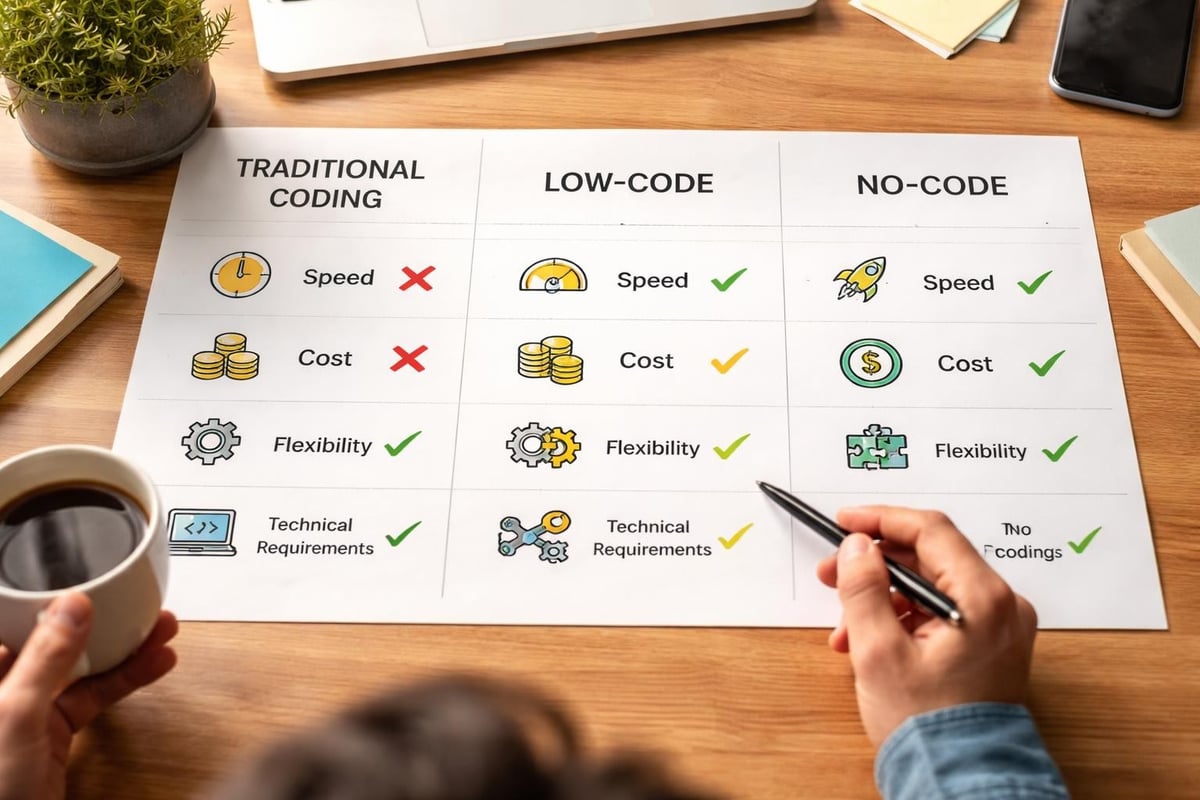
Before committing to a development path, assess your specific requirements systematically. Not every application suits every approach, and understanding your constraints helps you make informed decisions.
| Consideration | Traditional Code | Low-Code | No-Code |
|---|---|---|---|
| Time to Market | 6-12 months | 2-4 months | 2-8 weeks |
| Initial Investment | £50,000-£200,000 | £20,000-£80,000 | £5,000-£30,000 |
| Technical Team Required | Yes | Partial | No |
| Customization Level | Unlimited | High | Moderate-High |
| Scalability | Unlimited | High | Medium-High |
When you develop your app using the right approach for your situation, you maximize both efficiency and effectiveness.
Successful applications begin with thoughtful planning. The application development best practices emphasize starting with a clear architectural vision that supports both current needs and future growth.
Start by identifying the absolute minimum features required to solve your users' primary problem. This minimum viable product (MVP) approach prevents feature bloat and enables faster validation.
Your core feature set should include:
Map these features into detailed user flows that illustrate every step a user takes to complete key tasks. These flows become the blueprint when you develop your app, ensuring nothing critical gets overlooked.
Proper database design prevents costly refactoring later. Consider how different data types relate to each other and what queries your application will frequently perform.
Essential database planning steps:
When working with platforms like Bubble.io for API integrations, understanding your data structure becomes even more critical for seamless third-party connections.
Outstanding applications combine functionality with exceptional user experience. The design phase deserves substantial attention, as it directly impacts user adoption and retention rates.
Users expect applications to feel familiar whilst offering unique value. Study successful applications in your category to understand established patterns, then identify opportunities to differentiate through superior design.
Follow platform-specific guidelines when targeting particular ecosystems. Microsoft's app development documentation provides comprehensive guidance for Windows applications, whilst Apple's development resources cover iOS standards extensively.
Critical design considerations include:
With mobile usage dominating web traffic, adopting a mobile-first approach ensures your application performs excellently on smaller screens. This strategy involves designing for mobile constraints first, then enhancing for larger displays.
Mobile-first design forces prioritization of essential features and content. When you develop your app with mobile as the primary target, you create cleaner, more focused experiences that work everywhere.

Development execution determines whether your vision becomes reality on schedule and within budget. Balancing speed with quality requires disciplined processes and appropriate tooling.
Agile practices enable continuous progress whilst maintaining flexibility to adjust based on new information. Breaking development into short sprints (typically two weeks) creates natural checkpoints for assessment and course correction.
Agile sprint structure:
This iterative approach proves particularly effective when you develop your app as an MVP, allowing rapid incorporation of user feedback.
Quality assurance cannot be an afterthought. The best practices in Android app development emphasize integrating testing throughout the development lifecycle rather than treating it as a final phase.
| Testing Type | Purpose | When to Perform |
|---|---|---|
| Unit Testing | Verify individual components | During development |
| Integration Testing | Ensure components work together | After feature completion |
| User Acceptance Testing | Validate against requirements | Before release |
| Performance Testing | Confirm speed and scalability | Before and after major changes |
| Security Testing | Identify vulnerabilities | Throughout development |
Comprehensive testing catches issues early when they're less expensive to fix. For startups looking to develop SaaS applications, robust testing becomes even more critical as you're building for multiple concurrent users.
Security breaches destroy trust and damage reputations irreparably. Building security into your application from the foundation proves far more effective than attempting to add it later.
Modern applications face sophisticated threats requiring multi-layered defence strategies. Implementing security best practices protects both your users and your business.
The University at Buffalo's app development guidelines provide extensive security recommendations applicable across platforms and technologies.
GDPR, CCPA, and other privacy regulations impose specific requirements on how applications collect, store, and process personal data. Non-compliance risks substantial fines and legal consequences.
Key compliance requirements:
When you develop your app with privacy-by-design principles, compliance becomes a natural outcome rather than a retrofitted burden.
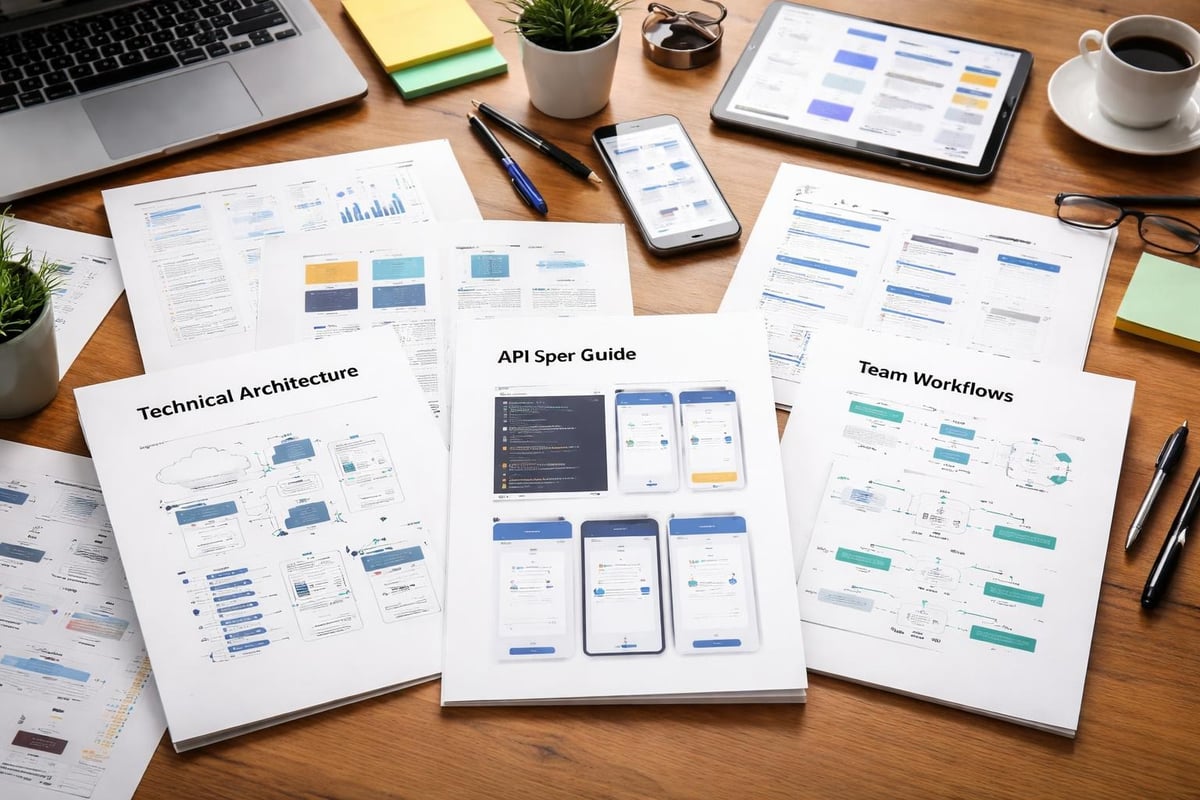
Proper documentation accelerates development, facilitates team collaboration, and simplifies future maintenance. The essential role of app documentation extends beyond code comments to encompass architecture decisions, API specifications, and user guides.
Different stakeholders require different documentation. Creating appropriate resources for each audience ensures everyone has the information they need.
Developer documentation includes:
User documentation encompasses:
Maintaining current documentation requires discipline but pays dividends in reduced support costs and smoother team onboarding.
Launch represents the beginning of your application's market journey, not the conclusion of development. Successful founders approach launch strategically, gathering data to inform continuous improvement.
Thorough pre-launch preparation prevents embarrassing issues and creates momentum. Develop a comprehensive checklist covering technical, marketing, and operational readiness.
When working with agencies that help founders build proof of concepts using no-code, coordinating launch timing with validation milestones ensures you're releasing to market at the optimal moment.
Launch day metrics provide the first real-world feedback on your application. Monitoring user behaviour reveals which features resonate and which cause confusion or friction.
Critical post-launch metrics:
| Metric Category | Key Indicators | Action Triggers |
|---|---|---|
| User Acquisition | Sign-ups, conversion rates | Low conversion suggests onboarding issues |
| Engagement | Daily active users, session duration | Declining engagement indicates value problems |
| Performance | Page load times, error rates | Performance issues drive user abandonment |
| Retention | Return visitors, churn rate | High churn reveals product-market fit gaps |
Analyse these metrics weekly during the first month, then adjust your review cadence based on traffic patterns. When you develop your app iteratively based on actual usage data, you make evidence-based decisions rather than assumptions.
The most successful applications never stop evolving. Establish regular improvement cycles that incorporate user feedback, address technical debt, and add valuable features.
Effective improvement prioritization considers:
For startups exploring community app development tools, understanding your community's evolving needs becomes particularly important for maintaining engagement.
As your user base grows, your infrastructure must scale accordingly. Planning for growth prevents performance degradation and service interruptions that damage user trust.
Application speed directly impacts user satisfaction and conversion rates. Studies consistently show that users abandon slow applications within seconds.
Regular performance audits identify bottlenecks before they impact user experience. When you develop your app with performance as a priority, you build a foundation that supports sustainable growth.
Proactive monitoring detects issues before users encounter them. Implementing comprehensive monitoring creates early warning systems that enable rapid response.
Essential monitoring components include:
Regular maintenance windows allow you to apply updates, optimize databases, and address technical debt without disrupting users. Communicating maintenance schedules transparently builds user trust and manages expectations.
For many founders, partnering with experienced development agencies accelerates time-to-market whilst maintaining quality. The right partner brings technical expertise, process discipline, and strategic guidance.
Not all development agencies deliver equivalent value. Careful evaluation ensures you select a partner aligned with your needs, timeline, and budget.
Critical evaluation criteria:
Agencies specializing in MVP development understand the unique challenges startups face, balancing speed with quality to help founders validate ideas efficiently.
Successful agency partnerships require active collaboration rather than passive delegation. Establishing clear expectations and communication patterns from the outset prevents misunderstandings.
Partnership best practices:
When you develop your app collaboratively with an experienced partner, you benefit from their accumulated knowledge whilst maintaining strategic control over your product vision.
Financial planning determines whether your development journey concludes successfully or stalls mid-project. Realistic budgeting accounts for all costs, including those easily overlooked.
Application development encompasses more than just coding. Thorough budgets include design, testing, deployment, and ongoing operational costs.
| Cost Category | Typical Range (GBP) | Notes |
|---|---|---|
| Design and UX | £3,000-£15,000 | Varies with complexity and screen count |
| Development | £10,000-£100,000+ | Depends on features and approach |
| Testing and QA | £2,000-£10,000 | Essential for quality assurance |
| Deployment | £500-£2,000 | Initial setup and configuration |
| Monthly Hosting | £50-£500+ | Scales with usage |
| Maintenance | £1,000-£5,000/month | Updates, fixes, support |
No-code approaches typically reduce development costs by 60-80% compared to traditional coding, enabling startups to allocate resources across marketing, customer acquisition, and other critical areas.
Securing adequate funding ensures you can complete development without compromising quality. Multiple funding options exist, each with distinct advantages and trade-offs.
Common funding approaches:
When you develop your app using efficient methodologies like no-code, reduced capital requirements expand your funding options and extend your runway.
Successfully developing an application in 2026 requires strategic planning, disciplined execution, and continuous iteration based on user feedback. By choosing appropriate development approaches, prioritizing user experience, implementing robust security, and planning for scale, you create applications that solve real problems and deliver genuine value. Creator Concepts specializes in helping entrepreneurs and startups navigate this journey, building award-winning MVPs that validate ideas quickly and position founders for sustainable growth. Whether you're exploring your first application or scaling an existing platform, partnering with experienced specialists accelerates your path from concept to market success.
© 2026 CreatorConcepts Limited
128 City Road, London EC1V 2NX