

Finding the right technical talent to bring your startup vision to life can feel overwhelming, particularly when you're navigating the rapidly evolving landscape of no-code development. As Bubble.io continues to dominate the MVP development space in 2026, knowing how to identify, evaluate, and hire bubble developer talent has become a critical skill for founders and entrepreneurs. This comprehensive guide walks you through every aspect of the hiring process, from understanding market rates to implementing effective vetting strategies that ensure you partner with developers who can transform your ideas into scalable applications.
The no-code movement has matured significantly, and Bubble developers now represent a specialized subset of technical talent with unique capabilities. Unlike traditional software engineers, these professionals combine visual programming expertise with an understanding of database architecture, API integration, and user experience design.
The current market reflects several key trends:
The official Bubble Developer Certification has established industry standards for skill verification, making it easier for startups to assess technical competency. However, certification alone doesn't guarantee the right fit for your specific project requirements.
Demand for experienced Bubble developers has intensified as more companies recognize the platform's potential for rapid MVP development. Traditional development agencies increasingly incorporate no-code development platforms into their service offerings, creating competition for independent talent.
Geography plays a diminishing role in 2026, with remote collaboration tools enabling startups to access global talent pools. This democratisation benefits smaller ventures but also means you're competing with well-funded enterprises for the same developers.

When you hire bubble developer talent, your sourcing strategy directly impacts the quality of candidates you'll evaluate. Multiple channels exist, each with distinct advantages and limitations.
Dedicated freelance platforms now cater specifically to no-code developers. Services like Lemon.io emphasize the importance of portfolio evaluation and architectural skills when selecting Bubble specialists. These curated marketplaces pre-vet candidates, saving you considerable screening time.
Primary sourcing channels include:
The Bubble forum community remains an invaluable resource, with developers often sharing their availability and showcasing recent projects. Understanding what employers look for in candidates from the developer perspective can help you craft more appealing job descriptions.
The build-or-buy decision applies equally to development resources. Partnering with established agencies provides structured project management and quality assurance, though typically at premium rates. Independent contractors offer flexibility and often more competitive pricing but require more hands-on management.
Creator Concepts specializes in MVP Development that helps founders validate their ideas through scaleable MVPs designed, built, and launched in weeks, demonstrating the agency model's efficiency advantages.
When evaluating this decision, consider your internal technical capacity, project complexity, and timeline constraints. Projects requiring ongoing maintenance and iteration may benefit from stable agency relationships, whilst discrete MVPs might suit independent contractors.
Cost structures vary dramatically based on developer experience, geographic location, engagement model, and project scope. Understanding these variables helps you set realistic budgets and avoid common pricing pitfalls.
According to detailed cost analyses, Bubble developer rates in 2026 span a considerable range. Junior developers typically charge £25-45 per hour, whilst senior specialists command £60-120 per hour or more for complex enterprise projects.
| Experience Level | Hourly Rate (£) | Fixed Project Range (£) | Best Suited For |
|---|---|---|---|
| Junior (0-2 years) | 25-45 | 2,000-6,000 | Simple MVPs, prototypes |
| Mid-Level (2-5 years) | 45-75 | 6,000-15,000 | Feature-rich applications |
| Senior (5+ years) | 75-120+ | 15,000-40,000+ | Complex systems, scaling |
The structure of your engagement significantly impacts both cost and outcomes. Fixed-price projects provide budget certainty but may limit flexibility as requirements evolve. Hourly arrangements offer adaptability but require careful scope management to control costs.
Retainer agreements work particularly well for ongoing product development, ensuring developer availability whilst building institutional knowledge about your application. Many successful startups maintain monthly retainers of 40-80 hours with their primary Bubble developer.
Consider how Bubble software development costs align with your runway and funding situation. Under-budgeting technical resources frequently leads to rushed implementations and technical debt.
The interview and evaluation phase determines whether you hire bubble developer talent capable of executing your vision. Structured assessment processes significantly improve hiring outcomes compared to conversational interviews alone.
A developer's previous work provides the most reliable indicator of future performance. Request access to live applications rather than just screenshots, allowing you to evaluate performance, user experience, and technical implementation quality.
Key portfolio evaluation criteria:
Examining projects similar to your planned application offers particular value. If you're building a SaaS product, prioritize developers with demonstrated subscription management and user authentication experience.
Beyond portfolio review, direct technical evaluation reveals problem-solving approaches and depth of platform knowledge. Consider providing a small paid test project that mirrors challenges your actual application will face.
Effective test projects typically involve:
As experienced practitioners note, paid trial periods provide mutual benefit by reducing hiring risk whilst compensating developers fairly for their time.

Technical proficiency represents only one dimension of successful developer relationships. Communication skills, project management approach, and cultural alignment often determine project success as much as coding ability.
During interviews, assess how candidates explain technical concepts, ask clarifying questions, and propose solutions to ambiguous requirements. Developers who ask insightful questions about your business model and user needs typically deliver more aligned solutions.
Request examples of how they've handled scope changes, timeline pressures, or technical limitations in previous projects. Their responses reveal adaptability and professional maturity.
Confirm compatibility with your preferred project management and communication tools. Most Bubble developers work comfortably with platforms like Notion, Trello, Slack, and Figma, but explicit alignment prevents friction.
Understanding their typical development workflow helps set appropriate expectations. Ask about:
Time zone overlap becomes particularly relevant for remote engagements requiring real-time collaboration. Minimum four-hour overlaps typically support effective working relationships.
Even experienced founders make predictable errors when hiring technical talent. Awareness of these patterns helps you navigate the process more successfully.
The cheapest developer rarely delivers the best return on investment. Inadequate technical implementations create compounding problems as your application scales, ultimately costing far more than the initial savings.
Multiple resources highlight common mistakes to avoid, with underinvestment consistently appearing as a primary issue. Consider the total cost of ownership, including maintenance, debugging, and potential rebuilds.
Pressure to launch quickly sometimes leads founders to skip thorough evaluation processes. This approach frequently results in mismatched expectations, technical debt, and wasted development time.
Red flags during the hiring process include:
Dedicated vetting services like those offered by pre-vetted developer platforms can accelerate the process whilst maintaining quality standards through AI-powered matching systems.
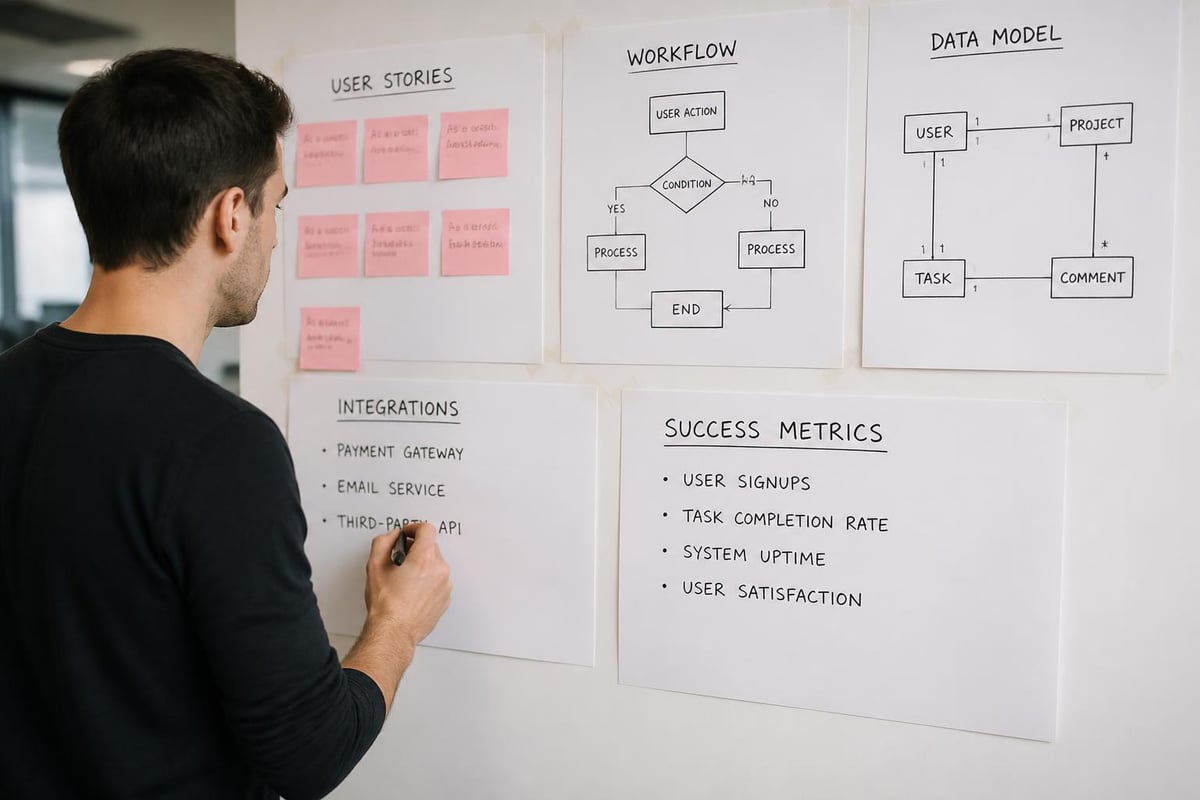
Vague project briefs waste everyone's time and virtually guarantee disappointing outcomes. Before beginning your search to hire bubble developer resources, invest time documenting your requirements, user stories, and success criteria.
Effective project briefs include user personas, key workflows, integration requirements, and MVP scope boundaries. Resources on who can build your Bubble app often emphasize specification clarity as a success predictor.
The relationship with your Bubble developer shouldn't end at project delivery. Cultivating ongoing partnerships provides continuity, institutional knowledge, and faster iteration cycles.
Proper onboarding accelerates productivity and establishes working norms. Provide context about your business model, target users, competitive landscape, and strategic priorities. This foundation enables developers to make informed technical decisions aligned with business objectives.
Document and share any existing technical assets, brand guidelines, API credentials, and previous development work. Clarity prevents duplicated effort and conflicting implementations.
Establish regular check-ins beyond just deliverable reviews. Weekly video calls discussing progress, blockers, and upcoming priorities maintain alignment and surface issues early when they're easier to address.
Encourage developers to suggest improvements beyond your explicit requirements. Experienced Bubble specialists often identify opportunities for optimization, enhanced user experience, or technical simplification that you might miss.
As your application gains traction, your development needs will evolve. Discuss growth scenarios with your initial developer, including their capacity for increased workload and interest in team collaboration if you expand.
Some developers prefer solo work, whilst others thrive in collaborative environments. Understanding these preferences early prevents mismatched expectations as your needs change. Examining successful development projects can provide insight into different team structures and their outcomes.
Bubble's unique characteristics create specific hiring considerations distinct from traditional development or other no-code platforms. Understanding these nuances helps you evaluate candidates more effectively.
Bubble's database system differs significantly from traditional SQL or NoSQL implementations. Developers must understand data relationships, privacy rules, and query optimization within Bubble's constraints.
Strong candidates articulate trade-offs between different database structures, explain when to use option sets versus separate data types, and demonstrate awareness of performance implications for large datasets.
Bubble's extensibility through plugins enables capabilities beyond native features. Experienced developers maintain familiarity with reliable plugin publishers, understand when custom plugins justify development investment, and can evaluate plugin quality and maintenance status.
For projects requiring payment processing, developers should demonstrate specific experience integrating Stripe payments or other financial APIs within Bubble's framework.
Mobile responsiveness in Bubble requires particular attention to element hierarchy, conditional visibility, and layout strategies. Review candidate portfolios specifically for mobile optimization quality, as this remains a common weakness among less experienced developers.
Testing applications across devices during portfolio review reveals their commitment to responsive design. Applications that function beautifully on desktop but poorly on mobile indicate insufficient attention to this critical aspect.
Different application types demand specialized knowledge beyond general Bubble proficiency. When possible, prioritize developers with relevant industry experience.
Applications with recurring revenue models require sophisticated user management, subscription logic, and payment processing. Developers need experience implementing role-based access controls, usage tracking, and billing automation.
Understanding whether Bubble suits SaaS products helps frame realistic expectations. The right developer can articulate both Bubble's strengths and limitations for your specific SaaS model.
Two-sided marketplaces introduce complexity through distinct user types, matching algorithms, transaction facilitation, and trust mechanisms. Developers need experience balancing competing stakeholder needs and implementing sophisticated search and filtering capabilities.
Review how candidates have approached user verification, messaging systems, and payment escrow in previous marketplace projects. These features require careful planning and robust implementation.
Whilst Bubble primarily creates web applications, experienced developers can implement progressive web app features providing app-like experiences. Understanding mobile app considerations becomes important when your target users primarily access applications on mobile devices.
Candidates should discuss approaches to offline functionality, push notifications, and home screen installation when mobile experience is paramount to your application.
Professional developer relationships require appropriate legal frameworks protecting both parties and clarifying ownership, responsibilities, and confidentiality obligations.
Ensure contracts explicitly transfer intellectual property rights to your company upon payment. Standard freelancer agreements may not automatically include IP assignment, creating potential ownership disputes.
Essential contract elements include:
Consider engaging legal counsel familiar with software development agreements rather than relying on generic templates found online.
Applications handling user data must comply with GDPR, data protection regulations, and industry-specific compliance requirements. Your developer should understand these obligations and implement appropriate security measures.
Discuss data handling practices, backup procedures, and access controls during the hiring process. Developers with healthcare, financial, or other regulated industry experience typically demonstrate stronger security awareness.
Successfully hiring the right Bubble developer transforms your startup journey from concept to launched product efficiently and effectively. By following structured vetting processes, setting clear expectations, and building collaborative partnerships, you position your project for both immediate delivery success and long-term scalability. Whether you're evaluating individual contractors or considering agency partnerships, Creator Concepts brings award-winning MVP development expertise to entrepreneurs and startups seeking to validate their ideas through professionally built, scaleable Bubble applications delivered in weeks rather than months.
© 2026 CreatorConcepts Limited
128 City Road, London EC1V 2NX