

The landscape of io application development has transformed dramatically over recent years, becoming central to how startups and entrepreneurs build connected, scalable products. Whether you're developing an Internet of Things solution, a distributed computing platform, or a data-intensive application, understanding the fundamentals of io applications is essential for success in 2026. This comprehensive guide explores the architecture, security considerations, development best practices, and strategic approaches that will help you build robust io applications without requiring extensive technical expertise.
An io application fundamentally differs from traditional software by how it handles input/output operations, data streams, and real-time processing. These applications manage continuous data flow between devices, sensors, cloud infrastructure, and end users, requiring careful architectural planning from the outset.
The core components of any io application include data collection layers, processing engines, storage systems, and presentation interfaces. Each component must communicate efficiently whilst maintaining security and scalability. Modern io applications leverage cloud infrastructure to handle variable workloads, allowing startups to scale resources based on actual demand rather than predicted capacity.
Successful io application development relies on proven architectural patterns that address common challenges:
When planning your io application architecture, consider how data will flow through your system. No-code platforms have made it considerably easier for non-technical founders to implement these patterns without writing extensive code, democratising access to sophisticated application development.

Security represents one of the most critical aspects of io application development, particularly as these systems often handle sensitive data across multiple touchpoints. The distributed nature of io applications creates numerous potential vulnerabilities that require comprehensive protection strategies.
Implementing robust security begins with understanding the threat landscape specific to io applications. According to security best practices on io.net, developers must protect not only user data but also the infrastructure and communication channels connecting various system components.
| Security Layer | Implementation Strategy | Priority Level |
|---|---|---|
| Authentication | Multi-factor authentication, OAuth 2.0 | Critical |
| Data Encryption | End-to-end encryption, TLS 1.3 | Critical |
| Access Control | Role-based permissions, least privilege | High |
| Network Security | Firewalls, VPNs, secure protocols | High |
| Monitoring | Real-time alerts, audit logs | Medium |
Authentication and authorization form the foundation of io application security. Every device, user, and service connecting to your application must verify its identity through secure methods. Modern authentication protocols support passwordless options, biometric verification, and time-limited tokens that enhance both security and user experience.
Data encryption protects information both in transit and at rest. For io applications handling continuous data streams, this means implementing encryption that doesn't significantly impact performance. The security considerations outlined for io.Connect Browser demonstrate how platform-specific security settings can enhance overall application protection.
When building an io application that connects physical devices or sensors, endpoint security becomes paramount. Each connected device represents a potential entry point for malicious actors.
Following IoT security best practices helps establish defense-in-depth strategies that protect your application even if individual security layers are compromised. This approach proves particularly valuable for startups that may not have dedicated security teams but need enterprise-grade protection.
Building an io application that scales efficiently requires strategic planning from the initial development phase. Scalability isn't merely about handling more users; it encompasses data volume, processing capacity, storage requirements, and geographic distribution.
The MVP approach to developing scalable applications allows entrepreneurs to validate core functionality before investing in extensive infrastructure. This strategy proves particularly effective for io applications where requirements often evolve based on real-world usage patterns.
IO applications generate substantial data volumes that require thoughtful management strategies. Your approach to data storage significantly impacts both performance and costs as your application grows.
Time-series databases excel at handling timestamped data from sensors and devices, offering optimized query performance for temporal patterns. Distributed databases provide redundancy and geographic distribution, ensuring data availability even during regional outages. Data lakes accommodate both structured and unstructured data, supporting advanced analytics and machine learning applications.
Consider implementing data lifecycle policies that automatically archive or delete older data based on business requirements. This practice reduces storage costs whilst maintaining compliance with data protection regulations like GDPR, which remains highly relevant for startups operating in the UK market.

Performance optimization separates functional io applications from exceptional ones. Users expect real-time responses, even when applications process millions of data points simultaneously.
Caching strategies reduce database load by storing frequently accessed data in memory. Implementing Redis or similar in-memory data stores can dramatically improve response times for common queries. Load balancing distributes incoming requests across multiple servers, preventing any single component from becoming a bottleneck.
Following best practices for I/O operations helps optimize file system interactions, particularly important for applications handling large data files or continuous streaming data.
| Processing Type | Use Case | Technology Options |
|---|---|---|
| Stream Processing | Live sensor data, user activity | Apache Kafka, AWS Kinesis |
| Batch Processing | Historical analysis, reports | Apache Spark, Hadoop |
| Event Processing | Triggered actions, alerts | AWS Lambda, Azure Functions |
| Complex Event Processing | Pattern detection, analytics | Flink, Storm |
The choice between stream and batch processing depends on your specific use case. Many successful io applications employ hybrid approaches, using stream processing for immediate responses whilst batch processing handles complex analytics during off-peak hours.
Modern io applications rarely operate in isolation. They must integrate with existing systems, third-party services, and emerging technologies to deliver comprehensive value to users.
API design becomes crucial when building io applications that others will interact with. RESTful APIs remain popular for their simplicity, whilst GraphQL offers more flexible data querying for complex applications. WebSocket connections enable real-time bidirectional communication essential for many io applications.
When developing your io application, consider how conditional logic can streamline workflows and create responsive user experiences. This approach allows your application to adapt behaviour based on real-time data inputs and user interactions.
Different communication protocols serve specific purposes within io applications:
The emergence of IO-Link security guidelines demonstrates the industry's commitment to standardizing secure industrial communication, providing templates that startup developers can adapt for their specific contexts.
Entrepreneurs and startups face unique challenges when building io applications. The complexity of connected systems can lead to extended development timelines and inflated budgets if not managed strategically.
The minimum viable product approach allows you to validate core assumptions before building comprehensive features. For an io application, this might mean starting with a limited number of device types, a simplified data model, or a focused geographic region. MVP Development services help founders translate their vision into functional prototypes within weeks rather than months, using platforms like Bubble.io that accelerate development without compromising scalability.
Not all features deserve equal attention in your initial release. Effective prioritization ensures you build what users actually need rather than what seems technically impressive.
Core functionality must include reliable data collection, basic processing, and user access to insights. Security features cannot be afterthoughts, even in MVP versions. User interface elements should prioritize clarity over sophistication in early versions.
Consider which features directly support your value proposition and which can wait for subsequent releases. This disciplined approach prevents scope creep whilst maintaining momentum toward launch. Understanding how to launch an app successfully requires balancing feature completeness with market timing.
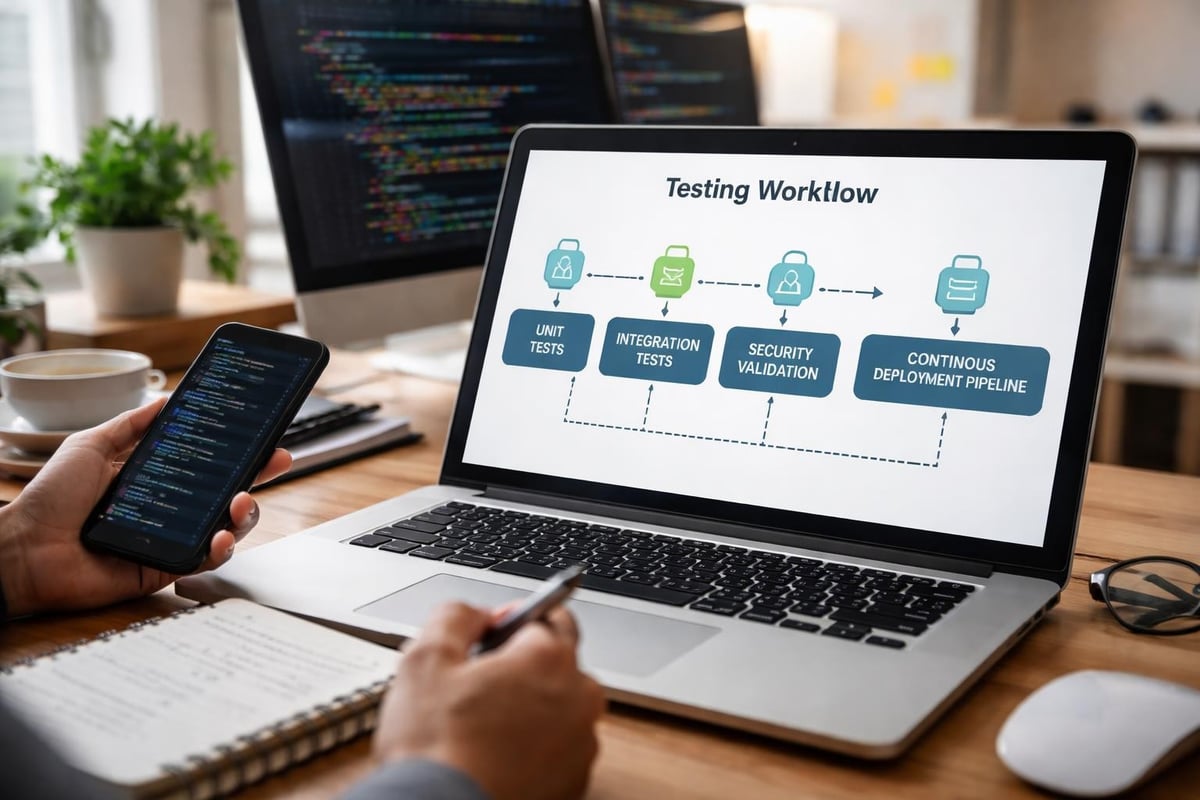
IO applications demand rigorous testing across multiple dimensions that traditional software may not encounter. The distributed nature of these systems introduces complexity that requires comprehensive quality assurance strategies.
Unit testing verifies individual components function correctly in isolation. Integration testing ensures different services communicate properly. Load testing confirms your application maintains performance under stress. Security testing identifies vulnerabilities before malicious actors do.
Automated testing frameworks significantly reduce the manual effort required whilst improving coverage. Continuous integration pipelines can run tests automatically whenever code changes, catching issues early when they're easiest to fix.
Launching your io application marks the beginning of an ongoing relationship with your users and infrastructure. Effective monitoring ensures you detect and resolve issues before they impact user experience.
Application performance monitoring tracks response times, error rates, and resource utilization. Infrastructure monitoring observes server health, network connectivity, and storage capacity. Business metrics monitoring measures user engagement, feature adoption, and conversion rates.
Modern monitoring tools provide real-time dashboards and automated alerts that notify your team when metrics exceed acceptable thresholds. This proactive approach prevents small issues from escalating into major outages.
Regular maintenance keeps your io application running smoothly and securely. Establish schedules for routine tasks that prevent gradual degradation of performance and security.
| Maintenance Task | Frequency | Purpose |
|---|---|---|
| Security patches | Weekly | Protect against new vulnerabilities |
| Database optimization | Monthly | Maintain query performance |
| Log analysis | Weekly | Identify emerging issues |
| Backup verification | Monthly | Ensure disaster recovery capability |
| Dependency updates | Quarterly | Access new features, security fixes |
Documentation proves invaluable during maintenance activities. Well-documented systems allow new team members to understand your io application quickly, reducing dependency on original developers and facilitating knowledge transfer as your startup grows.
IO applications often handle personal data, requiring compliance with various regulations depending on your geographic market and industry sector. Understanding these requirements early prevents costly retrofitting later.
GDPR compliance remains essential for startups targeting European markets, including the UK. Your io application must support user rights like data access, correction, and deletion. Industry-specific regulations may apply if you operate in sectors like healthcare, finance, or critical infrastructure.
Following application development security standards provides frameworks for building compliant systems from the start. These standards often exceed minimum legal requirements but establish best practices that protect both your users and your business.
Technology evolves rapidly, and successful io applications must adapt to changing landscapes whilst maintaining stability for existing users. Strategic planning helps balance innovation with reliability.
Modular architecture allows you to replace or upgrade components without rebuilding entire systems. Open standards reduce vendor lock-in and facilitate future integrations. Scalable infrastructure accommodates growth without requiring fundamental architectural changes.
Consider emerging trends like edge AI, 5G connectivity, and quantum-resistant cryptography when planning your io application's future. Whilst you needn't implement these technologies immediately, designing systems that can incorporate them later provides competitive advantages as markets mature.
The insights from IoT application development best practices emphasize that successful applications balance current requirements with future flexibility, ensuring your initial investment continues delivering value as technology and user expectations evolve.
Building a successful io application requires balancing technical complexity with business objectives, security with usability, and innovation with stability. The strategies outlined in this guide provide a foundation for entrepreneurs and startups to create robust, scalable io applications that solve real problems whilst remaining financially viable. If you're ready to transform your io application concept into reality, Creator Concepts specialises in helping non-technical founders build award-winning MVPs using Bubble.io, delivering scalable solutions in weeks rather than months. Our Canary Wharf based team brings expertise in no-code development that accelerates your journey from concept to launch whilst maintaining the quality and security your users deserve.
© 2026 CreatorConcepts Limited
128 City Road, London EC1V 2NX