

The digital landscape continues to evolve at remarkable speed, and understanding mobile and web development has become essential for entrepreneurs seeking to launch successful products. Whether you're building a startup or validating a business idea, knowing how to navigate the modern development ecosystem can significantly impact your time to market and overall success. This comprehensive guide explores the current state of development practices, emerging trends, and strategic considerations for founders in 2026.
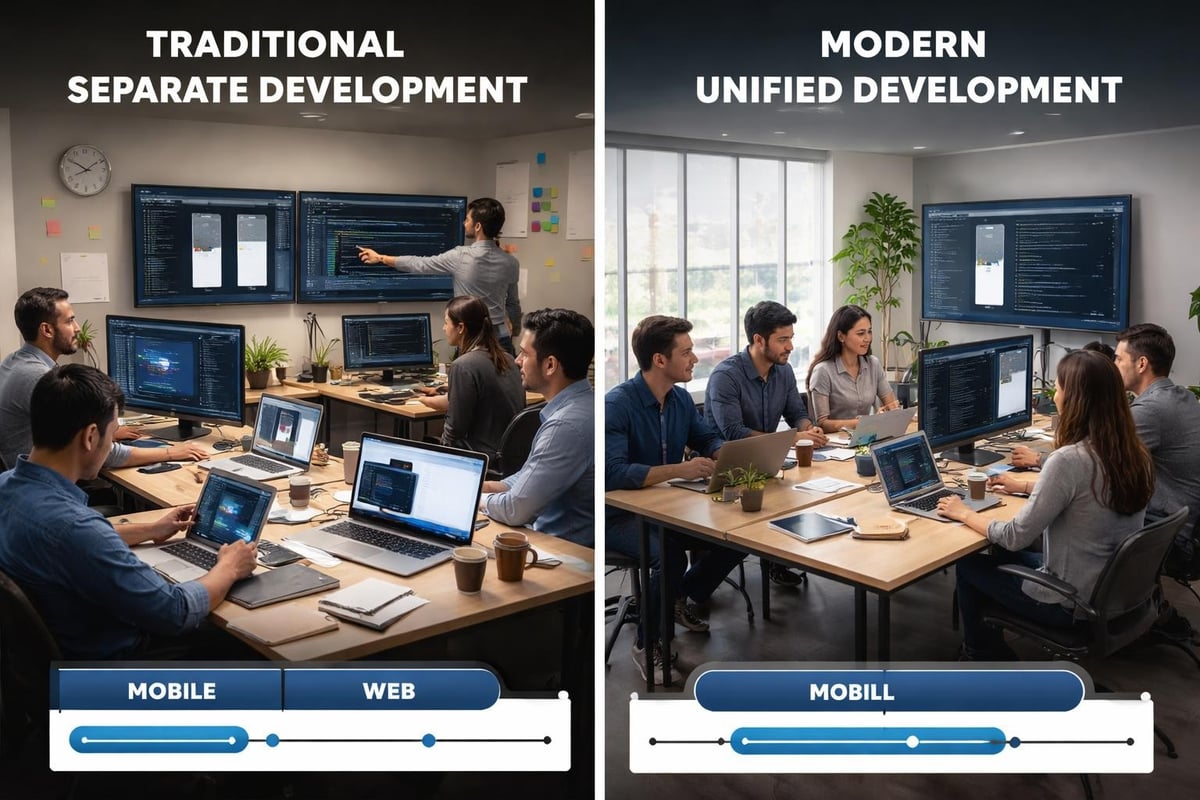
The traditional dichotomy between mobile and web development has blurred considerably in recent years. Progressive Web Apps (PWAs), cross-platform frameworks, and responsive design have created a more unified approach to building digital products. Rather than developing separate applications for each platform, modern teams focus on creating cohesive experiences that work seamlessly across devices.
Today's development landscape prioritizes efficiency without sacrificing quality. Cross-platform solutions enable teams to write code once and deploy across multiple operating systems and device types. This approach reduces development time, maintenance overhead, and costs whilst ensuring consistent user experiences.
Key benefits include:
The rise of no-code and low-code platforms has further democratised mobile and web development. These tools enable non-technical founders to build sophisticated applications without extensive programming knowledge. For startups seeking to validate their ideas quickly, this represents a fundamental shift in how products are brought to market.
The development industry continues to evolve rapidly, with several key web development trends for 2026 reshaping how teams build and deploy applications. Understanding these trends helps entrepreneurs make informed decisions about technology choices and development strategies.
Artificial intelligence has moved beyond experimental features to become a core component of modern applications. From personalised user experiences to automated customer support, AI enhances functionality whilst reducing operational overhead. Development teams now integrate machine learning models, natural language processing, and predictive analytics as standard features rather than premium add-ons.
The implementation of AI-powered experiences requires careful consideration of data privacy, user consent, and ethical implications. Successful products balance automation with human oversight, ensuring technology enhances rather than replaces meaningful interactions.
With mobile traffic consistently exceeding desktop usage, the mobile-first approach has become the industry standard. This methodology involves designing for smaller screens first, then progressively enhancing experiences for larger displays. The strategy ensures core functionality works perfectly on smartphones whilst taking advantage of additional screen space when available.
Best practices for building mobile-friendly websites emphasize several crucial elements:
| Design Approach | Primary Focus | Best For | Limitations |
|---|---|---|---|
| Mobile-First | Smartphone screens | Modern applications | Requires careful desktop enhancement |
| Desktop-First | Large screens | Legacy systems | Often poor mobile experience |
| Responsive Design | Fluid layouts | Universal compatibility | Can compromise on optimization |
| Adaptive Design | Specific breakpoints | Targeted experiences | Higher development complexity |
PWAs continue to gain traction as they combine the best attributes of web and native applications. These applications offer offline functionality, push notifications, and home screen installation whilst maintaining the accessibility and discoverability of websites. For startups, PWAs represent an attractive middle ground between traditional websites and resource-intensive native applications.
The technology stack for PWAs has matured significantly, with robust frameworks and tools supporting rapid development. Service workers, web app manifests, and modern APIs enable sophisticated functionality that rivals native applications in many scenarios.
Entrepreneurs face critical decisions when selecting technologies for mobile and web development projects. These choices impact development speed, scalability, maintenance requirements, and overall product success. Understanding the trade-offs between different approaches helps founders align technical decisions with business objectives.
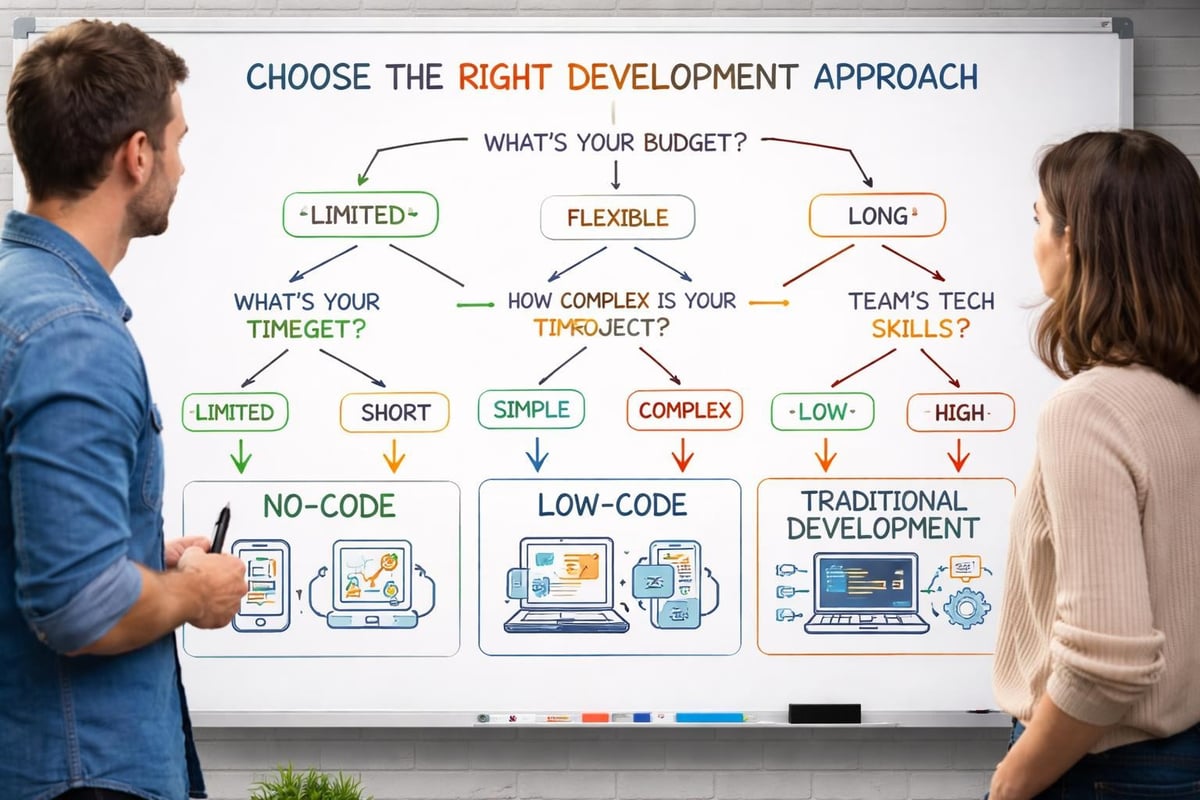
The debate between no-code solutions and traditional coding continues to evolve. No-code platforms enable rapid prototyping and deployment, making them ideal for MVP development and initial market validation. These tools reduce dependency on technical resources whilst maintaining flexibility for iteration based on user feedback.
Traditional development offers greater customization and control but requires more time, expertise, and financial investment. For many startups, the optimal approach involves starting with no-code solutions for validation, then migrating to custom development as the product matures and requirements become more complex.
Considerations for technology selection:
When evaluating platforms like Bubble.io, founders should consider the comprehensive comparison with custom coding to understand long-term implications. The right choice depends on specific business needs, technical requirements, and strategic objectives rather than following industry trends blindly.
Performance directly impacts user satisfaction, conversion rates, and search engine rankings. Modern users expect instantaneous responses and smooth interactions regardless of device or network conditions. Optimizing mobile and web development for performance requires attention to multiple factors throughout the development lifecycle.
Google's Core Web Vitals have become critical metrics for both user experience and search visibility. These measurements focus on loading performance, interactivity, and visual stability. Applications must prioritize these metrics to ensure competitive positioning in search results whilst delivering satisfying user experiences.
Loading speed optimization involves compressing assets, implementing lazy loading, utilizing content delivery networks, and minimizing render-blocking resources. Each millisecond improvement in load time correlates with measurable improvements in user engagement and conversion rates.
The choice between responsive and adaptive design approaches impacts both development complexity and user experience quality. Responsive design uses flexible grids and media queries to adjust layouts fluidly, whilst adaptive design serves different layouts based on detected device characteristics.
Most modern projects benefit from responsive approaches due to lower maintenance requirements and better support for emerging device types. However, specific use cases may warrant adaptive strategies when serving dramatically different experiences to distinct user segments.
As digital products handle increasingly sensitive user data, security cannot be an afterthought. Robust user authentication and security measures protect both users and businesses from data breaches, fraud, and compliance violations.
Modern authentication extends beyond simple username and password combinations. Multi-factor authentication, biometric verification, and social login options provide security whilst maintaining user convenience. Implementing industry-standard protocols like OAuth 2.0 and OpenID Connect ensures compatibility with external services whilst maintaining security best practices.
Essential security measures include:
The web and mobile development trends for 2026 highlight increased focus on privacy-first development approaches. Users expect transparency about data collection and control over their information, making privacy features a competitive differentiator rather than mere compliance requirement.
Whilst front-end experiences capture user attention, backend infrastructure determines long-term viability and scalability. Proper architecture choices enable applications to grow from initial users to millions without complete rebuilds.
Effective database design balances performance, scalability, and data integrity. Choosing between relational and NoSQL databases depends on data structure, query patterns, and consistency requirements. Many modern applications adopt polyglot persistence, using different database types for different aspects of the application.
| Database Type | Strengths | Ideal Use Cases | Scalability Model |
|---|---|---|---|
| Relational (SQL) | Data integrity, complex queries | Financial data, structured relationships | Vertical primarily |
| Document (NoSQL) | Flexibility, horizontal scaling | User profiles, content management | Horizontal easily |
| Key-Value | Speed, simplicity | Caching, session storage | Horizontal excellently |
| Graph | Relationship queries | Social networks, recommendations | Varies by implementation |
Application programming interfaces (APIs) enable communication between different system components and external services. Well-designed APIs support future growth, integration capabilities, and ecosystem development. RESTful APIs remain popular for their simplicity, whilst GraphQL gains adoption for complex data requirements and improved efficiency.
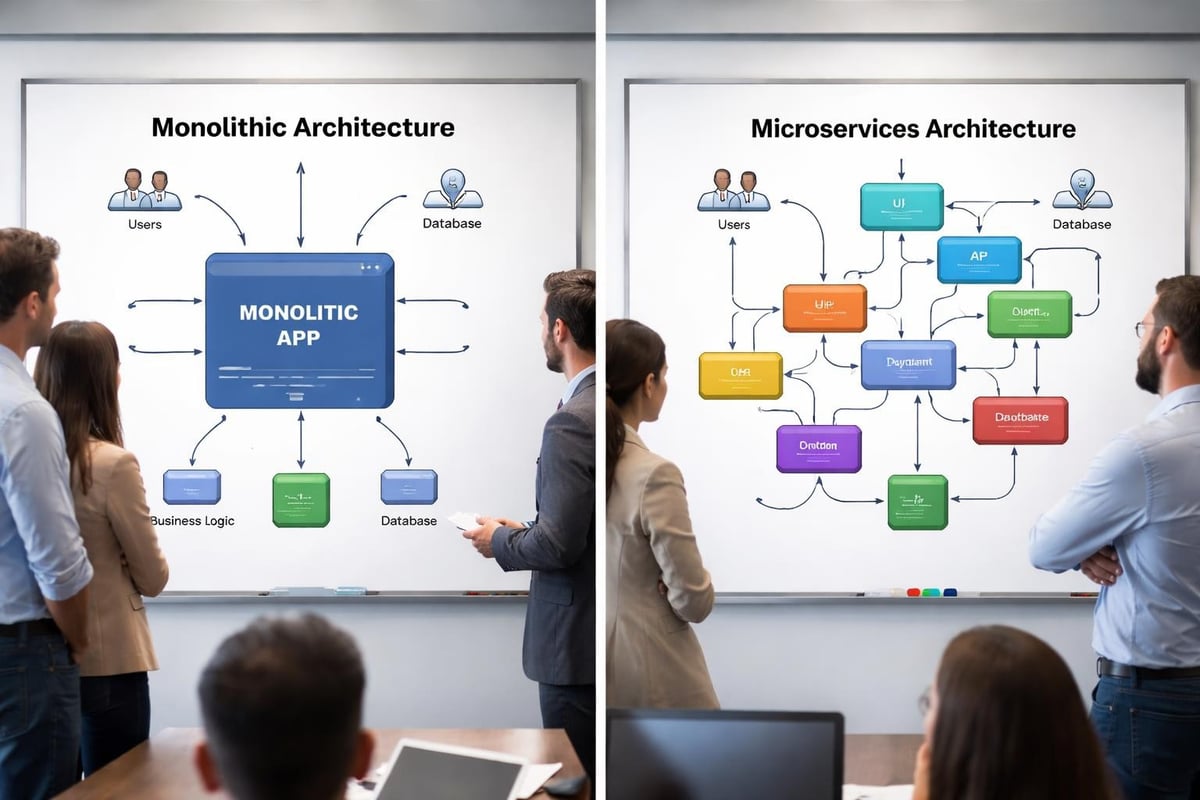
Microservices architecture breaks applications into smaller, independent services that can be developed, deployed, and scaled independently. This approach offers flexibility and resilience but introduces complexity in orchestration and monitoring. For most startups, monolithic architectures provide sufficient capability whilst minimizing operational overhead.
Efficient development workflows accelerate delivery whilst maintaining code quality and team morale. Establishing clear processes, communication channels, and quality standards prevents technical debt accumulation and ensures sustainable development practices.
Agile development emphasizes iterative progress, regular feedback, and adaptation over rigid planning. Sprint-based development cycles enable teams to deliver functionality incrementally whilst incorporating user feedback and market changes. Daily stand-ups, sprint planning, and retrospectives create structured communication that keeps teams aligned.
For startups working on mobile and web development simultaneously, coordinating releases across platforms requires careful planning. Feature flags enable gradual rollouts, A/B testing, and quick rollbacks if issues arise. This approach reduces risk whilst enabling continuous delivery of improvements.
Comprehensive testing strategies catch issues before they reach users, protecting reputation and reducing support costs. Automated testing provides confidence in code changes whilst enabling rapid iteration. Unit tests verify individual components, integration tests ensure systems work together properly, and end-to-end tests simulate real user workflows.
Testing pyramid priorities:
Cross-browser and cross-device testing ensures consistent experiences regardless of user technology choices. Automated testing services simulate various devices, browsers, and network conditions to identify compatibility issues before launch.
Modern applications increasingly feature dynamic content that responds to user preferences, behavior, and context. Content management systems (CMS) and headless CMS architectures enable non-technical team members to update content whilst developers focus on functionality and user experience.
Headless CMS solutions decouple content management from presentation, delivering content via APIs that can be consumed by multiple front-ends. This approach supports omnichannel strategies where the same content appears consistently across web apps and mobile apps, smart devices, and future platforms.
The flexibility of headless architectures enables teams to redesign user interfaces without migrating content or to serve different experiences to different user segments whilst maintaining a single content repository. This separation of concerns improves development velocity and enables specialized teams to work independently.
Understanding user behavior through analytics guides product development, marketing strategies, and business decisions. Implementing comprehensive tracking from launch enables data collection that informs future iterations and optimizations.
Tracking the right metrics depends on business objectives and product type. E-commerce platforms focus on conversion rates and average order value, whilst SaaS applications monitor activation rates and feature adoption. Mobile app development businesses typically track metrics including daily active users, session length, retention rates, and feature usage patterns.
Combining quantitative analytics with qualitative user feedback provides comprehensive understanding of product performance. User interviews, surveys, and usability testing reveal the "why" behind numerical trends, enabling teams to address root causes rather than symptoms.
| Metric Category | Key Indicators | Insight Value | Optimization Focus |
|---|---|---|---|
| Acquisition | Traffic sources, cost per acquisition | Marketing effectiveness | Channel optimization |
| Activation | Sign-up completion, onboarding progress | First experience quality | Friction reduction |
| Engagement | Session frequency, feature usage | Product value delivery | Feature development |
| Retention | Churn rate, cohort analysis | Long-term satisfaction | User experience |
| Revenue | Conversion rate, lifetime value | Business sustainability | Pricing and positioning |
Despite increasing convergence, mobile and web development still require platform-specific considerations. Understanding these nuances ensures optimal experiences on each platform whilst maintaining development efficiency.
Native mobile applications access device features unavailable to web applications, including advanced camera controls, background processing, and deep system integration. Determining which capabilities are essential versus nice-to-have helps decide between native, hybrid, or web-based approaches.
Push notifications remain one of the most valuable native capabilities, enabling re-engagement and timely updates. Implementing notifications requires careful consideration of user preferences, timing, and value to avoid becoming intrusive. Permission requests should clearly communicate benefits whilst respecting user choice.
Web applications offer universal accessibility without installation barriers, instant updates without app store approval processes, and easier discovery through search engines. For many business models, these advantages outweigh the benefits of native applications, particularly during initial market validation phases.
Progressive enhancement strategies ensure web applications work on all browsers whilst taking advantage of modern capabilities when available. This approach maximizes addressable market whilst delivering enhanced experiences to users with capable devices and browsers.
Staying informed about emerging technologies helps entrepreneurs make forward-looking decisions that position products for long-term success. Whilst not every trend warrants immediate adoption, understanding the landscape enables strategic planning and competitive positioning.
Edge computing brings processing closer to users, reducing latency and improving responsiveness. This architecture becomes increasingly important as applications handle real-time interactions, video streaming, and other latency-sensitive features. Content delivery networks (CDNs) represent the most accessible form of edge computing, caching static assets near users globally.
Voice-activated interfaces continue expanding beyond smart speakers into mobile and web applications. Implementing voice search and commands requires considering natural language processing, accent variations, and ambient noise. Conversational interfaces complement rather than replace traditional UI elements, providing alternative interaction methods for specific contexts.
Modern development practices increasingly consider environmental impact and ethical implications. Optimizing code efficiency reduces energy consumption, whilst thoughtful data practices respect user privacy and agency. These considerations align with user values and regulatory requirements whilst differentiating products in competitive markets.
Digital products consume significant energy through data centers, networks, and end-user devices. Optimizing performance reduces both environmental impact and operational costs. Efficient code, compressed assets, and thoughtful caching strategies minimize unnecessary data transfer and processing.
Sustainable development practices:
Navigating mobile and web development in 2026 requires balancing technical capabilities, user expectations, and business objectives. The landscape offers unprecedented opportunities for entrepreneurs to build sophisticated products quickly through modern tools and methodologies. Whether pursuing no-code solutions for rapid validation or investing in custom development for competitive differentiation, success depends on strategic alignment between technology choices and business goals. For startups seeking to validate ideas and launch scalable MVPs efficiently, working with specialists who understand both the technical landscape and entrepreneurial challenges accelerates the journey from concept to market. Creator Concepts helps founders navigate these decisions, building award-winning products that balance speed, quality, and scalability to achieve business objectives.
© 2026 CreatorConcepts Limited
128 City Road, London EC1V 2NX