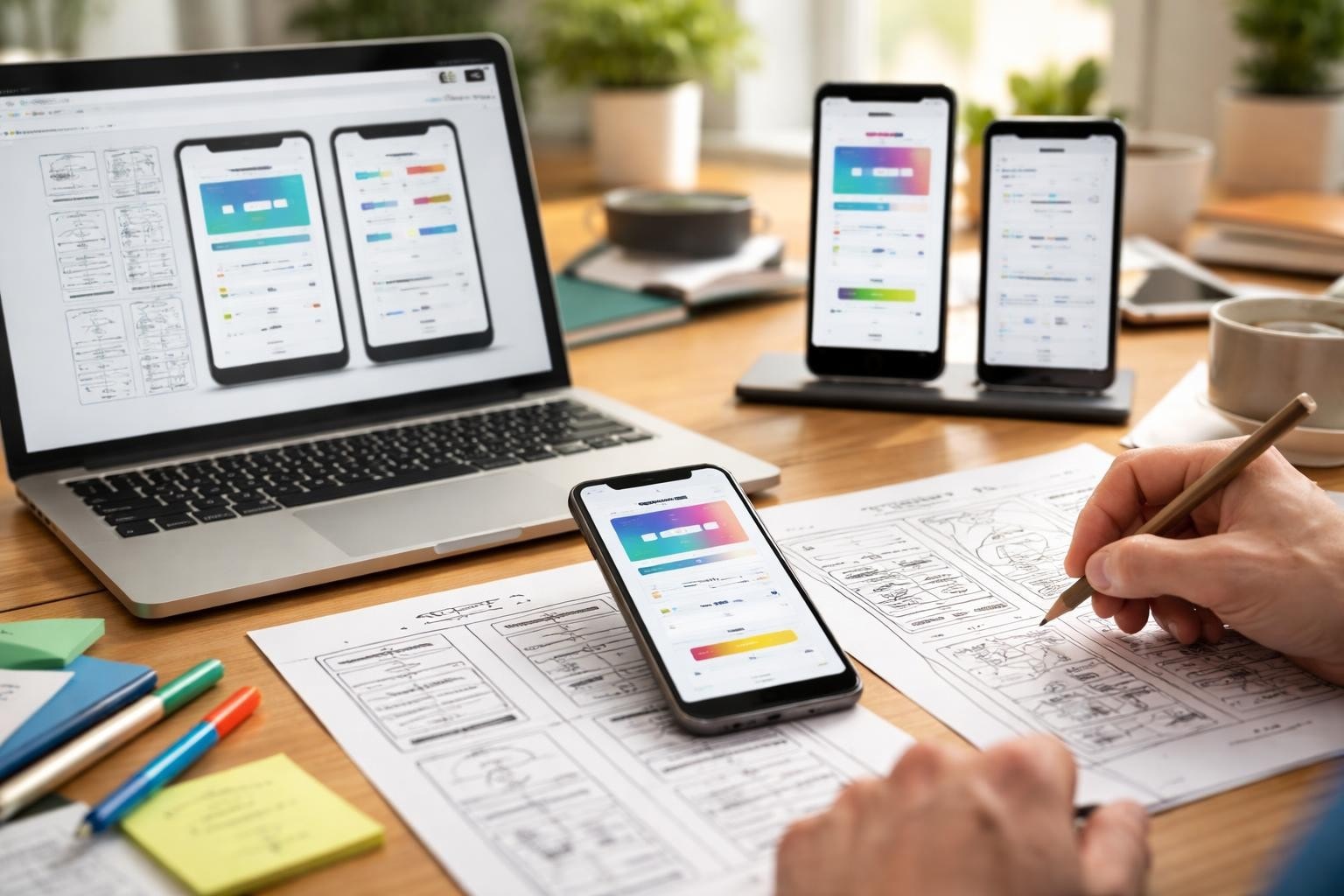

The mobile applications market continues its exponential growth in 2026, with over 6.8 billion smartphone users worldwide driving demand for innovative digital solutions. For entrepreneurs and startups, understanding mobile app design and development has become essential to compete in an increasingly digital-first economy. Whether you're building a marketplace, SaaS platform, or community app, the principles of effective mobile app creation remain fundamental to success. This comprehensive guide explores the critical elements, best practices, and emerging trends that define modern mobile app design and development.
The mobile application ecosystem has evolved dramatically over the past decade. Today's landscape encompasses native applications, progressive web apps, and hybrid solutions that blend the best characteristics of multiple approaches. Native apps offer superior performance and deep integration with device features, whilst cross-platform frameworks enable faster development cycles and broader market reach.
For startups operating with limited budgets and tight timelines, the choice of development approach significantly impacts time-to-market and product viability. Traditional coding methods can require months of development and substantial investment, creating barriers for early-stage companies. The emergence of no-code platforms has democratised access to mobile app design and development, enabling founders to validate ideas quickly without extensive technical expertise.
Choosing between iOS, Android, or cross-platform development requires careful analysis of your target audience and business objectives. According to mobile app development standards, understanding platform demographics helps inform strategic decisions.
iOS users typically demonstrate:
Android's market position offers:
The decision isn't always binary. Many successful startups adopt a phased approach, launching on one platform to validate their concept before expanding. This strategy conserves resources whilst gathering crucial user feedback that informs subsequent development.

Exceptional mobile app design and development begins with user-centred design principles. The constraints of mobile devices-limited screen space, touch-based interaction, variable connectivity-demand thoughtful interface decisions that prioritise clarity and efficiency.
Mobile navigation must strike a delicate balance between comprehensive functionality and simplicity. Users should access core features within three taps, following established mobile app design best practices that reduce cognitive load.
Common navigation patterns include:
| Pattern | Best Use Case | Advantages | Considerations |
|---|---|---|---|
| Tab Bar | 3-5 primary sections | Persistent visibility | Limited to few options |
| Hamburger Menu | Complex hierarchies | Saves screen space | Hides navigation |
| Bottom Sheet | Contextual actions | Thumb-friendly | Temporary visibility |
| Gesture-Based | Content-focused apps | Immersive experience | Discoverability issues |
The most effective mobile applications combine multiple patterns strategically, adapting navigation to different contexts within the user journey. Community app development, for instance, often benefits from tab-based navigation for primary feeds combined with gesture controls for content interaction.
Mobile screens demand ruthless prioritisation. Every pixel must justify its existence. Establishing clear visual hierarchy guides users through your interface intuitively, reducing friction at every interaction point.
Typography considerations include:
White space isn't empty space-it's a design element that improves comprehension and reduces cognitive strain. Applications that embrace generous spacing between elements typically achieve higher user satisfaction scores and longer engagement sessions.
The technical foundation of mobile app design and development has diversified considerably. Traditional native development using Swift or Kotlin remains relevant for applications requiring maximum performance, but alternative approaches offer compelling advantages for specific use cases.
Native development delivers optimal performance and complete access to platform-specific features. Applications built natively leverage platform APIs directly, resulting in smooth animations, responsive interfaces, and seamless integration with device hardware.
However, native development requires maintaining separate codebases for iOS and Android. This doubles development effort and increases long-term maintenance complexity. For resource-constrained startups, this overhead often proves prohibitive during early validation stages.
Frameworks like React Native and Flutter enable code sharing across platforms, significantly reducing development time. Modern cross-platform tools have narrowed the performance gap with native applications, making them increasingly viable for production applications.
React Native advantages:
Flutter strengths:
The choice between frameworks depends on team expertise, project requirements, and long-term maintenance considerations. Many successful startups have built scaleable products using cross-platform approaches, particularly when time-to-market outweighs marginal performance improvements.
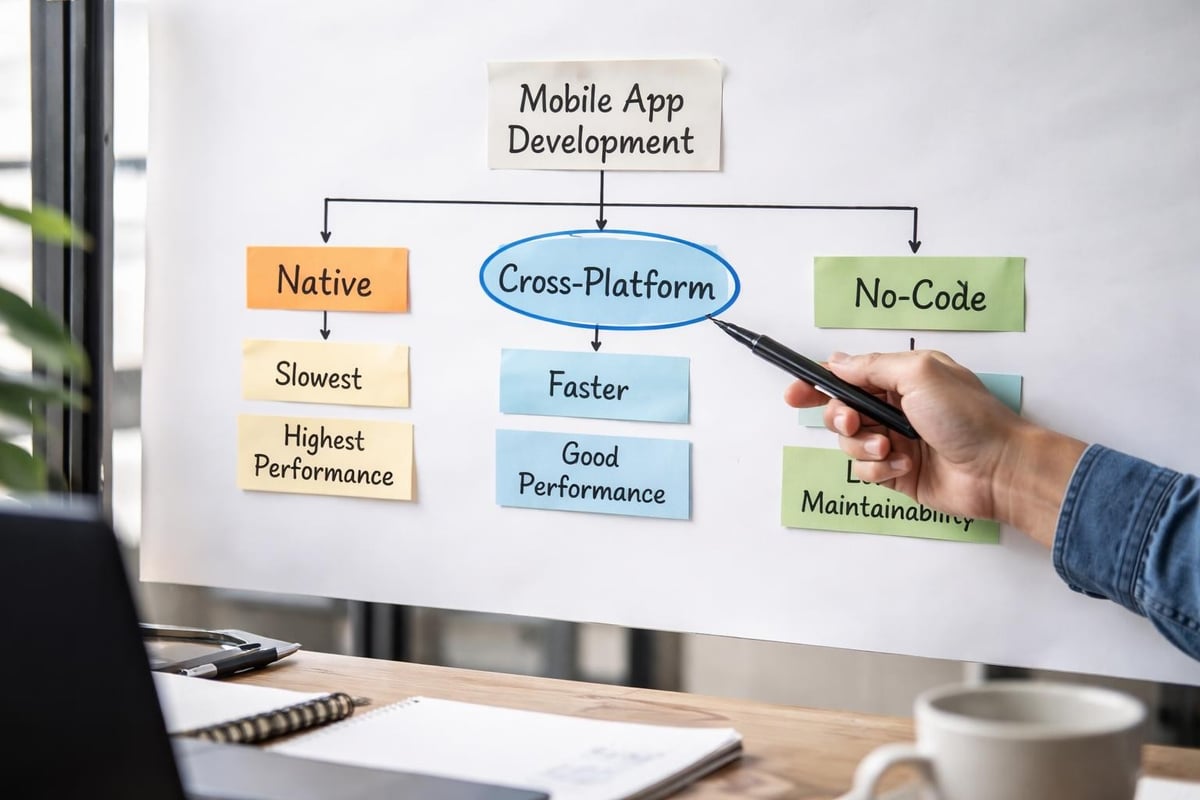
The no-code revolution has transformed mobile app design and development for entrepreneurs. Platforms like Bubble.io enable founders to build sophisticated applications without traditional programming knowledge, dramatically reducing time and cost barriers to entry.
For startups seeking to validate market fit before committing substantial resources, MVP Development using no-code platforms offers significant advantages. These tools provide visual development interfaces, pre-built components, and integrated databases that accelerate the creation process from months to weeks.
Professional mobile app design and development requires adherence to established methodologies that ensure quality, maintainability, and user satisfaction. The best practices for mobile app development evolve continuously, but core principles remain consistent.
Application performance directly impacts user retention and satisfaction. Studies consistently demonstrate that users abandon applications exhibiting slow loading times or laggy interactions. Performance optimisation should begin during the design phase, not as an afterthought.
Critical performance factors:
Profiling tools identify performance bottlenecks before they impact users. Regular testing on diverse devices-particularly mid-range and budget handsets-ensures acceptable performance across your target audience's actual hardware.
Mobile applications handle increasingly sensitive user data, making security paramount. Implementing robust security measures protects both users and business reputation, whilst compliance with regulations like GDPR avoids legal complications.
Essential security practices include:
Mobile devices span an enormous range of screen sizes, resolutions, and aspect ratios. Responsive design ensures your application adapts gracefully across this diversity, delivering consistent experiences regardless of device characteristics.
Accessibility extends your potential user base whilst demonstrating social responsibility. Features like VoiceOver support, dynamic text sizing, and sufficient colour contrast make applications usable for everyone, including those with visual, motor, or cognitive impairments.
The mobile app design and development landscape continues evolving rapidly. Understanding emerging mobile app development trends helps startups position their products competitively and leverage new capabilities effectively.
AI-powered features have transitioned from novelty to expectation. Machine learning models enable personalised experiences, predictive functionality, and intelligent automation that enhance user engagement.
Common AI applications include:
Implementing AI doesn't require building models from scratch. Pre-trained APIs from providers like OpenAI, Google Cloud, and AWS enable startups to integrate sophisticated AI capabilities with minimal machine learning expertise.
PWAs blur the distinction between web and native applications, offering app-like experiences through web browsers. For certain use cases, PWAs provide compelling alternatives to traditional mobile app design and development approaches.
| Aspect | Native Apps | Progressive Web Apps |
|---|---|---|
| Installation | App store required | Direct from browser |
| Offline capability | Full support | Limited support |
| Performance | Optimal | Good, improving |
| Discovery | Store search | Web search |
| Updates | User-initiated | Automatic |
| Development cost | Higher | Lower |
PWAs suit content-focused applications, e-commerce platforms, and services where distribution friction outweighs performance requirements. They eliminate app store approval processes and enable seamless updates without user intervention.
Voice interaction continues gaining prominence as smart speakers and digital assistants become ubiquitous. Forward-thinking applications incorporate voice commands, particularly for hands-free scenarios like cooking, driving, or exercising.
Designing for voice requires different thinking than visual interfaces. Conversational flows must account for ambiguity, provide clear feedback, and gracefully handle errors. The most effective implementations combine voice with visual elements, creating multimodal experiences that leverage strengths of each interaction method.

Comprehensive testing distinguishes professional mobile applications from amateur efforts. Quality assurance encompasses functional testing, usability evaluation, and performance validation across diverse scenarios and devices.
Effective mobile app design and development incorporates multiple testing approaches throughout the development lifecycle. Early testing identifies issues when they're cheapest to fix, whilst continuous testing maintains quality as features evolve.
Essential testing types:
Automated testing tools reduce repetitive manual work, enabling teams to focus on exploratory testing and edge cases. Platforms like TestFlight for iOS and Google Play Console for Android facilitate beta testing with real users before public launch.
Beta programmes provide invaluable insights impossible to gain through internal testing alone. Real users discover unexpected use cases, encounter device-specific issues, and provide feedback on feature priorities.
Successful beta programmes balance participant quantity with quality. A smaller group of engaged users who provide detailed feedback often proves more valuable than thousands of passive installers. Structured feedback mechanisms-in-app surveys, usage analytics, support channels-capture actionable insights that inform iteration priorities.
Launching represents the beginning of your mobile app design and development journey, not the conclusion. Successful applications iterate continuously based on user behaviour, market changes, and competitive pressures.
Visibility within app stores directly impacts download rates. App Store Optimisation (ASO) applies SEO principles to mobile marketplaces, improving discoverability through strategic keyword placement, compelling visuals, and social proof.
ASO elements include:
The best mobile app development software often includes ASO tools, but dedicated platforms provide deeper insights into keyword performance and competitive positioning.
Data-driven optimisation separates successful applications from failures. Analytics platforms track user behaviour, identify friction points, and reveal opportunities for enhancement. Key metrics vary by application type but typically include:
Understanding how to transform agency IP into productised SaaS demonstrates the importance of metrics-driven development. Successful products establish feedback loops connecting user behaviour to development priorities, ensuring resources focus on changes delivering maximum impact.
Mobile app design and development costs vary dramatically based on complexity, approach, and team composition. Realistic budgeting prevents mid-project surprises whilst ensuring adequate resources for quality execution.
Understanding cost drivers helps founders make informed decisions about scope, timeline, and approach. Traditional agency development for moderately complex applications typically ranges from £50,000 to £200,000, with timelines extending six months or longer.
Primary cost variables:
No-code platforms dramatically reduce both cost and timeline for appropriate use cases. Applications that don't require native performance or highly custom functionality often achieve 80% of desired outcomes at 20% of traditional development costs. When building proof of concepts, this efficiency proves particularly valuable.
Assembling the right team significantly influences project success. Mobile app design and development requires diverse expertise spanning design, development, and project management.
Typical team roles:
Startups often begin with generalised team members wearing multiple hats before specialising as the product matures. Outsourcing specific functions-design, testing, or backend development-can optimise resource allocation during early stages.
Whilst cross-platform approaches offer efficiency, understanding platform-specific conventions ensures applications feel native to each ecosystem. Users develop expectations based on platform norms; violating these conventions creates friction and confusion.
Apple's Human Interface Guidelines establish strict standards for iOS applications. Adherence to these guidelines influences App Store approval and user satisfaction.
iOS conventions include:
iOS users generally expect polished, consistent experiences. Applications that feel rough or inconsistent face harsh criticism in reviews, directly impacting download rates and retention.
Material Design provides comprehensive guidance for Android applications. Google's design system emphasises depth, motion, and adaptive layouts that work across Android's diverse device ecosystem.
Android's flexibility enables greater customisation but also creates fragmentation challenges. Applications must gracefully handle various screen sizes, Android versions, and manufacturer customisations whilst maintaining consistent functionality.
Android best practices:
Mobile app design and development extends far beyond initial launch. Successful applications evolve continuously, adapting to technological changes, user feedback, and competitive dynamics. The AI-driven development trends shaping 2026 demonstrate how quickly capabilities advance, requiring ongoing investment to remain competitive.
Regular updates signal active development, improve functionality, and address emerging issues. Strategic update planning balances new feature development with bug fixes, performance improvements, and compatibility updates.
Update categories:
Communication around updates manages user expectations whilst highlighting ongoing value delivery. Release notes should clearly articulate changes in language users understand, avoiding technical jargon that obscures actual benefits.
Applications experiencing rapid growth face technical and architectural challenges. Planning for scale prevents painful re-architecture when user numbers exceed initial capacity projections.
Scaleable architectures typically feature:
When exploring SaaS app development, scalability considerations become particularly critical. Subscription-based businesses must accommodate growth without proportional cost increases that erode unit economics.
Mobile app design and development in 2026 offers unprecedented opportunities for entrepreneurs willing to embrace modern methodologies and platforms. The combination of powerful no-code tools, sophisticated development frameworks, and established best practices enables startups to compete effectively regardless of technical background or resource constraints. Whether you're building your first MVP or scaling an established product, the principles outlined throughout this guide provide a foundation for success. Creator Concepts specialises in helping founders transform ideas into market-ready applications through our award-winning MVP development services, combining technical expertise with deep understanding of startup challenges to deliver scaleable solutions in weeks rather than months.
© 2026 CreatorConcepts Limited
128 City Road, London EC1V 2NX