

Selecting the right mobile app development services company represents one of the most critical decisions entrepreneurs and startups face when bringing digital products to market. The landscape has evolved dramatically in recent years, with traditional coding approaches now complemented by no-code and low-code platforms that accelerate development timelines whilst reducing costs. Understanding the capabilities, methodologies, and specialisations of different development partners enables founders to make informed choices that align with their business objectives, budget constraints, and time-to-market requirements. Whether you're validating a concept through a minimum viable product or scaling an established application, the partnership you forge with a development company will fundamentally shape your product's success trajectory.
The mobile application development industry has undergone substantial transformation since the early days of native iOS and Android programming. A mobile app development services company today offers diverse methodologies ranging from traditional native development to progressive web apps, hybrid frameworks, and no-code solutions.
Native development involves building separate applications for iOS using Swift or Objective-C and Android using Kotlin or Java. This approach delivers optimal performance and complete access to device-specific features, yet requires maintaining two distinct codebases with separate development teams.
Cross-platform frameworks like React Native, Flutter, and Xamarin enable developers to write code once and deploy across multiple operating systems. These technologies have matured significantly, offering near-native performance whilst reducing development time by 30-40% compared to building separate native applications.
Key considerations when evaluating development approaches:
The mobile app development process encompasses discovery, design, development, testing, and deployment phases, each requiring specialised expertise and methodological rigour.
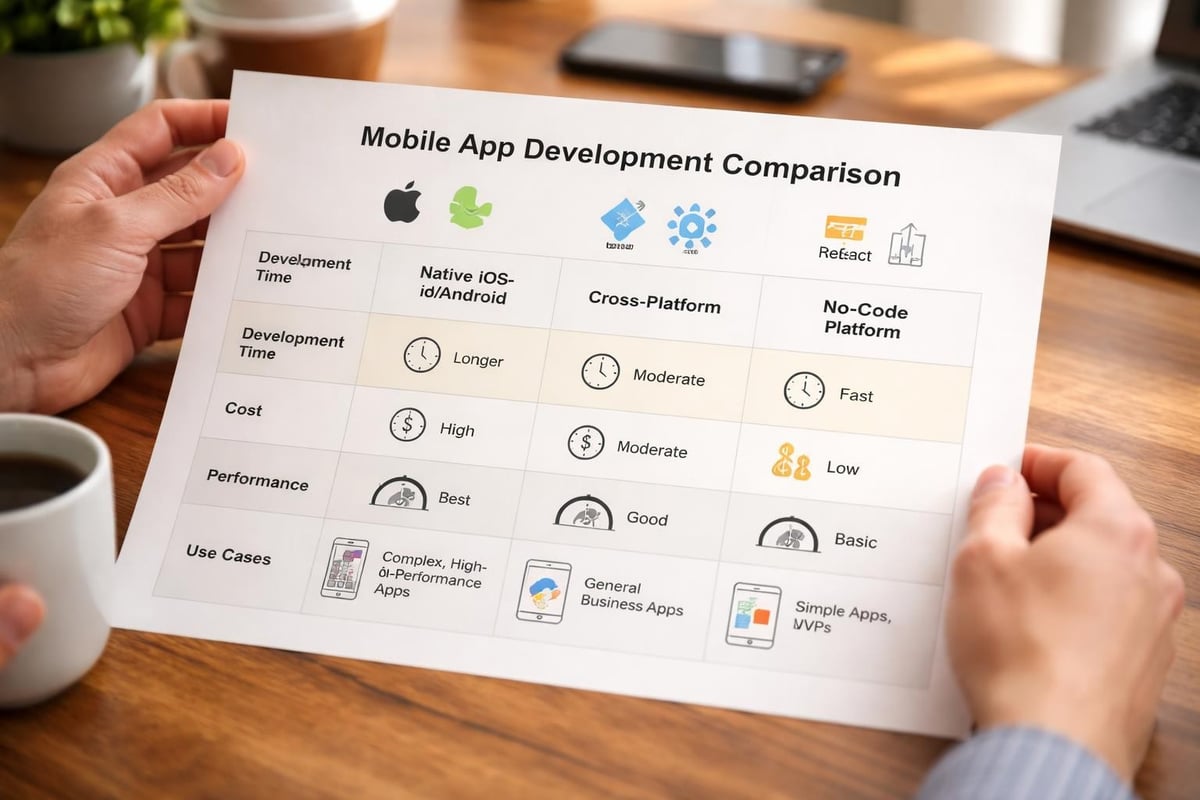
No-code platforms have democratised application development, enabling entrepreneurs without technical backgrounds to transform concepts into functional products. These visual development environments provide pre-built components, drag-and-drop interfaces, and automated backend infrastructure.
According to best mobile app development software comparisons, platforms like Appy Pie and Zoho Creator have integrated artificial intelligence and machine learning capabilities, expanding what's achievable without traditional programming.
Startups pursuing rapid validation benefit immensely from no-code approaches. For founders looking to build proof of concepts before securing investment, these platforms offer compelling advantages:
| Aspect | Traditional Development | No-Code Development |
|---|---|---|
| Development Timeline | 3-6 months for MVP | 2-6 weeks for MVP |
| Initial Investment | £30,000-£100,000+ | £5,000-£25,000 |
| Iteration Speed | Weeks per major change | Days per major change |
| Technical Dependency | Requires ongoing developer resources | Minimal technical expertise needed |
| Scalability | Highly scalable with proper architecture | Platform-dependent limitations |
Bubble.io has emerged as a particularly robust no-code platform for web and progressive web applications, offering database management, API integrations, and responsive design capabilities that rival traditionally coded solutions. Many successful startups have launched with no-code MVPs before transitioning to custom development as they scale.
The strategic advantage lies in speed-to-market. A mobile app development services company specialising in no-code can help entrepreneurs validate assumptions, gather user feedback, and iterate based on real-world data before committing substantial resources to custom development.
Not all development companies possess equal capabilities across different technologies and industry verticals. When selecting a mobile app development services company, assess their portfolio for relevant experience within your sector and technical requirements.
A company with healthcare application experience understands GDPR compliance, data encryption standards, and accessibility requirements differently than one focused on e-commerce or social networking. This domain knowledge accelerates development and reduces costly mistakes.
Essential questions to ask potential development partners:
Examine their technical stack proficiency. If you're considering implementing third-party API integrations, verify their experience connecting diverse services and handling authentication, data synchronisation, and error handling.
User experience design fundamentally determines application success. A mobile app development services company should demonstrate strong UI/UX capabilities alongside technical expertise. Review their design process, prototyping methodologies, and commitment to accessibility standards.
The most effective partnerships involve companies that integrate design thinking throughout development rather than treating design as a preliminary phase. This iterative approach ensures the final product aligns with user expectations and business objectives.
How a mobile app development services company structures their workflow directly impacts project outcomes, communication effectiveness, and adaptability to changing requirements.
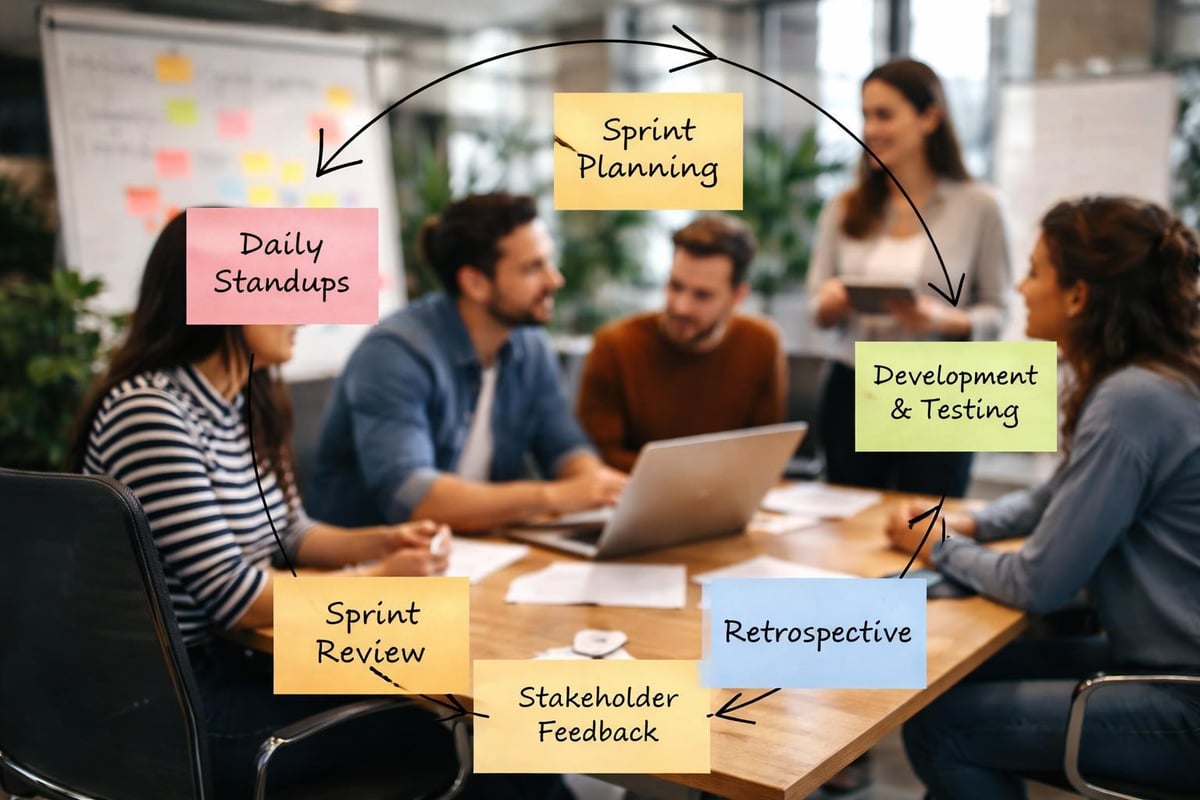
Agile methodologies dominate modern software development for compelling reasons. Two-week sprints enable regular feedback loops, course corrections, and continuous delivery of working features. This contrasts sharply with waterfall approaches where extensive planning precedes development and changes prove costly.
Agile advantages for startup applications:
When evaluating development companies, inquire about their sprint structure, stakeholder involvement expectations, and change management processes. The best partners establish clear communication protocols whilst remaining flexible to evolving requirements.
Understanding how mobile app development services companies structure pricing helps founders budget appropriately and avoid unexpected expenses during development.
Fixed-price agreements provide budget certainty but require comprehensive upfront specification. Any scope changes typically trigger additional costs. This model suits well-defined projects with minimal expected variation.
Time-and-materials arrangements bill actual hours worked, offering flexibility for exploratory projects where requirements evolve. Startups benefit from this model when validating concepts, though it requires active project oversight to manage costs.
| Pricing Model | Best Suited For | Risk Profile | Budget Predictability |
|---|---|---|---|
| Fixed Price | Clearly defined scope, established requirements | Higher vendor risk | High predictability |
| Time & Materials | Exploratory projects, evolving requirements | Shared risk | Variable costs |
| Dedicated Team | Long-term development, ongoing maintenance | Client assumes risk | Medium predictability |
| Equity Partnership | Early-stage startups with limited capital | Aligned incentives | Deferred costs |
Some companies offer equity arrangements for promising startups, accepting ownership stakes instead of upfront payment. Whilst attractive for capital-constrained founders, carefully evaluate whether dilution justifies the development services received.
Budget for the complete lifecycle, not just initial development. Ongoing maintenance, hosting infrastructure, App Store fees, and iterative improvements represent 15-20% of initial development costs annually.
A rigorous mobile app development services company implements comprehensive testing throughout development, not merely before launch. Quality assurance encompasses functional testing, performance optimisation, security audits, and user acceptance validation.
Mobile ecosystems present fragmentation challenges. Android alone spans thousands of device models with varying screen sizes, operating system versions, and hardware capabilities. iOS offers more uniformity but still requires testing across multiple iPhone and iPad generations.
Professional development companies maintain device laboratories or leverage cloud-based testing platforms to ensure applications perform consistently across target devices. Inquire about their testing infrastructure and methodologies during evaluation.
Critical testing dimensions:
Beta testing with real users provides invaluable feedback before public launch. Development partners should facilitate beta distribution through TestFlight for iOS and Google Play Console for Android, gathering structured feedback to inform final refinements.
The relationship with your development partner shouldn't conclude at application launch. Ongoing support, bug fixes, and feature enhancements require sustained collaboration with technical teams familiar with your codebase.
When selecting a mobile app development services company, clarify post-launch support terms. Some include 30-90 days of complimentary bug fixes, whilst others offer monthly retainer agreements covering maintenance, monitoring, and incremental improvements.
Successful applications evolve based on user behaviour analytics, market trends, and competitive pressures. Establish mechanisms for collecting user feedback, monitoring crash reports, and tracking key performance metrics.
SaaS app development particularly benefits from continuous deployment pipelines enabling frequent updates without app store approval delays. Progressive web apps offer this advantage whilst maintaining broad device compatibility.
A mobile app development services company experienced in post-launch optimisation helps prioritise enhancements based on data-driven insights rather than assumptions, maximising return on development investment.
The decision framework for choosing a mobile app development services company extends beyond technical capabilities to encompass cultural alignment, communication effectiveness, and shared vision for your product's success.
Examine completed projects for quality indicators. Look beyond aesthetic appeal to evaluate functionality depth, user experience sophistication, and business outcomes achieved. Strategic guides to selecting top companies highlight firms like ThoughtBot and Fueled, emphasising the importance of reviewing core expertise and industry focus.
Request references from past clients with similar project scopes. Inquire about communication responsiveness, problem-solving approaches, and whether projects delivered on time and within budget.
Red flags during evaluation:
The discovery phase itself reveals much about a development partner's approach. Quality companies invest time understanding your business model, target audience, competitive landscape, and success metrics before proposing solutions.

Effective collaboration between founders and development teams determines project success as much as technical capability. Establish clear communication protocols, decision-making processes, and escalation procedures before development commences.
Different development companies require varying levels of client participation. Some prefer autonomous operation with weekly check-ins, whilst others encourage daily collaboration through pair programming or design workshops.
Clarify expectations regarding:
Startups benefit from development partners who educate throughout the process, explaining technical trade-offs and empowering informed decision-making. This transparency builds internal capability and reduces dependency on external resources long-term.
For entrepreneurs seeking to validate ideas quickly, MVP development services designed specifically for founders enable rapid iteration whilst maintaining scalability for future growth. These specialised approaches recognise startup constraints whilst delivering production-ready applications that attract users and investors.
A responsible mobile app development services company prioritises security throughout development, not as an afterthought before launch. Data breaches, privacy violations, and security vulnerabilities damage user trust irreparably and expose businesses to regulatory penalties.
GDPR compliance mandates specific data handling practices for applications serving European users. This includes explicit consent mechanisms, data portability features, and the right to erasure functionality. Development partners must demonstrate familiarity with these requirements and implement compliant architecture from inception.
Authentication and authorisation systems require particular attention. Multi-factor authentication, secure token management, and encrypted data transmission represent baseline security measures for applications handling sensitive information.
Security implementation checklist:
Mobile applications storing payment information must achieve PCI DSS compliance, adding complexity and cost to development. Many startups leverage established payment processors like Stripe or PayPal to offload compliance burden whilst maintaining secure transaction processing.
Architecture decisions made during initial development profoundly impact future scalability. A forward-thinking mobile app development services company designs systems anticipating growth rather than merely meeting current requirements.
Cloud infrastructure enables elastic scaling, adjusting resources automatically based on demand. Amazon Web Services, Google Cloud Platform, and Microsoft Azure offer comprehensive services for application hosting, database management, file storage, and content delivery.
Database architecture particularly influences scalability. Relational databases suit structured data with complex relationships, whilst NoSQL solutions excel with high-volume, distributed workloads. The choice depends on your application's data characteristics and expected growth trajectory.
Consider future feature requirements when selecting platforms and technologies. If you might need advanced responsive design capabilities as you expand to tablet and desktop experiences, ensure your development partner's platform supports these adaptations without complete rebuilds.
Migration planning matters even when starting with no-code solutions. Successful startups often outgrow initial platforms, requiring transition to custom development. Understanding this pathway from inception enables smoother transitions when growth necessitates greater technical sophistication.
Contract terms governing intellectual property ownership require careful attention. Some development companies retain code ownership, licensing it to clients, whilst others transfer complete rights upon final payment.
Full ownership of source code, designs, and associated intellectual property provides maximum flexibility for future development, whether continuing with the original partner or transitioning to different resources.
Verify that contracts address:
Open-source component usage requires understanding licensing obligations. Some open-source licenses mandate that derivative works also remain open-source, potentially conflicting with commercial objectives. Professional development companies navigate these complexities, ensuring compliant implementation whilst protecting your intellectual property.
Documentation quality affects long-term code maintainability. Comprehensive technical documentation, API specifications, and architectural diagrams enable future developers to understand and modify systems efficiently, reducing dependency on original creators.
Beyond technical capabilities, the working relationship quality with your development partner substantially impacts project outcomes and founder wellbeing during intense development periods.
A mobile app development services company that understands startup pressures, embraces rapid iteration, and maintains flexible processes suits entrepreneurial clients better than rigid, process-heavy organisations optimised for enterprise clients.
Schedule video calls with team members who would work directly on your project, not just sales representatives. Gauge their enthusiasm for your concept, understanding of your market, and communication style compatibility.
Geographic proximity once determined development partnerships, but distributed teams now deliver exceptional results through effective tooling and communication practices. However, significant time zone differences complicate real-time collaboration. Consider whether asynchronous or synchronous communication better suits your project requirements and working style.
References from founders who've completed similar projects provide insight into partnership dynamics under pressure. Ask specifically about responsiveness during critical issues, flexibility accommodating changing requirements, and support during launch periods.
For entrepreneurs ready to validate concepts rapidly whilst maintaining professional quality standards, partnering with specialists who understand the unique challenges of bringing new products to market accelerates the journey from idea to traction. The ultimate guide to choosing the right company emphasises evaluating key criteria beyond surface-level capabilities to ensure successful long-term partnerships.
Launching applications through Apple's App Store and Google Play Store involves navigating platform-specific requirements, review processes, and ongoing compliance obligations that influence development decisions.
Apple maintains rigorous review standards covering functionality, content, design, and business model implementation. Applications must provide meaningful utility, implement Apple's design guidelines, and comply with privacy requirements including App Tracking Transparency.
Google Play offers more lenient review processes but maintains standards prohibiting malicious behaviour, deceptive practices, and inappropriate content. Both platforms regularly update guidelines, requiring ongoing monitoring and adaptation.
Launch preparation requirements:
Development companies experienced with platform submission processes accelerate launch timelines and reduce rejection risk. They understand common rejection reasons and proactively address potential issues during development.
App Store Optimisation (ASO) influences discoverability and download rates. Strategic keyword selection, compelling visual assets, and positive user reviews combine to improve organic rankings. Planning ASO strategies during development rather than post-launch maximises early traction.
Selecting the right mobile app development services company fundamentally shapes your product's trajectory from concept through launch and beyond. The most successful partnerships balance technical excellence with strategic thinking, empowering founders to validate ideas rapidly whilst building foundations for sustainable growth. Whether you're pursuing native development, cross-platform solutions, or no-code approaches, aligning with partners who understand startup dynamics and maintain flexible, collaborative processes positions your application for market success. At Creator Concepts, we specialise in helping entrepreneurs and startups transform ideas into scalable MVPs using no-code development, delivering award-winning applications in weeks rather than months whilst maintaining the quality and performance users expect.
© 2026 CreatorConcepts Limited
128 City Road, London EC1V 2NX