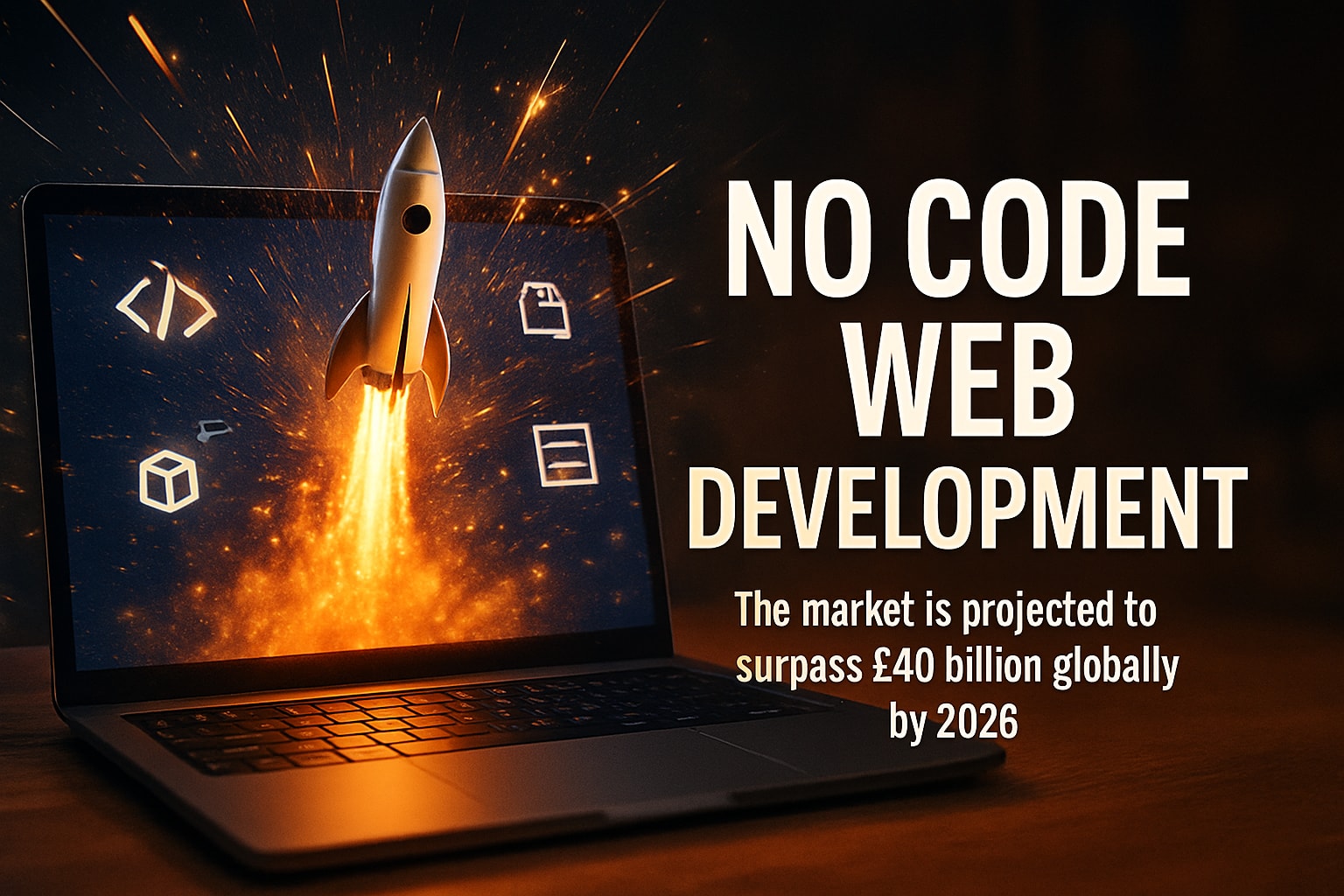

The world of no code web development is experiencing explosive growth, with the global market expected to exceed £40 billion by 2026. Today, these tools enable everyone, from entrepreneurs to large enterprises, to build professional web apps and websites without any traditional coding expertise.
The appeal is clear: rapid prototyping, significant cost savings, and unmatched accessibility for non-technical users. As a result, digital innovation is accelerating across industries.
In this article, we will introduce seven exciting no code web development tools to try in 2026. You will discover their standout features, pricing, and use cases to help you select the right platform for your next project.
No code web development is experiencing remarkable momentum across industries as we approach 2026. The landscape has shifted dramatically, allowing organisations of all sizes to innovate and build digital products faster than ever. Let us explore the key factors behind this surge, from the evolution of platforms to the real-world benefits and challenges.
The journey of no code web development began with simple drag and drop website builders, limited in scope and flexibility. Over the past decade, platforms like Bubble and Webflow have transformed into robust ecosystems supporting full-scale web applications, intricate workflows, and powerful automations. Today, these tools enable users to visually create and deploy apps without writing a single line of code.
Visual development and workflow automation now drive digital transformation, making it possible for teams to iterate quickly and reduce reliance on traditional development cycles. According to Top No Code Web Platforms, the market is set to surpass £40 billion globally by 2026, highlighting the explosive growth and maturity of these platforms.
A major catalyst for the rise of no code web development is the ongoing shortage of skilled developers worldwide. Businesses face pressure to innovate rapidly while managing budgets and time constraints. No code solutions bridge this gap by offering:
The emergence of "citizen developers" means entrepreneurs, product managers, and even marketing teams can now launch MVPs and business tools independently. This democratisation of software creation is unlocking new opportunities and accelerating digital initiatives everywhere.
No code web development brings significant advantages, including reduced development time, less need for ongoing maintenance, and user-friendly interfaces. Startups, for instance, can build MVPs in days rather than months, while enterprises can deploy internal tools with minimal IT involvement.
However, these tools do have limitations. Common challenges include:
Despite these drawbacks, the ease of building and deploying web solutions continues to outweigh the risks for many organisations, particularly when rapid iteration is crucial.
A broad range of sectors are leveraging no code web development to modernise and streamline operations. Notable examples include:
| Sector | Application Examples |
|---|---|
| Startups | Rapid MVP launches, SaaS platforms |
| SMEs | Internal tools, process automation |
| Enterprises | Legacy system modernisation, client portals |
| Healthcare | Patient portals, appointment systems |
| Fintech | Dashboards, compliance tools |
| Marketplaces | E-commerce, service platforms |
From healthcare portals to fintech dashboards, the impact of no code tools is visible across industries. As accessibility and platform capabilities improve, more organisations will continue to benefit from this technological revolution.
The no code web development landscape continues to evolve rapidly, with an ever-expanding array of platforms catering to different needs. Whether you are a startup founder seeking a fast MVP, an enterprise modernising internal systems, or a creative professional building visually stunning sites, there is a solution tailored for you. Below, we explore seven standout tools to watch in 2026, breaking down their features, pricing, and unique strengths to help you navigate the no code web development ecosystem.
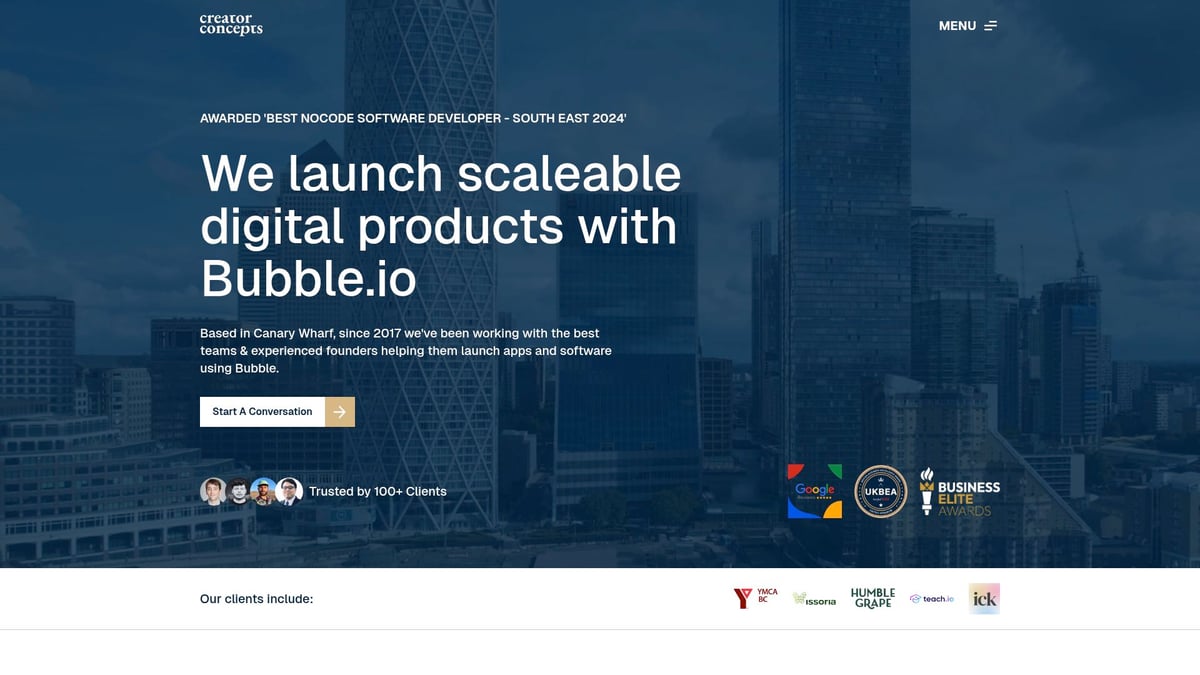
Creator Concepts sets the standard for no code web development agencies in the UK, offering custom solutions tailored to diverse business needs. With custom project-based pricing and a free initial consultation, their approach remains flexible for startups and established enterprises alike.
Key Features:
Unique Selling Points:
Ideal For:
Use Cases:
Pros:
Cons:
For readers interested in comparing more platforms, see this in-depth guide on No Code Tools for Apps for further insights into the no code web development market.
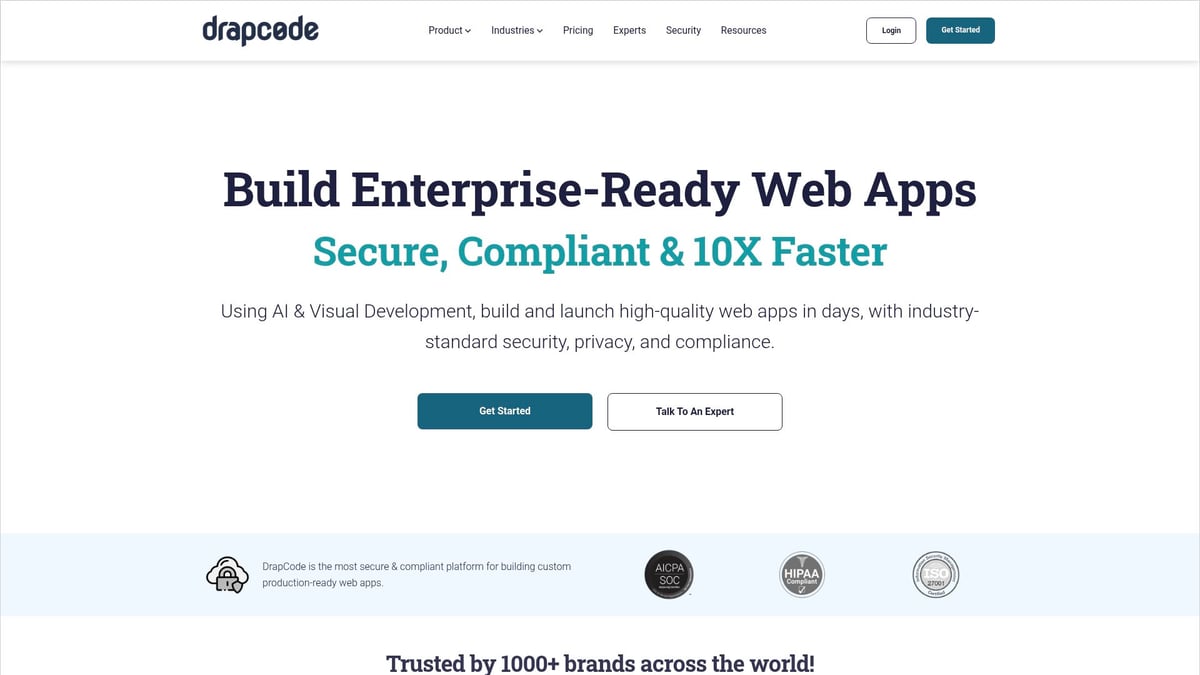
DrapCode offers a robust, visual drag-and-drop builder designed to empower businesses of all sizes. It stands out for its dynamic databases, automated workflows, and scalable hosting, making it a strong choice for those prioritising flexibility in no code web development.
Pricing:
Key Features:
Target Audience:
Ideal Use Cases:
Pros:
Cons:
DrapCode continues to push the boundaries of no code web development, particularly for business and enterprise applications.
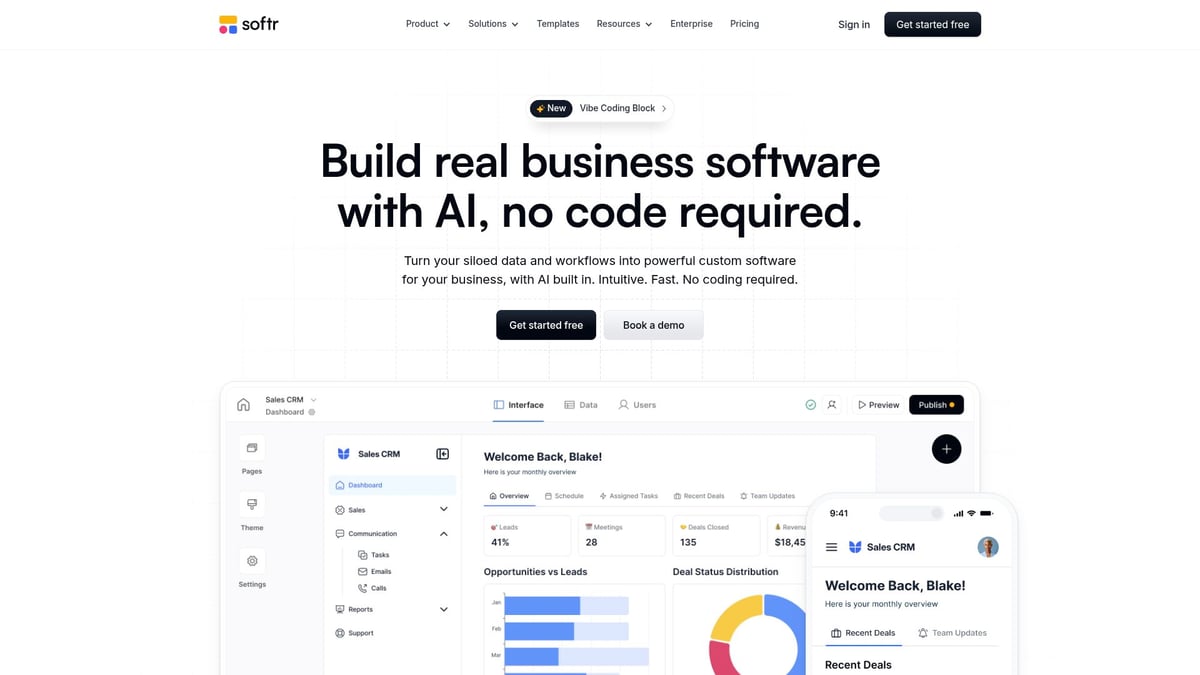
Softr makes no code web development highly accessible, especially for those seeking to build functional web apps and client portals using data from Airtable or Google Sheets. Its intuitive interface and extensive template library set it apart.
Pricing:
Core Features:
Target Audience:
Ideal Use Cases:
Pros:
Cons:
Softr’s data-driven approach simplifies no code web development for users looking to launch products quickly and efficiently.
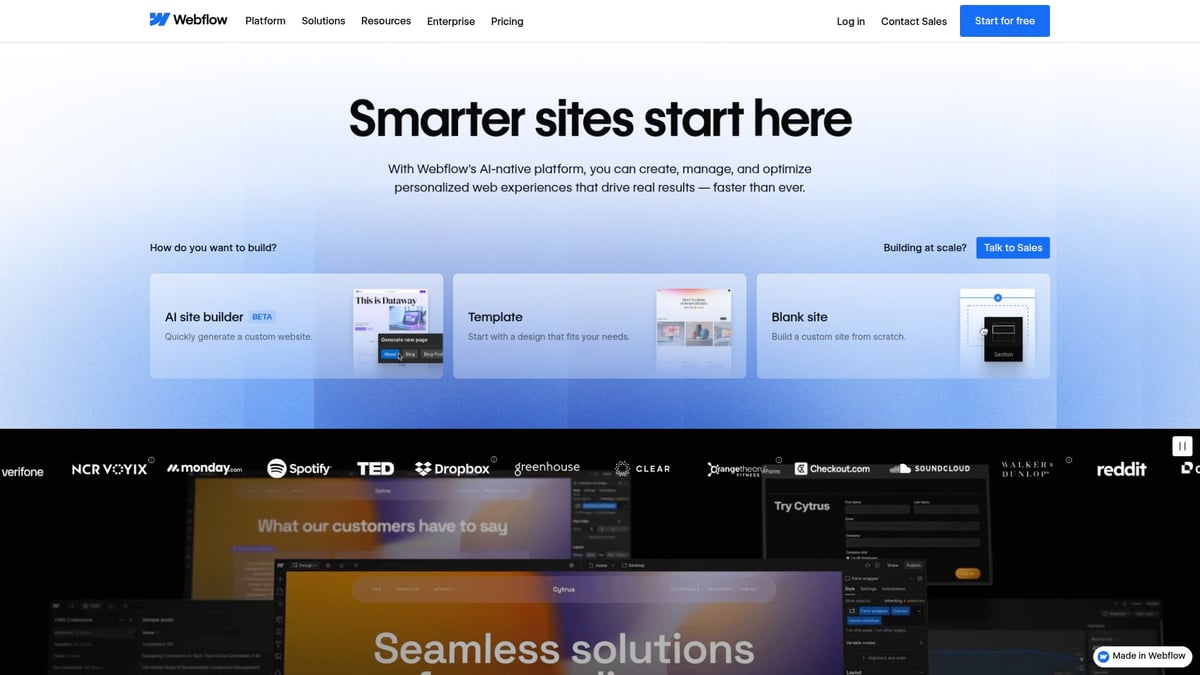
Webflow is a powerhouse in the no code web development space, offering pixel-perfect design control and a built-in CMS. Its free starter plan and scalable paid options make it attractive for agencies and solo designers alike.
Pricing:
Core Features:
Target Audience:
Ideal Use Cases:
Pros:
Cons:
Webflow’s combination of design flexibility and CMS power makes it a leading choice for visually rich no code web development projects.
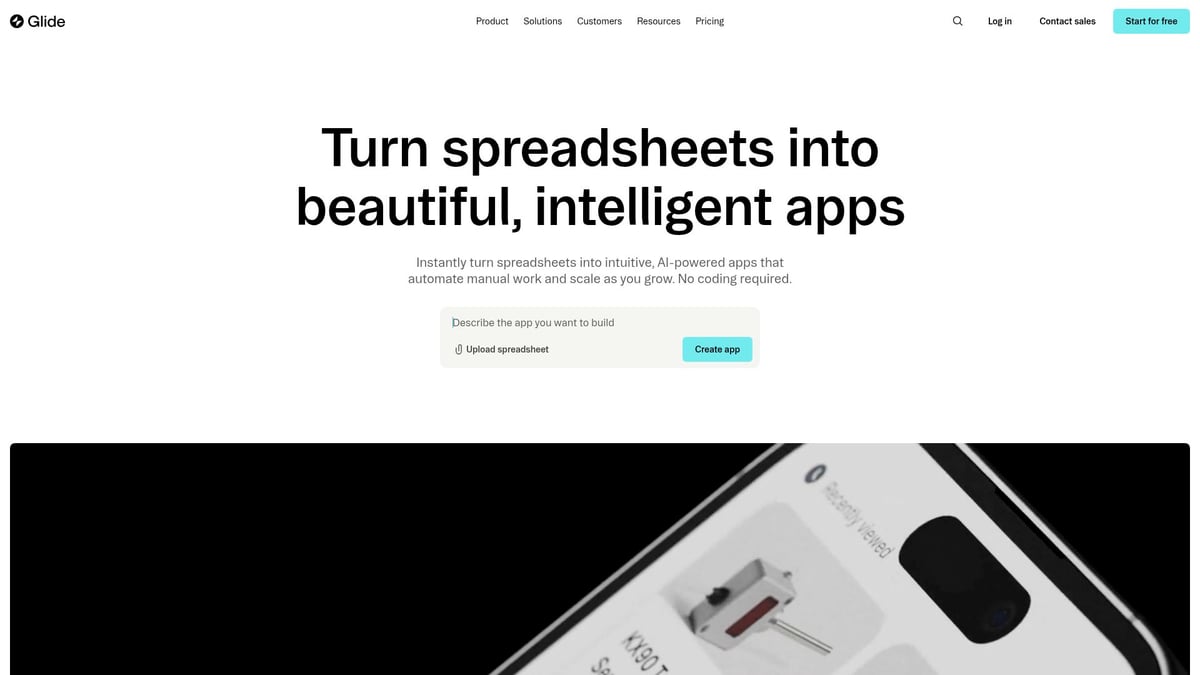
Glide transforms spreadsheets into fully functional web and mobile apps, making no code web development approachable even for complete beginners. Its drag-and-drop editor and instant app creation are ideal for rapid prototyping.
Pricing:
Core Features:
Target Audience:
Ideal Use Cases:
Pros:
Cons:
Glide’s simplicity and speed make it a popular entry point for those new to no code web development.
OutSystems is a heavyweight in enterprise-grade no code web development, blending low-code and no code approaches for maximum flexibility. It is engineered for complex, large-scale deployments and digital transformation projects.
Pricing:
Core Features:
Target Audience:
Ideal Use Cases:
Pros:
Cons:
OutSystems stands out as the go-to solution for mission-critical no code web development projects in 2026.
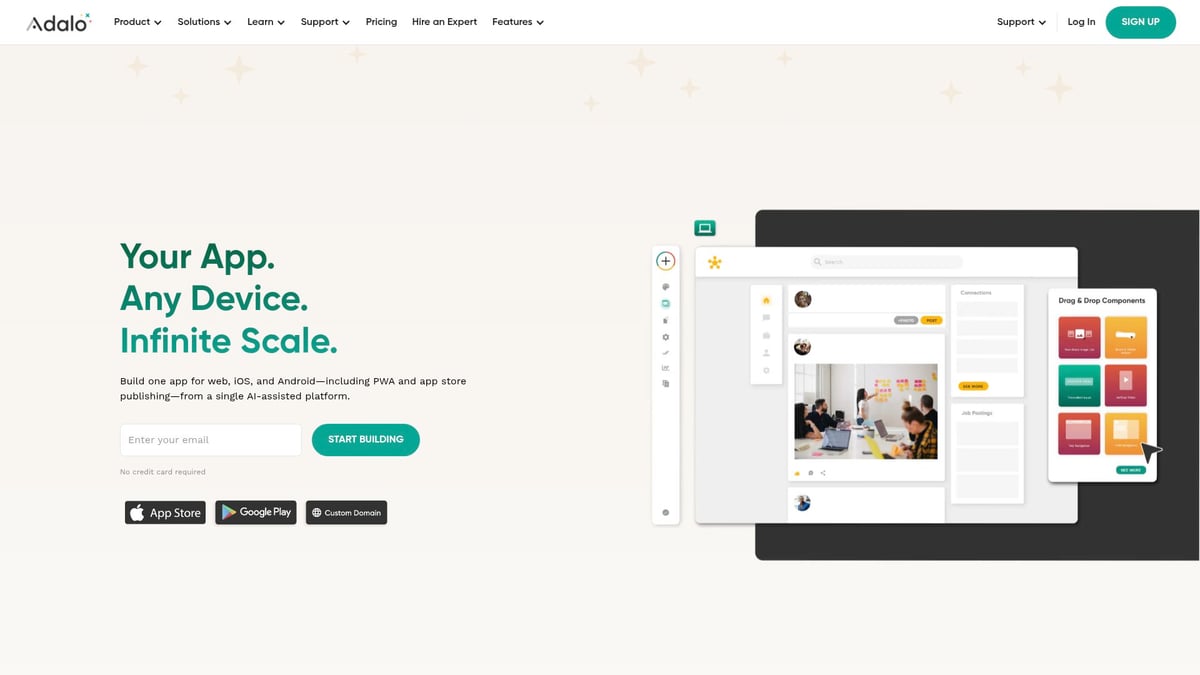
Adalo brings no code web development to both web and mobile platforms, focusing on fast prototyping and multi-platform deployment. Its visual workflow editor enables users to build and publish apps with minimal technical expertise.
Pricing:
Core Features:
Target Audience:
Ideal Use Cases:
Pros:
Cons:
Adalo’s streamlined approach to no code web development makes it an excellent choice for rapid, cross-platform app launches.
Choosing the right platform for no code web development can feel overwhelming given the range of options available in 2026. Taking a structured approach ensures your choice aligns with your project’s goals and long-term vision.
Start by clarifying the type of no code web development project you are planning. Are you building a simple website, a complex web app, or an internal business tool?
List your essential features, such as custom workflows, integrations, and database requirements. Think about how your project might grow. Will you need to scale for more users or integrate with third-party services as your business expands?
Remember, startups often prioritise rapid MVP delivery, while enterprises may focus on scalability and security. Considering the projected global no-code market growth, making a strategic decision today can set your project up for future success.
Budget is a crucial factor in no code web development. Compare free plans, monthly subscriptions, and agency pricing to see what fits your resources.
Evaluate the learning curve. Some platforms make it easy for beginners, while others require technical know-how for advanced features.
Support matters too. Check if the tool offers comprehensive documentation, active community forums, or direct agency assistance. A platform with robust support can make your development journey much smoother.
Security is a top concern for any no code web development project. Review each platform’s security features, hosting environment, and compliance certifications.
Customisation flexibility is equally important. Some tools allow deep customisation, while others focus on simplicity and speed. For projects with sensitive data, consider platforms that offer advanced security measures. For example, Bubble provides extensive security capabilities, as detailed in this guide to user authentication in Bubble.
Balance the need for custom features with the importance of a secure, compliant environment.
Take advantage of free trials or demo versions offered by most no code web development platforms. Prototyping your idea lets you test features before committing.
Compare shortlisted tools against your project requirements. Consider vendor lock-in risks, export options, and how frequently the platform is updated.
Future-proof your choice by ensuring the platform evolves with industry trends and supports your business growth. This approach helps secure the long-term success of your no code web development initiatives.
The landscape of no code web development is rapidly transforming, driven by new technologies and a growing demand for accessible digital creation. AI is now at the forefront, enabling automated layouts, smart workflows, and integrated chatbots within leading platforms. These innovations mean users can design complex solutions with less manual effort, leveraging intelligent suggestions and real-time assistance. Imagine building a customer support portal where AI guides both the design and user experience, all within a no code web development environment.
Businesses are also embracing greater automation in no code web development. Platforms are streamlining repetitive processes, allowing teams to automate tasks such as onboarding, notifications, and data syncing. Enhanced integrations now connect no code solutions with both emerging technologies and established enterprise systems, simplifying digital transformation. As a result, even complex workflows can be managed visually, breaking down barriers for organisations of every size.
Community-driven growth is another defining trend. Access to vast template libraries, plugins, and educational resources is expanding, empowering users to quickly launch and customise projects. With more intuitive designs and support, no code web development is becoming increasingly accessible, opening doors for non-technical founders and teams across industries like healthcare, fintech, and education. The rise of “citizen developers” demonstrates how anyone can contribute to digital innovation with minimal technical background.
Market data underscores this explosive momentum. According to No-code development platforms market size, the sector is projected to soar from USD 8.9 billion in 2024 to over USD 44.3 billion by 2034, reflecting a 17.3 percent compound annual growth rate. As no code web development tools evolve, expect AI-powered features, broader integrations, and robust communities to make digital creation even more inclusive and future-proof.
If you’re feeling inspired to explore the world of no code web development after discovering these innovative tools, you’re not alone. The landscape is evolving quickly, making it easier than ever for businesses and founders to turn big ideas into secure, scalable digital products—without a single line of code. Whether you’re planning a new MVP, looking to streamline operations, or just curious about what’s possible, our team at Creator Concepts is here to help you navigate your options and find the right fit for your goals. Ready to take the next step? Book a discovery call and let’s bring your vision to life.
© 2026 CreatorConcepts Limited
128 City Road, London EC1V 2NX