

The digital landscape in 2026 demands that agencies deliver more than traditional services. Whether you're a marketing agency, consultancy, or creative studio, clients increasingly expect integrated digital solutions that solve real business problems. An agency app has evolved from a nice-to-have differentiator into a fundamental component of modern service delivery. This shift presents both opportunities and challenges for agencies looking to expand their capabilities whilst maintaining the agility that defines their business model.
An agency app serves multiple purposes within the modern agency ecosystem. These applications range from internal tools that streamline operations to client-facing platforms that deliver measurable value. The distinction matters because each category requires different development approaches, technical considerations, and resource allocations.
Internal agency apps typically focus on project management, time tracking, resource allocation, and client communication. These tools create efficiency gains that directly impact profitability and service quality. Client-facing agency apps, conversely, represent billable deliverables that extend your service offering beyond traditional consulting or creative work.
The most successful agencies treat their app development capabilities as a strategic advantage. Rather than viewing each project as isolated development work, they build reusable frameworks and component libraries that accelerate future projects whilst maintaining quality standards.

Choosing the right development platform fundamentally shapes your agency app strategy. Traditional coding offers maximum flexibility but requires significant technical resources and extended timelines. No-code platforms like Bubble.io have transformed this equation by enabling rapid development without sacrificing sophistication.
When evaluating no-code versus traditional development approaches, agencies must consider several factors:
The right choice depends on your specific project requirements, client expectations, and internal capabilities. Many agencies adopt a hybrid approach, using no-code for MVPs and prototypes whilst reserving custom coding for highly specialized requirements.
Successful agency app development begins with clearly defined objectives. Vague requirements like "we need an app" inevitably lead to scope creep, budget overruns, and disappointed stakeholders. Instead, focus on specific business outcomes that the application will enable.
Start by identifying the core problem your agency app will solve. Is it automating manual processes, creating new revenue streams, improving client engagement, or enabling data-driven decision making? This clarity guides every subsequent decision from feature prioritization to technical architecture.
Not all features deserve equal attention during initial development. The most effective agencies use structured prioritization frameworks that balance client needs against development complexity and timeline constraints.
| Priority Level | Characteristics | Development Approach |
|---|---|---|
| Must-Have | Core functionality without which the app fails its purpose | Build first, test thoroughly |
| Should-Have | Features that significantly enhance value but aren't critical | Include in initial release if timeline permits |
| Nice-to-Have | Enhancements that improve experience incrementally | Plan for future iterations |
| Won't-Have | Features that sound appealing but don't serve core objectives | Document for potential consideration later |
This structured approach prevents the common pitfall of underestimating backend work that clients rarely see but that determines application performance and reliability.
When working with founders and startups on MVP development, prioritization becomes even more critical. Resources are constrained, and time-to-market directly impacts competitive positioning. Building the minimum viable feature set that validates core assumptions should always take precedence over creating a comprehensive solution that arrives too late.
Even the most technically sophisticated agency app fails if users find it confusing or frustrating. User experience encompasses everything from visual design to interaction patterns, navigation logic, and performance characteristics.
Mobile app development agencies emphasize the importance of iterative prototyping and user testing throughout the development cycle. This approach identifies usability issues early when they're inexpensive to fix rather than after launch when changes become costly and disruptive.
Consider these UX principles when building your agency app:
The relationship between user experience and business outcomes cannot be overstated. Applications with superior UX generate higher adoption rates, better retention metrics, and more positive word-of-mouth referrals.
Behind every successful agency app lies solid technical architecture that supports current requirements whilst enabling future growth. This foundation includes database design, API integration strategies, security implementations, and scalability planning.
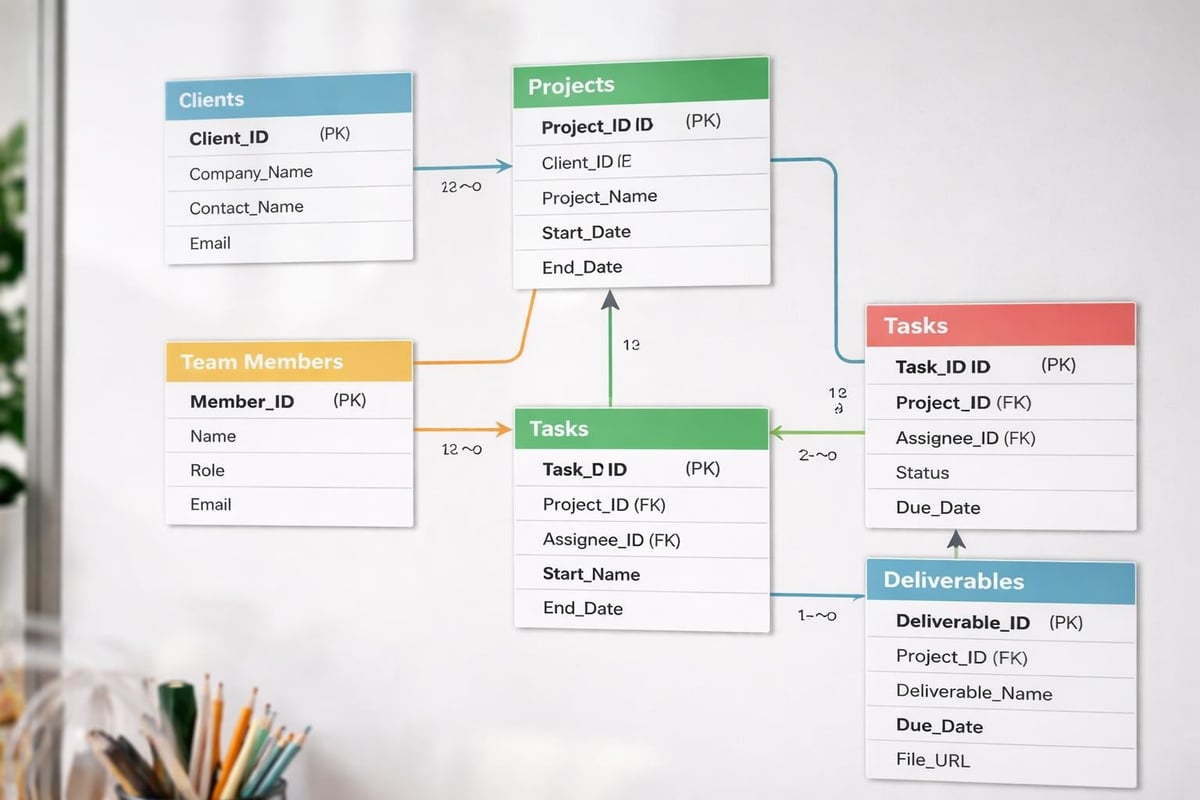
Effective database design determines application performance, feature flexibility, and maintenance complexity. Poor data structures create technical debt that compounds over time, whilst well-designed schemas adapt gracefully to changing requirements.
No-code platforms offer visual database builders that simplify this process without sacrificing sophistication. Understanding how these platforms handle data relationships helps agencies make informed decisions about platform suitability for specific projects.
Key database considerations include:
Modern agency apps rarely operate in isolation. They connect to payment processors, email services, analytics platforms, CRM systems, and industry-specific tools. These integrations extend functionality whilst creating dependencies that require careful management.
App development agencies implement robust API integration strategies that include error handling, rate limiting compliance, and fallback mechanisms when external services experience downtime. These technical details separate professional implementations from amateur efforts.
When planning integrations for your agency app, consider:
The methodology agencies use to build applications significantly impacts outcomes. Waterfall approaches that specify every requirement upfront before beginning development have largely given way to agile methodologies that embrace iteration and continuous feedback.
Agile development breaks projects into short sprints that deliver working functionality incrementally. This approach provides several advantages for agency app development:
Clients see tangible progress throughout the development process rather than waiting months for a big reveal. This visibility builds confidence and enables course corrections before significant resources are invested in the wrong direction.
Development teams receive regular feedback that informs subsequent work. Features that seemed important during initial planning sometimes prove less valuable in practice, whilst unanticipated needs emerge as users interact with early versions.
Risk distributes across the project timeline rather than concentrating at the end. Technical challenges surface early when addressing them is least disruptive to overall timelines and budgets.
Common mistakes when working with agencies often stem from communication breakdowns and misaligned expectations. Successful agency app projects establish clear communication protocols from the outset.
Weekly check-ins provide regular touchpoints for status updates, blocker identification, and priority alignment. These sessions needn't be lengthy, but consistency matters more than duration. Brief, focused meetings maintain momentum without creating excessive overhead.
Shared documentation ensures all stakeholders reference the same information. Specification documents, technical architecture diagrams, and project roadmaps should live in accessible locations where team members and clients can review them anytime.
Visual demonstrations communicate progress more effectively than status reports. Even unfinished features shown in development environments help clients understand how the application is taking shape.
Many agencies face a build-versus-buy decision when entering the app development space. Building internal capabilities offers maximum control but requires significant investment in talent acquisition, training, and retention. Partnering with specialized development agencies provides immediate access to expertise without long-term overhead.
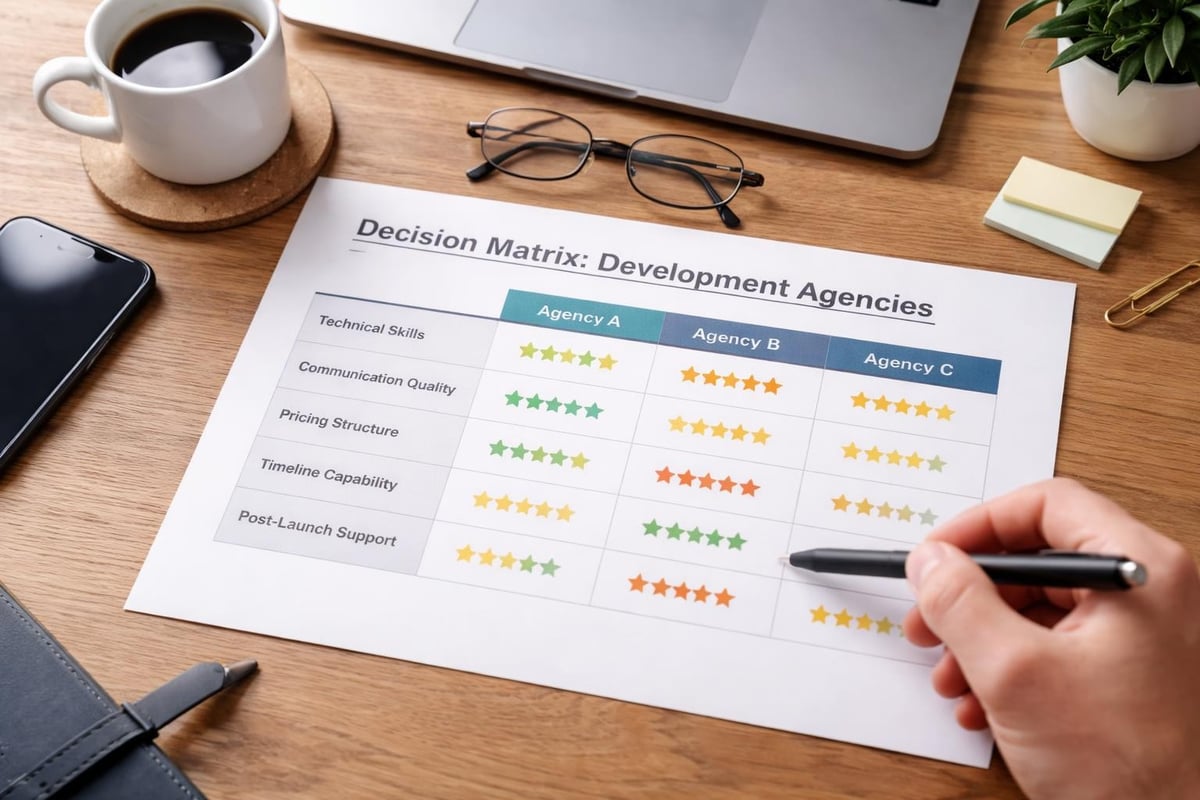
Selecting the right mobile app development agency requires evaluating multiple dimensions beyond simply comparing hourly rates. Technical expertise, industry experience, communication quality, and cultural fit all influence project success.
When assessing potential development partners for your agency app project, consider these factors:
| Criterion | What to Look For | Red Flags |
|---|---|---|
| Portfolio | Diverse projects demonstrating relevant capabilities | Only similar projects or no verifiable work |
| Technical expertise | Deep knowledge of chosen platforms and technologies | Vague technical discussions or buzzword reliance |
| Communication | Clear, prompt responses and proactive updates | Slow response times or unclear explanations |
| Process | Documented methodology with defined milestones | Ad-hoc approach without structure |
| Pricing transparency | Detailed breakdowns linking costs to deliverables | Vague estimates or hidden fees |
The importance of reviewing portfolios and assessing communication cannot be overstated. Past work demonstrates capability whilst communication patterns during the sales process preview the working relationship.
Development partnerships take various forms depending on project scope, duration, and strategic importance. Fixed-price contracts work well for clearly defined projects with stable requirements. Time-and-materials arrangements offer flexibility for exploratory work where requirements evolve.
Retainer relationships suit ongoing development needs where regular updates, feature additions, and maintenance create continuous workstreams. These arrangements provide development capacity on demand without the overhead of full-time employees.
White-label partnerships enable agencies to offer app development under their own brand whilst relying on specialist partners for execution. This model preserves client relationships whilst accessing technical capabilities that would be expensive to build internally.
Agency apps frequently handle sensitive client data, financial information, or personal details that require robust security measures. Inadequate security implementations create legal liability, reputational damage, and potential regulatory penalties.
Enhanced security practices distinguish professional agency app development from amateur efforts. These practices begin during architecture design and continue through deployment, monitoring, and incident response planning.
Essential security considerations include:
Security isn't a one-time implementation but an ongoing commitment that evolves with emerging threats and changing regulatory landscapes. Regular security reviews and prompt patching of identified vulnerabilities maintain protection over time.
Building an agency app represents only half the equation. Successful launches require planning that extends beyond technical deployment to encompass user onboarding, marketing, support infrastructure, and performance monitoring.
The weeks before launch determine whether your agency app gains traction or languishes with low adoption. App store optimization and launch strategies create visibility and drive initial downloads for mobile applications, whilst web applications require different promotional approaches.
Testing protocols ensure quality at launch. Beta testing with representative users identifies issues that internal teams miss. Load testing verifies performance under expected usage patterns. Security assessments confirm that protective measures function as designed.
Documentation preparation includes user guides, video tutorials, and FAQ content that helps new users understand application functionality. Comprehensive onboarding reduces support burden whilst improving user satisfaction and retention.
Launch marks the beginning of the application lifecycle, not its conclusion. Analytics implementation tracks user behaviour, feature adoption, performance metrics, and conversion funnels. This data informs optimization priorities and feature development roadmaps.
How app development agencies help scale businesses often centres on their ability to analyse usage data and implement improvements that drive business outcomes. Regular iteration based on real-world usage patterns keeps applications relevant and valuable.
Establish clear metrics that define success for your agency app:
As agencies gain experience with app development, opportunities emerge to systematize and scale these capabilities. Reusable components, standardized processes, and specialized team members transform one-off projects into sustainable service lines.
Building component libraries accelerates future projects by providing tested building blocks for common functionality. Authentication systems, payment processing, user management, and notification frameworks can be adapted across multiple projects rather than rebuilt from scratch.
Process documentation captures lessons learned and codifies best practices. As team members join or projects multiply, documented processes maintain quality and reduce onboarding time. Templates for discovery sessions, specification documents, testing protocols, and launch checklists create consistency.
Specialization enables team members to develop deep expertise in specific areas. Rather than everyone understanding everything superficially, specialists in database architecture, API integration, UI design, or quality assurance deliver superior outcomes within their domains.
Agencies committed to long-term app development capabilities benefit from investing in internal skill development. Training programs, certification courses, and conference attendance keep teams current with evolving technologies and methodologies.
No-code web development platforms have lowered the barrier to entry for agencies wanting to offer app development without hiring traditional developers. Team members with strong logical thinking and attention to detail can build sophisticated applications after relatively brief training periods.
This democratization of development capabilities enables agencies to respond quickly to client needs without lengthy recruitment processes or expensive outsourcing arrangements. Internal teams understand your clients, processes, and quality standards in ways that external partners cannot match.
Quality assurance distinguishes professional agency app development from amateur implementations. Comprehensive testing identifies issues before users encounter them, preventing the reputational damage and support overhead that bugs create.
Testing strategies should encompass multiple dimensions:
Automated testing frameworks reduce manual testing burden whilst improving coverage and consistency. Unit tests verify individual components, integration tests confirm that components work together, and end-to-end tests simulate complete user workflows.
Essential tips for agency app development emphasize building cushions into timelines and budgets to accommodate unexpected challenges. Testing often reveals issues that require additional development time, and rushing this phase to meet arbitrary deadlines creates technical debt and user dissatisfaction.
Technology evolves rapidly, and applications built today must adapt to tomorrow's requirements. Future-proofing begins with architectural decisions that enable modification without complete rebuilds.
Modular design separates concerns into discrete components with well-defined interfaces. This separation enables replacing or updating individual modules without cascading changes throughout the application. Payment processors, email services, and analytics platforms should be abstracted behind interfaces that allow swapping providers without extensive refactoring.
API-first architectures expose application functionality through programmatic interfaces that enable future integrations and alternative frontends. A web application with a robust API can later support mobile apps, voice interfaces, or third-party integrations without backend modifications.
Documentation investment pays dividends over time. Well-documented codebases, architecture decisions, and integration specifications enable team transitions and future enhancements. Understanding app development for non-technical founders highlights how clear documentation bridges knowledge gaps and reduces dependency on specific individuals.
Regular technology reviews assess whether current platforms and tools remain optimal. Sometimes newer alternatives offer significant advantages, whilst in other cases, stability and team expertise favour maintaining existing choices. These reviews should balance innovation against disruption risk.
Agency app development in 2026 represents a strategic capability that extends service offerings whilst creating competitive differentiation. Success requires balancing technical excellence with user-focused design, robust processes with agile adaptation, and immediate functionality with long-term scalability. Whether you're building internal tools or client-facing platforms, the principles remain consistent: understand core objectives, prioritize ruthlessly, iterate based on feedback, and maintain quality throughout. If you're ready to transform your agency's digital capabilities through rapid MVP development, Creator Concepts specializes in helping agencies and startups build scalable applications using no-code platforms that deliver results in weeks rather than months.
© 2026 CreatorConcepts Limited
128 City Road, London EC1V 2NX