

The landscape of app and software development has transformed dramatically over recent years, driven by artificial intelligence, no-code platforms, and evolving user expectations. For entrepreneurs and startups in 2026, understanding the current development ecosystem is essential for building products that validate ideas quickly whilst maintaining quality and scalability. The traditional barriers to entry have lowered substantially, yet the strategic decisions around development approach, technology selection, and team composition remain as critical as ever.
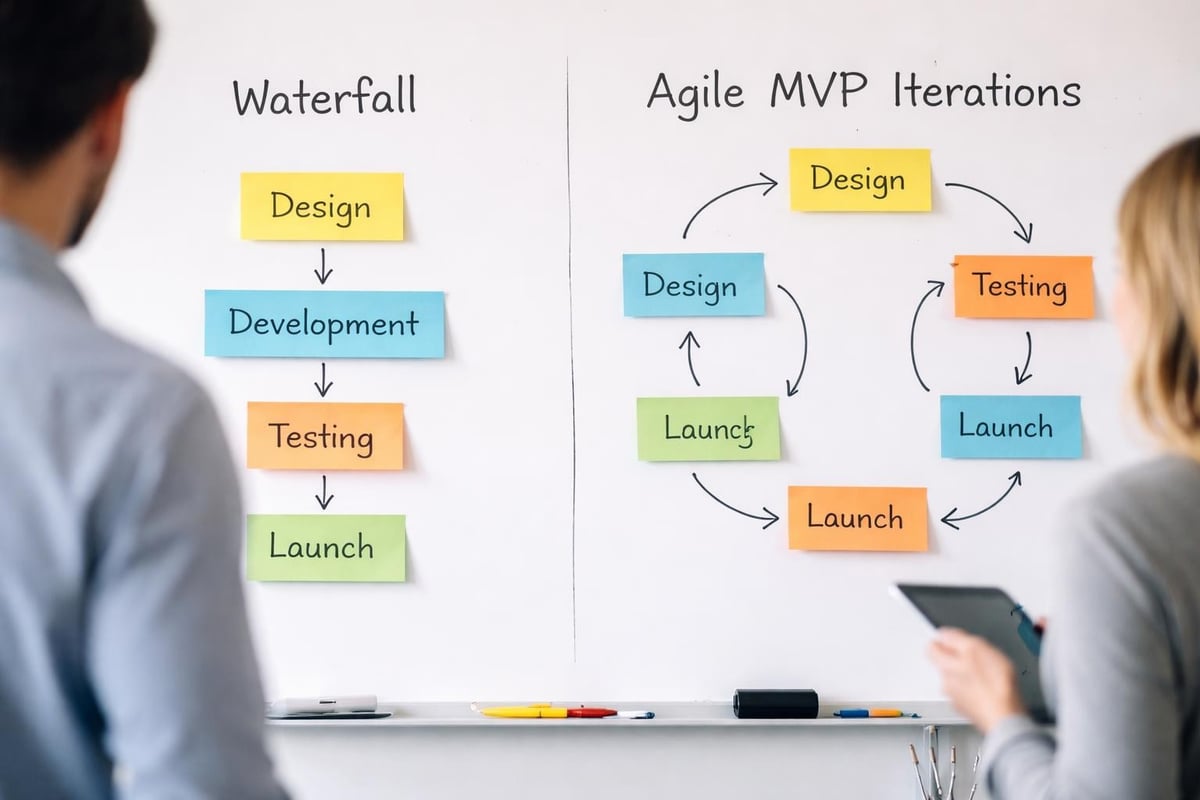
The methodology behind app and software development has shifted from rigid waterfall processes to agile, iterative frameworks that prioritize rapid validation and user feedback. Modern development teams embrace continuous integration and deployment, allowing updates to reach users within hours rather than months. This acceleration has been further amplified by AI-driven tools enhancing developer workflow efficiency, which assist with tasks ranging from code refactoring to automated test creation.
The contrast between legacy and contemporary approaches reveals fundamental changes in how teams build digital products:
| Aspect | Traditional Approach | Modern Approach |
|---|---|---|
| Timeline | 6-12 months minimum | 4-8 weeks for MVP |
| Code Base | Custom from scratch | Leverages frameworks and platforms |
| Testing | End-of-cycle QA | Continuous automated testing |
| User Feedback | Post-launch only | Integrated throughout development |
| Cost Structure | High upfront investment | Scaleable incremental spending |
These differences reflect not merely technological advancement but a philosophical shift towards validation-first thinking. Startups cannot afford to spend months building features users may never want.
The rise of no-code platforms has fundamentally altered the development landscape, democratizing access to app creation for non-technical founders. Platforms such as Bubble.io enable entrepreneurs to build sophisticated applications without writing traditional code, reducing both time-to-market and initial investment requirements. For startups questioning whether Bubble remains viable in 2026, the answer lies in understanding the trade-offs between speed, customization, and scalability.
Key advantages of no-code development include:
The misconception that no-code solutions lack professional quality has been thoroughly debunked. Agencies like Creator Concepts demonstrate how MVP development can deliver award-winning products using these platforms, validating startup ideas within weeks rather than quarters.
No-code app and software development suits specific scenarios particularly well. Startups validating market fit, businesses automating internal processes, and founders building community-driven platforms find these tools exceptionally valuable. The community app development tools available in 2024 continue evolving, offering increasingly sophisticated functionality without code complexity.
However, applications requiring extensive custom algorithms, real-time processing at massive scale, or deep integration with proprietary hardware may still necessitate traditional development approaches.
Artificial intelligence has become integral to modern app and software development workflows. The emergence of "vibe coding" represents a new paradigm where developers work alongside AI assistants to accelerate development whilst maintaining code quality. This approach has sparked important conversations about security, governance, and the future role of human developers.
Vibe coding describes development where AI tools generate substantial portions of code based on natural language descriptions and contextual understanding. Rather than replacing developers, these tools augment their capabilities, handling routine implementations whilst humans focus on architecture, business logic, and user experience.
Critical considerations for AI-assisted development:
The transformation expected in software development by 2026 emphasizes these governance mechanisms, ensuring that speed gains don't compromise security or maintainability.
With mobile devices accounting for the majority of internet traffic, app and software development must prioritize mobile experiences from inception rather than treating them as afterthoughts. This mobile-first approach influences everything from database design to user interface patterns.

Mobile app development best practices emphasize user experience, performance optimization, and cross-platform compatibility. Applications must function flawlessly across diverse screen sizes, operating systems, and network conditions.
Performance optimization techniques include:
The choice between native, hybrid, and progressive web apps significantly impacts development approach and resource requirements. Native apps offer superior performance but demand platform-specific development. Hybrid solutions balance cost and capabilities, whilst progressive web apps provide universal accessibility without app store dependencies.
Successful app and software development requires assembling teams with complementary skills aligned to project requirements. Startups face a fundamental decision: building an internal team, partnering with an agency, or adopting a hybrid model.
| Team Model | Advantages | Disadvantages | Best For |
|---|---|---|---|
| In-House | Full control, product knowledge retention | High fixed costs, recruitment challenges | Established companies with ongoing development needs |
| Agency Partnership | Rapid deployment, diverse expertise | Less direct control, potential communication gaps | Startups validating MVPs quickly |
| Freelance Network | Flexibility, cost control | Coordination overhead, variable quality | Small projects with defined scope |
| Hybrid Approach | Balanced control and expertise | Complexity in management | Growing startups scaling operations |
For non-technical founders navigating app development, partnering with experienced agencies often accelerates validation whilst building product understanding that informs future hiring decisions.
Robust testing frameworks distinguish professional app and software development from amateur efforts. Quality assurance must be integrated throughout the development lifecycle rather than bolted on before launch.
Modern applications demand multiple testing layers, each addressing different aspects of functionality and user experience:
Best practices for software development processes emphasize continuous testing integrated with version control systems. Automated test suites run with every code commit, catching regressions before they reach production environments.
The investment in comprehensive testing pays dividends through reduced bug-fixing costs, improved user satisfaction, and faster feature development enabled by confidence in existing functionality.
Security cannot be an afterthought in app and software development. Applications handle sensitive user data, financial transactions, and personal information requiring robust protection mechanisms and compliance with regulations such as GDPR, CCPA, and industry-specific standards.
Security architecture must be designed into applications from the initial wireframes. Encryption, authentication, authorization, and data protection mechanisms form the foundation upon which applications are built.
Essential security measures include:
Mobile application development for sensitive environments provides frameworks applicable across industries, emphasizing minimal permissions, secure development processes, and third-party security reviews.

Applications that succeed face the challenge of growth. App and software development must anticipate scaling requirements from inception, even when initial user numbers are modest. The architectural decisions made during MVP development significantly impact future scaling costs and technical debt.
Database selection and structure fundamentally influence application performance and scaling characteristics. Relational databases offer consistency and complex query capabilities but may require significant optimization for massive scale. NoSQL solutions provide horizontal scaling but demand careful data modelling.
Scalability considerations across application layers:
The beauty of modern cloud infrastructure lies in the ability to start small and scale incrementally. Applications can launch on modest resources and expand capacity as user demand warrants, avoiding premature optimization whilst maintaining growth readiness.
Exceptional user experience distinguishes successful applications from technically competent failures. App and software development teams must balance functionality with usability, ensuring features remain discoverable and workflows feel intuitive.
Modern applications leverage design systems that ensure visual and functional consistency across platforms and features. These systems encompass component libraries, style guides, and interaction patterns that accelerate development whilst maintaining quality.
The most successful applications anticipate user needs, reducing friction through thoughtful defaults, clear navigation, and progressive disclosure of complexity. Features should be discoverable without overwhelming new users, allowing sophistication to reveal itself as users become more comfortable.
Contemporary app and software development rarely occurs in isolation. Applications integrate with payment processors, authentication providers, analytics platforms, and countless third-party services. Well-designed APIs make these integrations reliable and maintainable.
The debate between REST and GraphQL architectural styles continues, with each offering distinct advantages:
| Characteristic | REST | GraphQL |
|---|---|---|
| Learning Curve | Lower, widely understood | Steeper initial learning |
| Data Fetching | Multiple endpoints, potential over-fetching | Single endpoint, precise queries |
| Caching | HTTP caching built-in | Requires additional implementation |
| Tooling | Mature, extensive | Growing rapidly |
| Mobile Optimization | May require multiple requests | Efficient single request |
The impact of AI-driven development on API platforms suggests APIs must increasingly accommodate machine consumption alongside human developers, influencing design decisions around versioning, documentation, and error handling.
The integration of development and operations eliminates traditional silos that slowed software delivery. App and software development teams employ continuous integration and deployment pipelines that automate testing, building, and releasing applications.
Key DevOps practices include:
These practices enable teams to deploy updates multiple times daily whilst maintaining stability. The ability to release small, incremental changes reduces risk and accelerates the feedback loop between users and developers.
Budget constraints challenge every startup, making cost-effective app and software development essential. Strategic technology choices, efficient development processes, and careful infrastructure management keep expenses manageable whilst delivering professional results.
Cloud platforms offer tremendous flexibility but can generate unexpected expenses without proper governance. Understanding pricing models, implementing resource tagging, and establishing budget alerts prevents cost overruns.
Serverless architectures often provide cost advantages for applications with variable load patterns, charging only for actual compute consumption rather than provisioned capacity. Conversely, applications with consistent high traffic may benefit from reserved instances or committed use discounts.
The £5 billion opportunity UK CTOs can unlock through AI emphasizes strategic technology investment aligned with business objectives rather than chasing every emerging trend.
Minimum viable products represent the intersection of app and software development efficiency and market validation. Building only essential features allows startups to test hypotheses with real users before committing extensive resources to unvalidated assumptions.
The minimum viable product concept is frequently misunderstood as building the simplest possible application. Instead, viable means sufficient to test core value propositions with target users. The product must deliver enough value that users engage genuinely, providing meaningful feedback.
Effective MVPs balance three competing priorities:
Startup tips for navigating early development emphasize this balance, recognizing that premature scaling wastes resources whilst inadequate quality invalidates user feedback.
App and software development continues evolving rapidly, with emerging technologies creating new possibilities and challenges. Staying informed about trends allows startups to make strategic technology choices aligned with medium-term opportunities.
Whilst blockchain technology has matured beyond initial hype, legitimate use cases continue emerging in areas requiring trustless verification, immutable records, or decentralized governance. Applications must evaluate whether blockchain genuinely solves business problems or adds unnecessary complexity.
Moving computation closer to users through edge networks reduces latency and enables new application categories. Real-time processing for IoT devices, augmented reality applications, and latency-sensitive services benefit substantially from edge architectures.
Voice-activated interfaces and conversational AI transform how users interact with applications. Natural language processing capabilities continue improving, making voice a viable primary interface for specific use cases rather than merely a novelty feature.
App and software development must navigate increasingly complex regulatory landscapes governing data privacy, accessibility, and industry-specific requirements. Compliance cannot be retrofitted; it must be integrated into development processes from inception.
European privacy regulations influence global application design through requirements for consent management, data portability, and the right to erasure. Applications serving European users must implement comprehensive data governance regardless of where they're headquartered.
Compliance implementation includes:
Similar regulations are emerging globally, making privacy-first design prudent even when not strictly required by current regulations.
Understanding user behaviour guides effective app and software development decisions. Analytics platforms provide insights into feature usage, user journeys, and conversion funnels that inform prioritization and optimization efforts.
Comprehensive analytics capabilities must respect user privacy and comply with regulations. Anonymous aggregate data often provides sufficient insights without requiring invasive tracking that erodes user trust.
Successful applications define key performance indicators aligned with business objectives, then instrument their applications to measure these metrics reliably. Vanity metrics like total downloads matter less than engagement depth, retention rates, and conversion to paid tiers.
The modern landscape of app and software development offers unprecedented opportunities for startups willing to embrace contemporary tools and methodologies. Success requires balancing speed with quality, innovation with pragmatism, and ambition with validation. Whether you're a non-technical founder with a breakthrough idea or an established business expanding digital capabilities, partnering with experienced development specialists accelerates your path to market whilst avoiding costly missteps. Creator Concepts helps entrepreneurs and startups transform ideas into validated MVPs through award-winning Bubble.io development, delivering scaleable applications in weeks rather than months. Ready to bring your vision to life with expert guidance and proven processes?
© 2026 CreatorConcepts Limited
128 City Road, London EC1V 2NX