
Building a compelling mobile app development website has become increasingly crucial as the app development industry continues its rapid evolution in 2026. Whether you're an established agency or an emerging startup specialising in no-code solutions, your online presence serves as the primary touchpoint for potential clients evaluating your capabilities. A well-crafted mobile app development website doesn't simply list services – it demonstrates expertise, showcases successful projects, and converts visitors into qualified leads through strategic design and messaging.
The primary function of a mobile app development website extends far beyond basic information delivery. Your site must simultaneously educate potential clients about your technical capabilities, demonstrate your understanding of current app development trends and challenges, and establish trust through tangible proof points.
Before designing your mobile app development website, identify which business goals take priority. Most development agencies focus on three primary objectives:
Each objective requires specific website elements and content strategies. A mobile app branding approach that aligns your website's visual identity with your technical expertise creates stronger market positioning.
Your mobile app development website must speak to multiple stakeholder types. Founders and entrepreneurs require different messaging than CTOs or product managers. Segment your content accordingly:
| Audience Type | Primary Concerns | Key Website Elements |
|---|---|---|
| Startup Founders | Speed to market, cost efficiency, validation | MVP case studies, pricing transparency, timeline estimates |
| Enterprise Decision-makers | Scalability, security, integration capabilities | Technical specifications, compliance credentials, support SLAs |
| Product Managers | Process alignment, communication, iteration flexibility | Development methodology, project management tools, collaboration approach |

A successful mobile app development website balances information depth with user experience simplicity. Visitors should find answers quickly whilst feeling confident in your technical capabilities.
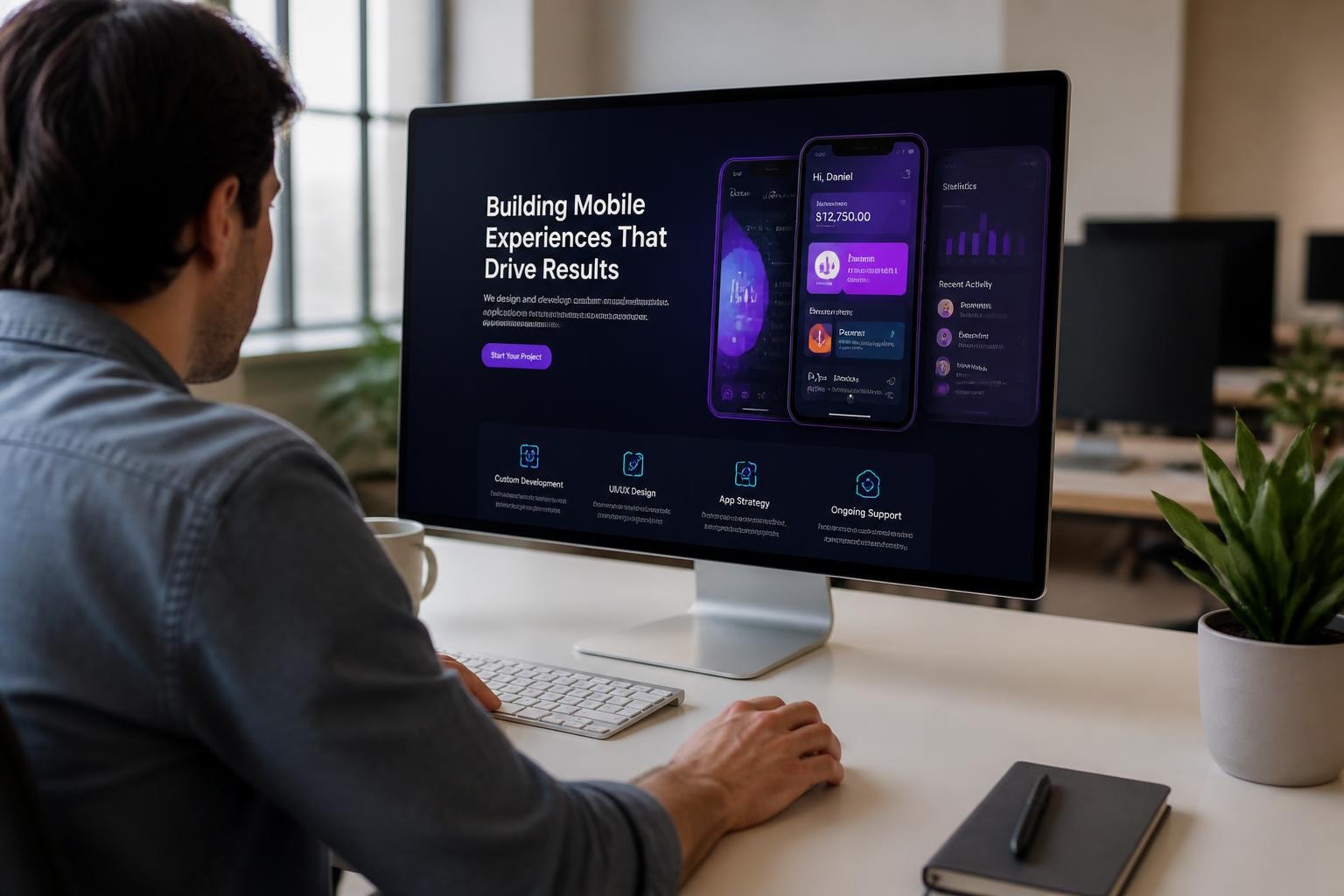
Your homepage sets expectations and directs traffic flow. Within three seconds, visitors should understand what you build, whom you serve, and why they should choose you. Position your value proposition prominently, followed by social proof elements such as client logos, project statistics, or awards.
Navigation architecture matters significantly. Implement clear pathways to your portfolio, services breakdown, and contact mechanisms. Many high-converting sites use a sticky header with prominent "Start Your Project" calls-to-action that remain accessible throughout the browsing journey.
Generic project listings fail to engage sophisticated buyers. Your portfolio section should tell stories about problem-solving, not just showcase visual designs. Structure each case study around:
When presenting work, consider whether potential clients seeking an app to make can envision their own project's potential. Include diverse examples spanning industries, complexity levels, and platform types.
Rather than listing capabilities generically, structure service pages around client outcomes. If you specialise in no-code development, explain when this approach delivers superior value versus traditional coding. Address common misconceptions and highlight the best practices for mobile app development within your chosen technology stack.
For agencies working with platforms like Bubble.io, demonstrating MVP Development expertise helps founders and startups validate their ideas using scaleable MVPs designed, built and launched with them in weeks. This specificity attracts qualified prospects already aligned with your methodology.
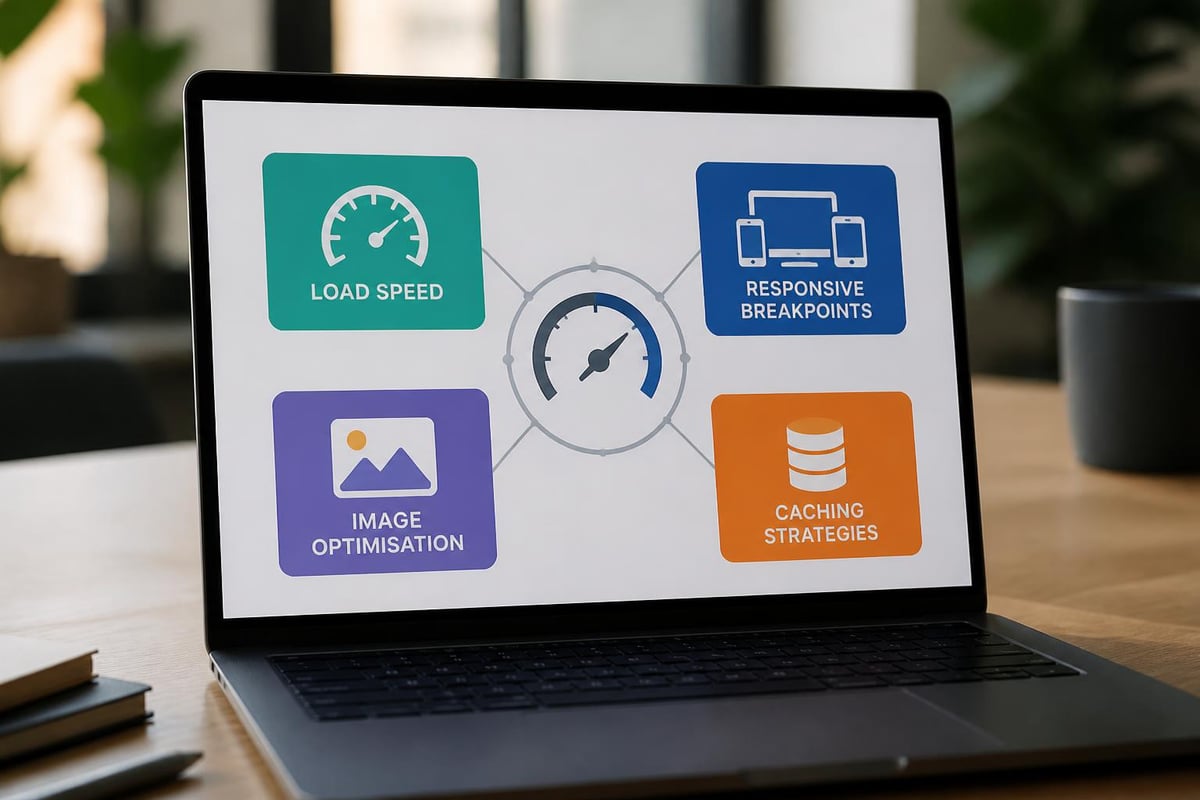
Your mobile app development website's technical foundation directly impacts credibility. Slow load times or broken responsive layouts undermine confidence in your development capabilities.
It's remarkable how many development agencies neglect their own mobile experience. In 2026, with over 60% of web traffic originating from mobile devices, responsive design isn't optional. Test your site across multiple device types, screen sizes, and orientations.
Pay particular attention to:
Page speed influences both user experience and search rankings. Implement these technical improvements:
Consider using best mobile app development software insights to understand what prospects evaluate when selecting development partners. If your site demonstrates technical excellence, visitors infer similar quality in your client work.
Publishing valuable content positions your mobile app development website as an educational resource, not merely a promotional channel. This approach generates organic traffic whilst nurturing leads through extended decision cycles.
Develop content addressing questions prospects ask throughout their buying journey. Early-stage content might explore "should I build a native or hybrid app?" whilst later-stage articles compare development methodologies or deployment strategies.
Topic clusters work particularly well:
When discussing broader concepts like working with a London SaaS development company, connect these topics to mobile app development contexts where relevant.
Detailed case studies serve dual purposes: demonstrating expertise whilst addressing objections. Structure them to highlight how you've solved problems similar to those your prospects face.
Include specific metrics wherever possible. Rather than stating "improved user engagement," quantify it: "increased daily active users by 127% within 60 days of launch." These concrete outcomes resonate more strongly than vague claims.
Credibility determines whether visitors become enquiries. Your mobile app development website must systematically address scepticism through multiple proof points.
Generic praise carries minimal weight. Effective testimonials include:
Position testimonials strategically throughout your site, not relegated to a single page. Feature relevant feedback near related service descriptions or portfolio items.
Display certifications, partnerships, and awards prominently. If you've achieved platform partner status (such as Bubble.io certification), showcase this credential. Awards from industry bodies or technology providers validate your expertise to risk-averse buyers.
Create a comprehensive credentials section detailing:
| Credential Type | Examples | Placement Strategy |
|---|---|---|
| Platform Partnerships | Certified Bubble.io Partner, Google Developer Partner | Homepage, footer, relevant service pages |
| Industry Awards | Best Mobile App Agency 2026, Innovation Award | Homepage hero section, about page |
| Client Recognition | Featured case studies, client logos | Homepage, dedicated client page |
| Team Qualifications | Certifications, speaking engagements, publications | About page, team profiles |
Generating traffic means nothing without converting visitors into leads. Your mobile app development website needs strategic conversion pathways aligned with different buyer readiness levels.
Not every visitor arrives ready to book a consultation. Provide engagement options matching various commitment levels:
This tiered approach captures contacts earlier in their journey whilst identifying hot prospects through their engagement progression.
Lengthy forms create friction, but insufficient information wastes your team's time. Strike balance by requesting essential details whilst keeping the process simple.
Effective form structures include:
Consider implementing progressive profiling, gathering basic information initially and requesting additional details in subsequent interactions.

Hundreds of agencies offer mobile app development services. Your mobile app development website must articulate what makes you distinctly valuable.
Generalist positioning rarely wins in saturated markets. Consider focusing on:
This focused approach makes marketing more efficient and positions you as the specialist choice rather than one option among many. Agencies offering no-code web development platforms expertise can attract founders seeking rapid validation without extensive development budgets.
Pricing transparency remains controversial, with valid arguments on both sides. However, providing ballpark figures or package structures helps qualify leads whilst demonstrating confidence in your value proposition.
Consider these approaches:
Even without exact pricing, educating prospects about cost factors (platform choice, feature complexity, design requirements) positions you as helpful rather than evasive.
Your mobile app development website should reflect awareness of emerging technologies shaping the industry in 2026.
If you incorporate AI capabilities into client projects, demonstrate this expertise through your own site. Implement chatbots for initial enquiries, personalised content recommendations based on browsing behaviour, or predictive project scope estimators.
Discussing topics like adversarial AI security challenges shows sophistication beyond basic development knowledge. This technical depth attracts more sophisticated buyers seeking partners who understand complex implementation considerations.
Static descriptions of your capabilities pale compared to interactive experiences. Consider implementing:
These dynamic elements engage visitors more effectively than text-heavy descriptions whilst showcasing your technical capabilities implicitly.
A professionally executed mobile app development website adheres to accessibility standards, demonstrating commitment to inclusive digital experiences.
Meeting Web Content Accessibility Guidelines (WCAG) 2.1 AA standards ensures your site serves all users effectively. Key considerations include:
Understanding accessibility practices in mobile app development positions you favourably with clients requiring compliance, particularly in regulated industries like healthcare, education, or government sectors.
Review your content for unnecessarily technical jargon that excludes less technical stakeholders. Whilst demonstrating expertise remains important, accessibility to business-focused decision-makers matters equally.
Similarly, ensure imagery reflects diverse user groups and avoids stereotypical representations of technology professionals or end users.
Launch represents the beginning, not the conclusion, of your mobile app development website's evolution. Systematic measurement and iteration drive ongoing performance improvements.
Track metrics revealing both traffic quality and conversion effectiveness:
| Metric Category | Specific Measurements | Optimisation Insights |
|---|---|---|
| Traffic Sources | Organic search, referrals, direct, social | Channel effectiveness, marketing ROI |
| Engagement | Pages per session, time on site, bounce rate | Content relevance, user experience quality |
| Conversion | Form submissions, calls booked, downloads | Messaging effectiveness, CTA performance |
| Technical | Page load speed, mobile usage, browser types | Performance optimisation priorities |
Set up goal tracking for specific actions: contact form submissions, resource downloads, video views, and key page visits. This data reveals which content drives engagement and where visitors encounter friction.
Continuous testing refines your mobile app development website's performance. Test elements systematically:
Implement changes incrementally rather than redesigning completely, allowing clear attribution of performance improvements to specific modifications.
Demonstrating robust security practices on your own mobile app development website builds confidence in your ability to implement similar standards for clients.
Basic table stakes in 2026, but surprisingly some development sites still neglect this fundamental security measure. Ensure your entire site operates over HTTPS, particularly forms collecting user information.
With GDPR, CCPA, and other privacy regulations governing data handling, clearly communicate how you collect, store, and utilise visitor information. Link your privacy policy prominently in the footer and near data collection points.
Understanding mobile app security practices from a developer perspective enables you to address security concerns confidently when prospects raise them during sales conversations.
Your mobile app development website shouldn't exist in isolation from your broader business systems. Strategic integrations streamline operations whilst improving customer experience.
Connect form submissions directly to your customer relationship management system. This automation ensures immediate follow-up whilst maintaining comprehensive lead records. Popular integrations include HubSpot, Salesforce, or Pipedrive connections that trigger automated nurture sequences based on engagement patterns.
Some agencies provide client portal access directly through their website, allowing prospects to understand the collaboration experience before engaging. This transparency differentiates you from competitors whilst setting clear process expectations.
Eliminate email tennis for booking discovery calls. Embed calendar tools (Calendly, Acuity, or custom solutions) allowing prospects to book consultations directly. This convenience increases conversion whilst qualifying prospect commitment level.
Building an effective mobile app development website requires balancing technical excellence with strategic marketing, combining credibility signals with conversion optimisation, and maintaining relevance as industry trends evolve. Whether you're establishing your first online presence or refining an existing site, focus on clearly communicating your unique value whilst removing friction from the enquiry process. Creator Concepts specialises in helping entrepreneurs and startups bring their digital visions to life through rapid MVP development, combining strategic positioning with technical execution to launch market-ready solutions efficiently.
© 2026 CreatorConcepts Limited
128 City Road, London EC1V 2NX