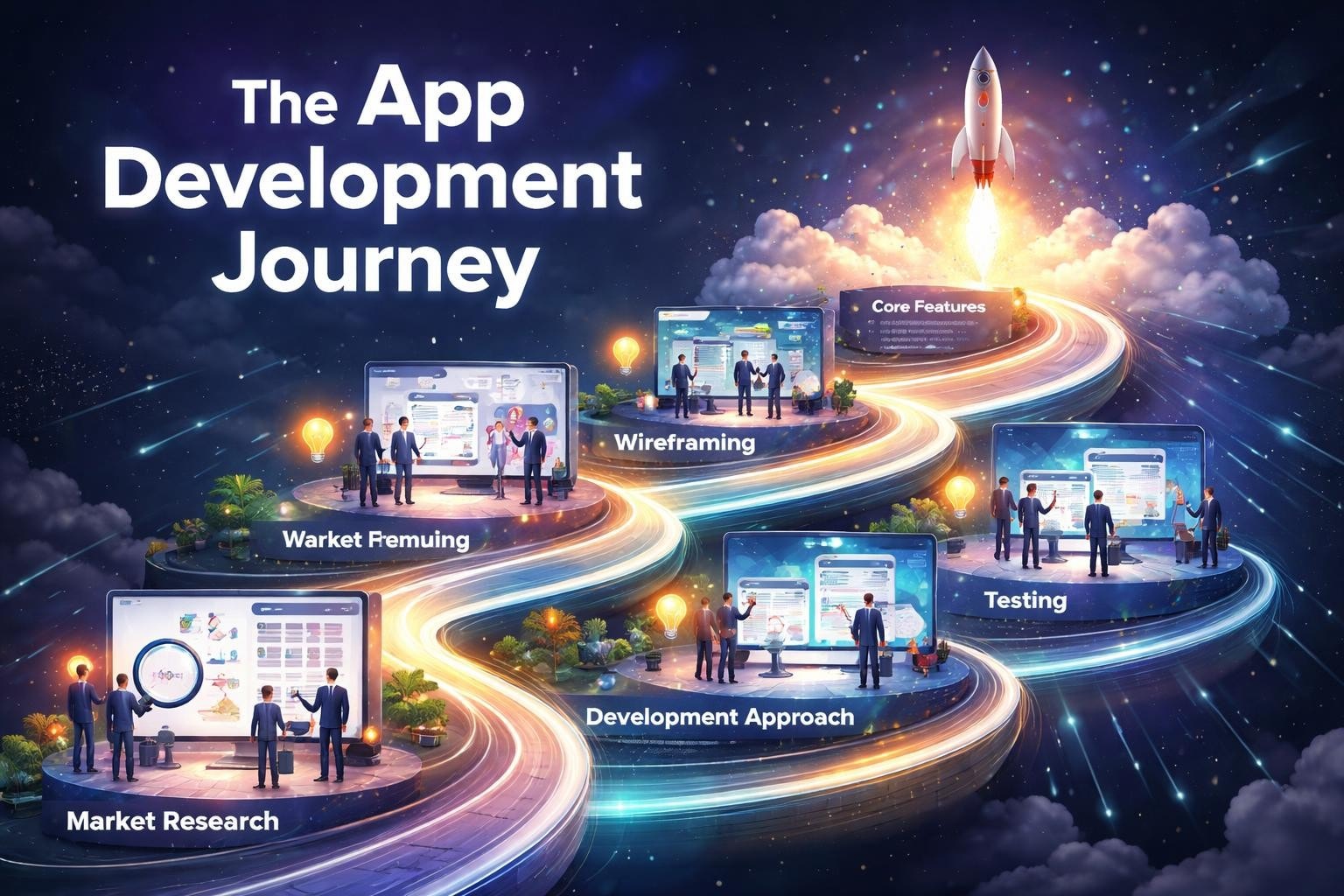

Creating a successful application in 2026 requires more than just a brilliant idea. The landscape of app development has evolved significantly, offering entrepreneurs and startups unprecedented opportunities to bring their visions to life without needing extensive technical expertise. Whether you're a non-technical founder or an experienced developer, understanding the complete process of how to create an app from concept to launch is essential for success. This guide explores the strategic planning, design considerations, development approaches, and deployment strategies that will help you build a market-ready application efficiently and cost-effectively.
The question of "app how to make" has transformed dramatically over recent years. Traditional development approaches that once required months of coding and substantial investment now coexist with innovative no-code platforms that empower founders to validate ideas rapidly.
The mobile app development ecosystem encompasses several key elements that every entrepreneur should understand. Native apps built specifically for iOS or Android deliver optimal performance but require separate codebases. Progressive web apps offer cross-platform functionality through browsers, whilst hybrid apps attempt to balance native capabilities with code reusability.
According to comprehensive research on mobile app development, the industry continues to evolve with new frameworks and methodologies emerging regularly. The choice between these approaches depends on your specific requirements, budget constraints, timeline expectations, and technical capabilities.
Before writing a single line of code or designing any interface, successful app development begins with thorough market research. This foundational step determines whether your concept addresses a genuine market need.
The validation phase saves countless hours and resources by ensuring you're building something people actually want. Many founders skip this crucial step, eager to jump into development, only to discover their assumptions were incorrect after significant investment.

Strategic planning transforms vague concepts into actionable development roadmaps. This phase requires brutal honesty about resources, capabilities, and realistic timelines.
The minimum viable product (MVP) approach has become the gold standard for startups. Rather than building every conceivable feature, successful entrepreneurs focus on the essential functionality that delivers core value.
| MVP Component | Purpose | Common Mistakes |
|---|---|---|
| Core Problem Solution | Addresses the primary user pain point | Including too many secondary features |
| User Authentication | Enables personalised experiences and data security | Over-complicating the registration process |
| Essential User Flow | Allows users to complete primary tasks | Creating convoluted navigation paths |
| Basic Analytics | Provides insights into user behaviour | Implementing excessive tracking too early |
| Feedback Mechanism | Enables user communication and iteration | Neglecting this crucial learning tool |
When considering app development for non-technical founders, the MVP approach becomes even more critical. It allows you to test market assumptions without exhausting your budget or timeline.
Feature prioritisation requires discipline. Create a comprehensive list of desired functionality, then categorise each item as must-have, should-have, or nice-to-have. Your MVP should only include must-have features that directly enable your core value proposition.
The decision of how to actually build your app represents one of the most significant choices you'll make. Each approach offers distinct advantages and trade-offs.
Traditional coding provides maximum flexibility and control. Custom development allows you to build precisely what you envision without platform limitations. However, this approach typically requires either technical co-founders, hired developers, or outsourced development teams, all of which demand substantial financial investment and extended timelines.
No-code platforms have revolutionised the app how to make process for entrepreneurs. These visual development environments enable founders to build functional applications through drag-and-drop interfaces and pre-built components. No-code web development platforms offer rapid prototyping capabilities, reduced development costs, and faster time-to-market.
The rise of platforms like Bubble.io has democratised app development. Entrepreneurs can now validate ideas and build scaleable MVPs in weeks rather than months. For those wondering whether Bubble is still worth it in 2026, the platform continues to evolve with enhanced capabilities, making it an increasingly viable option for serious startups.
Low-code platforms occupy the middle ground, offering visual development with the ability to add custom code when needed. This hybrid approach suits projects that require specific customisations whilst benefiting from accelerated development.
Exceptional design distinguishes successful apps from abandoned projects. User experience (UX) and user interface (UI) design work together to create intuitive, engaging applications that users love.
Wireframes serve as the blueprint for your application. These simplified visual representations focus on layout, functionality, and user flows without getting distracted by colours, fonts, or detailed graphics.
The wireframing process outlined by Knack emphasises creating a clear blueprint before development begins. This approach prevents costly revisions during the build phase.
Prototyping tools allow you to create interactive mockups that simulate the actual app experience. These clickable prototypes enable user testing without writing code, revealing usability issues early in the process.
Visual design creates emotional connections with users whilst reinforcing your brand identity. Professional UI design balances aesthetics with functionality.
Consistency across your application builds user confidence. Maintain uniform colour schemes, typography, button styles, and interaction patterns throughout all screens. Users should never wonder whether they're still using the same application.

According to HubSpot's comprehensive guide on app development, investing time in thoughtful design significantly impacts user retention and satisfaction. Users form opinions about your app within seconds of opening it.
The development phase transforms designs into functional software. Your chosen development approach determines the specific tools and processes you'll use.
For entrepreneurs leveraging no-code platforms, the building process focuses on visual development and configuration rather than writing code. This approach has transformed the app how to make question for non-technical founders.
Platform selection matters enormously. Evaluate platforms based on your specific requirements, including database capabilities, API integrations, responsive design features, and scalability potential. Many startups working with agencies specialising in MVP development can validate their ideas using scaleable MVPs designed, built and launched with them in weeks.
The visual development process typically involves:
Testing throughout development catches issues early. No-code platforms often include preview modes that allow you to test functionality as you build.
Custom coding follows a more structured development lifecycle when building applications from scratch. This process requires technical expertise but offers unlimited flexibility.
| Development Phase | Activities | Typical Duration |
|---|---|---|
| Environment Setup | Configure development tools, repositories, frameworks | 1-2 weeks |
| Backend Development | Build server logic, database architecture, APIs | 4-8 weeks |
| Frontend Development | Create user interfaces, implement designs | 4-8 weeks |
| Integration | Connect frontend and backend, implement features | 2-4 weeks |
| Testing | Unit tests, integration tests, user acceptance testing | 2-4 weeks |
Understanding technical aspects of coding an app helps even non-technical founders communicate effectively with development teams. Familiarity with concepts like APIs, databases, and responsive design enables better project management.
Version control using platforms like Git ensures code changes are tracked, enabling collaboration and preventing accidental loss of work. Agile methodologies with regular sprints allow for iterative development and continuous improvement based on feedback.
Regardless of your development approach, certain features appear in virtually every successful application. Implementing these correctly ensures a professional, secure user experience.
User authentication and security protect user data whilst enabling personalised experiences. Modern applications require secure registration, login, password recovery, and session management. For detailed guidance, explore best practices for enhancing user authentication and security.
Data management forms the backbone of most applications. Design your database schema carefully, considering relationships between different data types, scalability requirements, and query performance. Poor database design creates technical debt that becomes increasingly difficult to resolve.
Push notifications re-engage users by delivering timely, relevant information. However, excessive or irrelevant notifications drive users to disable them or uninstall your app entirely. Implement notification preferences allowing users to control what they receive.
Rigorous testing separates professional applications from amateur projects. No app should launch without comprehensive quality assurance.
Functional testing verifies that features work as intended. Test every user flow, button, form, and interaction to ensure the application behaves correctly. Create test cases covering both expected usage and edge cases where users might do something unexpected.
Usability testing involves real users attempting to complete tasks within your application. Observe where they struggle, what confuses them, and which features delight them. According to Prototyper.co's beginner guide, user testing reveals insights that internal teams often miss due to familiarity bias.
Performance testing ensures your application remains responsive under various conditions. Test load times, database query speeds, and functionality with poor internet connectivity. Users abandon apps that feel slow or unresponsive.
Beta testing provides real-world feedback before public launch. Select a diverse group of beta testers who represent your target audience but understand they're testing pre-release software.
Structured beta programmes include clear communication about what you're testing, how users can provide feedback, and what improvements they can expect. Use analytics to track how beta testers actually use the app versus how you anticipated they would.
Feedback collection mechanisms should be simple and accessible. In-app feedback forms, dedicated email addresses, or community forums enable beta testers to report issues and suggest improvements easily.
The launch phase requires careful coordination across multiple platforms and marketing channels. A successful launch generates initial users whilst gathering valuable feedback for future iterations.
For native mobile applications, submission to the Apple App Store and Google Play Store involves specific requirements and review processes. Each platform maintains detailed guidelines covering functionality, design, content, and legal requirements.
App Store requirements include high-quality screenshots, compelling descriptions, appropriate categorisation, privacy policies, and compliance with platform guidelines. Prepare these assets in advance to avoid delays during submission.
The review process varies between platforms. Apple's review typically takes 24-48 hours but may request changes before approval. Google's process is often faster but less stringent initially, with ongoing monitoring for policy violations.
Building a great app means nothing if nobody knows it exists. Strategic marketing begins well before launch day.
Pre-launch marketing builds anticipation and creates an initial user base. Develop a landing page collecting email addresses from interested users. Share progress updates, behind-the-scenes content, and sneak previews to build excitement.
The detailed roadmap from Coding Dojo emphasises the importance of a well-planned launch strategy that extends beyond simply publishing your app.
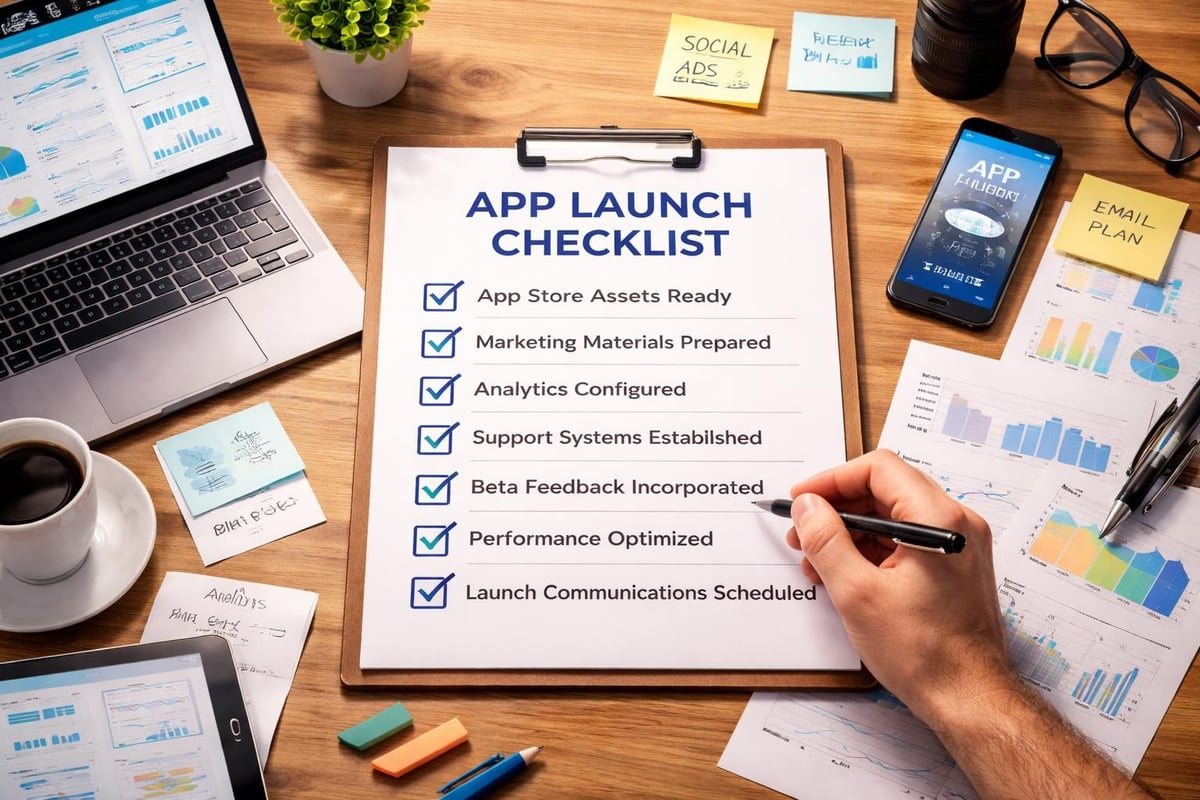
Launching your app is just the beginning. Successful applications evolve based on user feedback, analytics insights, and market changes.
Analytics implementation provides crucial insights into user behaviour. Track key metrics including daily active users, session length, feature usage, conversion rates, and retention over time. These data points inform future development priorities.
User feedback channels ensure you hear directly from your audience. App store reviews, in-app feedback forms, support tickets, and social media mentions all provide valuable insights. Respond promptly to user concerns, demonstrating your commitment to continuous improvement.
As your user base grows, technical and business challenges evolve. Applications must scale to handle increased traffic whilst maintaining performance and reliability.
Database optimisation becomes critical as data volume increases. Implement caching strategies, optimise queries, and consider database sharding if handling massive scale. Many successful startups eventually migrate from no-code platforms to custom infrastructure as they reach significant scale.
API rate limiting protects your infrastructure from abuse whilst ensuring fair resource allocation. Monitor API usage patterns to identify potential bottlenecks before they impact users.
Infrastructure costs typically increase with user growth. Regularly review hosting expenses, optimising resource allocation and exploring more cost-effective solutions as usage patterns become clear.
The most successful applications never stop evolving. Establish a regular rhythm of updates incorporating new features, improvements, and bug fixes.
Feature prioritisation frameworks help determine what to build next. Methods like RICE scoring (Reach, Impact, Confidence, Effort) provide objective criteria for comparing potential features. Balance user requests with strategic vision and technical feasibility.
Regular updates signal to users that you're actively improving the application. However, avoid changing core functionality too drastically, as this frustrates users who've learned existing patterns. Significant redesigns should be thoroughly tested and optionally rolled out gradually.
| Update Type | Frequency | Primary Focus |
|---|---|---|
| Bug Fixes | As needed | Addressing critical issues affecting functionality |
| Minor Updates | Monthly | Small improvements, performance optimisations |
| Feature Releases | Quarterly | New capabilities based on user feedback and strategy |
| Major Versions | Annually | Significant redesigns or architectural changes |
Understanding different apps to build and their specific requirements helps inform your development roadmap. Some applications benefit from frequent small updates, whilst others require more substantial quarterly releases.
Learning from others' mistakes accelerates your success. Certain errors appear repeatedly in failed app projects.
Overbuilding the initial version wastes resources on features users don't want. Start minimal, validate with real users, then expand based on demonstrated need rather than assumptions.
Ignoring user feedback after launch represents a critical mistake. Users often identify issues and opportunities that internal teams miss. Create systematic processes for collecting, analysing, and acting on user input.
Neglecting performance optimisation creates poor user experiences. Slow load times, laggy animations, and unresponsive interfaces drive users away regardless of how useful your features might be.
Underestimating ongoing costs leads to sustainability issues. Beyond initial development, applications require hosting, maintenance, updates, customer support, and marketing investment. Budget accordingly for long-term operation.
Weak security practices expose user data and damage reputation. Implement proper authentication, encrypt sensitive data, regularly update dependencies, and conduct security audits.
The evolution of app development has created unprecedented opportunities for entrepreneurs to build and launch applications. Understanding the complete process from ideation through launch and iteration enables founders to make informed decisions about their approach.
Whether choosing traditional coding, no-code platforms, or hybrid approaches, success requires strategic planning, user-centric design, rigorous testing, and continuous improvement. The app how to make question has multiple valid answers depending on your specific situation, technical capabilities, timeline, and budget constraints.
For startups and entrepreneurs seeking to validate ideas rapidly without extensive technical expertise, modern development approaches offer compelling advantages. The key is matching your chosen method to your specific goals, resources, and market opportunity.
Creating a successful application requires strategic vision, disciplined execution, and continuous iteration based on user feedback. By following a structured approach from validation through launch and beyond, entrepreneurs can build applications that solve real problems and deliver genuine value. If you're ready to transform your app concept into reality, Creator Concepts specialises in helping founders and startups validate their ideas through award-winning MVP development, designed and launched in weeks rather than months.
© 2026 CreatorConcepts Limited
128 City Road, London EC1V 2NX