

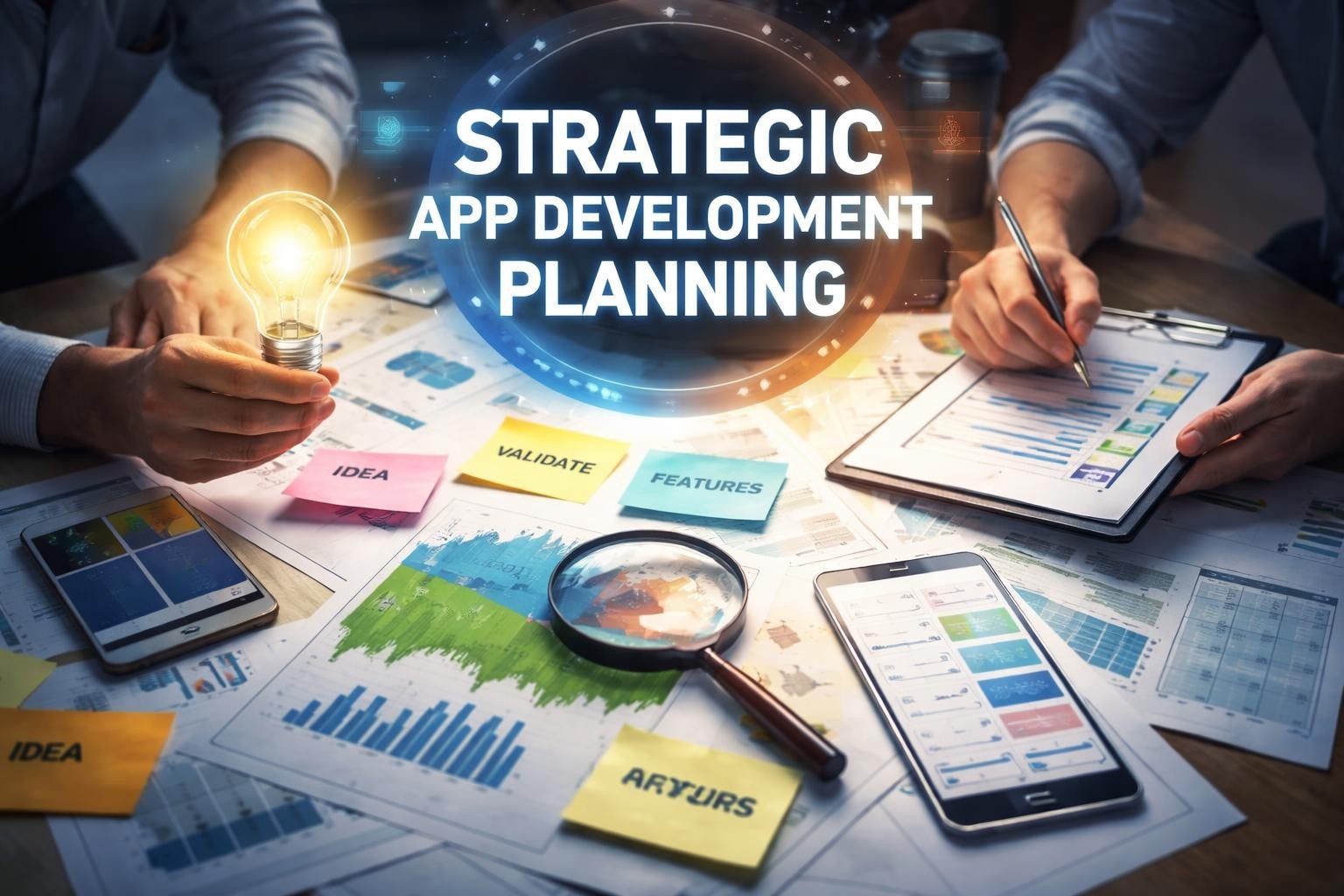
The landscape of app development has shifted dramatically in 2026, with entrepreneurs now having unprecedented access to tools that transform ideas into functional applications within weeks rather than months. Understanding which apps to build requires more than technical knowledge-it demands market awareness, user empathy, and strategic thinking about where genuine opportunities exist. Whether you're a first-time founder or an experienced entrepreneur, the right app idea combined with efficient development practices can create significant value for users whilst building a sustainable business.
Market-Validated App Categories Worth Building
Not all app ideas deserve equal attention. Some categories consistently demonstrate market demand and provide clear paths to monetization. These represent the most promising apps to build for entrepreneurs seeking to enter the market quickly whilst addressing real user problems.
Productivity and Workflow Management Applications
Productivity tools remain amongst the most viable apps to build because they solve universal problems across industries. Teams constantly seek better ways to manage projects, collaborate remotely, and automate repetitive tasks. The key differentiator in 2026 is specialization-broad tools face saturation, but niche-focused productivity apps thrive.
Consider building applications that address specific workflows within industries:
- Healthcare administration tools that streamline patient communication and appointment scheduling
- Legal practice management systems designed for boutique law firms
- Construction project coordination platforms with offline-first capabilities
- Academic research collaboration tools for distributed teams

These focused applications command premium pricing because they integrate seamlessly with existing industry practices. Rather than competing with established giants, you create category-defining software for underserved markets. The development approach matters significantly here-platforms like no-code web development platforms enable rapid prototyping and iteration based on user feedback.
Marketplace and Community Platforms
Two-sided marketplaces consistently rank amongst the most challenging yet rewarding apps to build. They require solving the chicken-and-egg problem of attracting both supply and demand simultaneously. However, successful marketplaces create powerful network effects that become competitive moats.
| Marketplace Type | Primary Challenge | Success Metric |
|---|---|---|
| Service Marketplaces | Quality control of providers | Repeat booking rate |
| Product Marketplaces | Inventory management | Seller retention |
| Rental Platforms | Trust and verification | Transaction volume |
| Skill-sharing Communities | Engagement consistency | Monthly active users |
The most successful marketplace apps to build in 2026 focus on specific geographic areas or specialized services. Rather than attempting to become the "Uber for everything," winning founders build the "platform for X in Y location" or "marketplace for Z professional service." This geographical or categorical focus allows for concentrated marketing efforts and community building.
Modern marketplace development has become significantly more accessible. Whilst custom coding offers maximum flexibility, many successful founders now validate their marketplace concepts using rapid MVP development techniques that get their platform in front of real users within weeks.
Technical Capabilities That Define Successful Apps
Understanding which apps to build extends beyond market opportunity-technical feasibility plays an equally critical role. The applications most likely to succeed balance ambitious functionality with realistic development timelines and budgets.
Real-Time Collaboration Features
Applications incorporating real-time collaboration have become table stakes across categories. Users expect simultaneous editing, instant updates, and seamless synchronization across devices. These features once required extensive backend infrastructure, but modern development approaches have democratized access to real-time capabilities.
Real-time functionality proves particularly valuable in:
- Document collaboration tools where multiple users edit simultaneously
- Design review platforms enabling instant feedback and annotations
- Event coordination apps with live updates and participant tracking
- Educational platforms facilitating interactive learning experiences
The technical architecture supporting real-time features has evolved considerably. WebSocket connections, operational transformation algorithms, and conflict resolution mechanisms form the foundation of these experiences. For founders without deep technical backgrounds, partnering with experienced development teams-such as those offering MVP development services-ensures these complex features function reliably from launch.
Data Visualization and Analytics
Another critical capability defining successful apps to build involves presenting complex data in intuitive, actionable formats. Users increasingly expect applications to not merely store information but to derive insights and present recommendations.
Effective data visualization serves multiple purposes:
- User dashboards that surface key metrics without overwhelming detail
- Reporting interfaces generating shareable insights for stakeholders
- Predictive analytics highlighting trends and forecasting outcomes
- Comparative analysis enabling data-driven decision-making
The challenge lies in balancing sophistication with usability. Overly complex analytics intimidate users, whilst oversimplified metrics fail to provide genuine value. The best approach involves progressive disclosure-presenting essential information prominently whilst allowing users to drill deeper when needed.

Platform Selection and Technical Architecture
Choosing the right technical foundation dramatically impacts which apps to build successfully. The decision between native development, cross-platform frameworks, or no-code solutions fundamentally shapes development speed, cost, and scalability.
Cross-Platform Development Frameworks
For applications requiring presence on both iOS and Android, cross-platform frameworks offer compelling advantages. NativeScript and similar technologies enable developers to maintain a single codebase whilst deploying to multiple platforms, dramatically reducing development time and maintenance complexity.
Cross-platform approaches suit apps to build when:
- Time-to-market represents a critical competitive advantage
- Development budgets constrain building separate native applications
- Core functionality doesn't require deep platform-specific integration
- Consistent user experience across platforms matters more than platform-native conventions
However, certain applications demand native development. Games with complex physics engines, augmented reality experiences, or apps requiring extensive hardware sensor integration typically justify the additional investment in platform-specific code.
No-Code and Low-Code Solutions
The maturation of no-code platforms has expanded the range of viable apps to build for non-technical founders. These platforms abstract away infrastructure concerns, database management, and API integration, allowing founders to focus on business logic and user experience.
Research into natural language app development demonstrates how platforms continue evolving to reduce technical barriers. Modern no-code tools support sophisticated functionality including user authentication, payment processing, and third-party integrations-capabilities that once required months of custom development.
The question of whether no-code remains viable compared to custom coding depends on specific project requirements. For most MVPs and many production applications, no-code platforms deliver perfectly adequate performance whilst offering unmatched development speed.
| Development Approach | Typical Timeline | Cost Range | Best Use Case |
|---|---|---|---|
| Native iOS/Android | 4-8 months | £80,000-£200,000 | Consumer apps requiring platform-specific features |
| Cross-Platform | 2-5 months | £40,000-£100,000 | Business tools needing mobile and web presence |
| No-Code | 2-8 weeks | £8,000-£30,000 | MVPs and validated concepts needing rapid iteration |
| Custom Software | 6-18 months | £100,000-£500,000+ | Complex enterprise solutions with unique requirements |
Emerging Categories Creating New Opportunities
Beyond established categories, several emerging areas present opportunities for innovative apps to build. These categories benefit from changing user behaviours, regulatory shifts, or technological advances creating new possibilities.
Personal Data Management and Privacy
Growing awareness around data privacy has created demand for applications helping users understand and control their digital footprint. Apps to build in this space include personal data vaults, consent management tools, and privacy-focused alternatives to mainstream services.
These applications require careful attention to security architecture and compliance with regulations like GDPR. Features such as enhanced user authentication and security become foundational rather than optional. Users entrusting sensitive data expect bank-level security implemented correctly from the outset.
Vertical SaaS for Specific Industries
Generic software struggles to address the nuanced requirements of specialized industries. This creates opportunities for vertical SaaS-applications built specifically for dentists, estate agents, yoga studios, or any profession with unique operational requirements.
The advantage of vertical SaaS among apps to build lies in reduced competition and higher willingness to pay. When software addresses precise needs-incorporating industry-specific terminology, workflows, and integrations-users perceive substantially higher value than generic alternatives.
Successful vertical SaaS development often benefits from founder expertise in the target industry. Domain knowledge informs feature prioritization and ensures the application genuinely solves problems rather than digitizing broken processes. For founders transitioning from agency to SaaS models, this represents a natural evolution of existing client relationships into scalable products.
Sustainability and Carbon Tracking
Environmental consciousness has moved from niche concern to mainstream priority. Applications helping individuals and businesses measure, reduce, and offset carbon emissions represent valuable apps to build for the current moment.
These platforms range from consumer-focused carbon calculators to enterprise sustainability reporting tools. The technical challenge involves accurate data collection across varied sources-energy bills, transportation, supply chains-and translating raw data into meaningful insights and actionable recommendations.
Partnerships with environmental data providers and carbon offset marketplaces add credibility and functionality. Users increasingly expect these applications to not merely report environmental impact but facilitate concrete steps toward reduction.
Development Best Practices for Modern Applications
Regardless of which specific apps to build, certain development practices separate successful launches from failed experiments. These practices span initial planning, iterative development, and post-launch optimization.
User-Centric Design and Testing
Applications succeed when they solve real problems in ways users find intuitive. This requires continuous user involvement throughout development-not merely at the research phase, but through prototyping, testing, and iteration.
Following application development best practices ensures consistency and quality throughout the codebase. These standards become particularly important when working with development partners or planning future feature additions.
Modern design tools have transformed how teams conceptualize and prototype applications. Research into enhanced design methodologies demonstrates how integrating professional design tools with development platforms improves UI/UX quality, particularly in educational and accessible app contexts.
Strategic Feature Prioritization
Perhaps the most common mistake when determining apps to build involves feature bloat. Founders envision comprehensive solutions addressing every conceivable user need, resulting in delayed launches and confused user experiences.
The alternative approach focuses on core value proposition:
- Identify the single problem your application solves better than alternatives
- Build the minimal feature set demonstrating this advantage
- Launch to real users and gather behavioural data
- Expand functionality based on observed needs rather than assumptions
This methodology particularly suits founders without technical backgrounds who benefit from validating concepts before committing to extensive development. The speed advantage of modern development platforms enables testing market assumptions quickly and affordably.
Monetization Models That Actually Work
Understanding apps to build requires clarity on how they generate revenue. Different application categories support different monetization approaches, each with distinct implications for user acquisition and retention.
Subscription-Based Revenue
Recurring subscription models provide predictable revenue and align incentives between creators and users. Applications that continuously deliver value-through updated content, ongoing service, or persistent utility-suit subscription monetization.
Successful subscription apps typically offer:
- Tiered pricing accommodating different user segments and use cases
- Annual options with discounts incentivizing long-term commitments
- Free trials removing friction from initial adoption
- Usage-based upgrades allowing users to start small and expand
The key challenge involves demonstrating ongoing value sufficient to justify recurring payments. Users readily cancel subscriptions when applications fail to integrate into regular workflows or when perceived value diminishes over time.
Transaction and Commission Models
Marketplace apps to build naturally suit transaction-based monetization. Taking a percentage of each transaction aligns platform success with user success-the platform only profits when facilitating valuable exchanges.
Commission rates vary dramatically by industry and transaction value. Digital service marketplaces might charge 15-30%, whilst high-value B2B platforms might operate on 3-5% commissions. The sustainable rate depends on value provided, competitive alternatives, and transaction frequency.
Building trust becomes paramount in transaction-based platforms. Implementing secure payment processing, dispute resolution mechanisms, and verified user profiles justifies commission charges by reducing transaction risk for all parties.
Development Partnerships and Technical Resources
Most successful apps to build benefit from collaboration between business-focused founders and technical experts. Understanding when to hire, partner, or outsource development significantly impacts project outcomes.
Choosing Between In-House and Agency Development
Founders face a fundamental choice: build internal development capability or engage external development partners. Each approach offers distinct advantages depending on project scope, timeline, and long-term vision.
In-house development provides maximum control and accumulated knowledge but requires significant time recruiting and onboarding technical talent. Agency partnerships offer immediate expertise and faster time-to-market but require clear communication and well-defined scopes.
For many startups, hybrid approaches work best. Initial development through experienced agencies establishes solid technical foundations, followed by gradual hiring of internal developers as the product matures and requirements stabilize. When exploring options for custom software development, evaluating technical expertise across relevant platforms and industries ensures alignment with specific project needs.
| Development Partner Type | Ideal Project Stage | Primary Advantage | Key Consideration |
|---|---|---|---|
| Freelance Developers | Proof of concept | Cost efficiency | Management overhead |
| Development Agency | MVP to initial traction | Speed and expertise | Communication clarity |
| In-House Team | Post-validation scaling | Product knowledge accumulation | Recruitment timeline |
| Hybrid Approach | Growth phase | Flexibility and continuity | Coordination complexity |
Platform-Specific Expertise
Different apps to build demand different technical specializations. Mobile applications require understanding of app store requirements, push notifications, and offline functionality. Web applications prioritize responsive design, browser compatibility, and SEO considerations.
Game development represents a particularly specialized domain. Platforms like Buildbox and GDevelop democratize game creation, but successful commercial games still benefit from experienced designers understanding player psychology, progression systems, and monetization mechanics.
Understanding these specializations helps founders evaluate potential development partners. Portfolio review should examine not merely visual polish but technical sophistication relevant to your specific app category.
Testing and Quality Assurance
Even the most promising apps to build fail if plagued by bugs, crashes, or poor performance. Comprehensive testing throughout development prevents costly post-launch fixes and protects brand reputation.
Automated Testing Strategies
Modern applications benefit enormously from automated testing frameworks that verify functionality continuously as code evolves. These tests catch regressions-when new features inadvertently break existing functionality-before users encounter them.
Tools like Appium enable automated testing across mobile platforms, simulating user interactions and validating expected behaviours. For complex applications, investing in test automation early pays dividends throughout the product lifecycle.
Testing strategies should encompass:
- Unit tests verifying individual functions and components
- Integration tests ensuring different systems communicate correctly
- End-to-end tests simulating complete user workflows
- Performance tests validating response times under realistic loads
- Security tests identifying vulnerabilities before deployment
User Acceptance Testing
Beyond automated verification, successful apps to build undergo extensive testing with representative users. This human-centered testing reveals usability issues, confusing workflows, and missing functionality that automated tests cannot detect.
Beta testing programmes serve dual purposes-identifying issues whilst building launch momentum. Early users who contribute feedback often become powerful advocates, sharing their positive experiences within relevant communities.
Structured feedback collection during beta testing yields actionable insights. Rather than asking whether users like the application, effective testing focuses on behavioural observations: which features do users adopt? Where do they encounter friction? What tasks remain incomplete?
Launch Strategy and Growth Planning
Building applications represents merely the first phase-successful apps to build require equally thoughtful launch and growth strategies. Too many founders assume quality products naturally find audiences, leading to disappointing adoption despite technical excellence.
Pre-Launch Audience Building
The most successful application launches leverage audiences built before launch day. This approach transforms launch from cold start to warm reception, generating immediate traction and valuable feedback.
Pre-launch audience building includes:
- Content marketing addressing problems your application solves
- Waitlist development capturing interested users before availability
- Community engagement within forums and groups serving your target market
- Partnership development with complementary services and influencers
This groundwork ensures launch momentum rather than silence. Applications launching to audiences primed with awareness and anticipation achieve faster initial growth and better early retention.
Metrics-Driven Iteration
Post-launch, successful founders obsessively track metrics revealing how users engage with their applications. Beyond vanity metrics like download counts, focus on indicators predicting long-term success:
- Activation rate: percentage of users completing key setup actions
- Retention curves: how many users return after 1 day, 7 days, 30 days
- Feature adoption: which capabilities users embrace versus ignore
- Conversion rates: progression through monetization funnels
- Customer acquisition cost: total marketing spend divided by new customers
These metrics inform prioritization decisions. Features with high adoption warrant expansion, whilst capabilities users ignore merit reevaluation or removal. Continuous iteration based on observed behaviour rather than assumptions separates successful apps to build from those that plateau after initial launch.
The opportunities for creating valuable apps to build continue expanding as technology democratizes development and new markets emerge. Whether you're targeting specific industries with vertical SaaS, building marketplaces connecting underserved communities, or creating productivity tools for specialized workflows, success depends on validating market demand quickly and iterating based on real user feedback. At Creator Concepts, we help founders transform ideas into functional MVPs within weeks, providing the technical expertise and strategic guidance needed to build applications that genuinely solve problems whilst establishing scalable businesses.