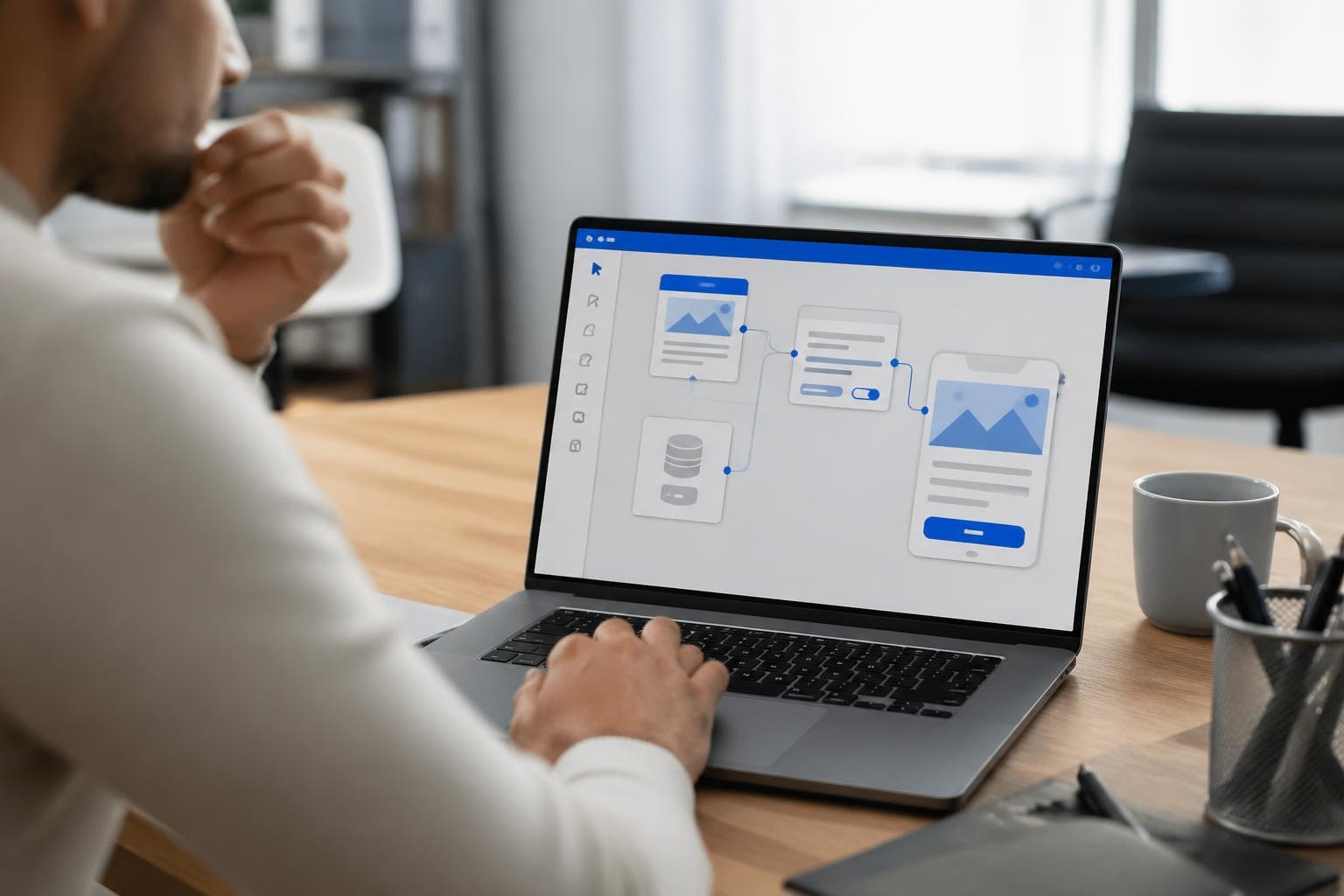

Selecting and executing the right projects for software development can determine whether a startup thrives or struggles in today's competitive market. For entrepreneurs and founders, understanding how to identify, structure, and deliver software projects efficiently has become more critical than ever. This guide explores the essential elements of successful software development projects, from initial planning through execution, with a particular focus on strategies that help startups validate their ideas and reach the market quickly.
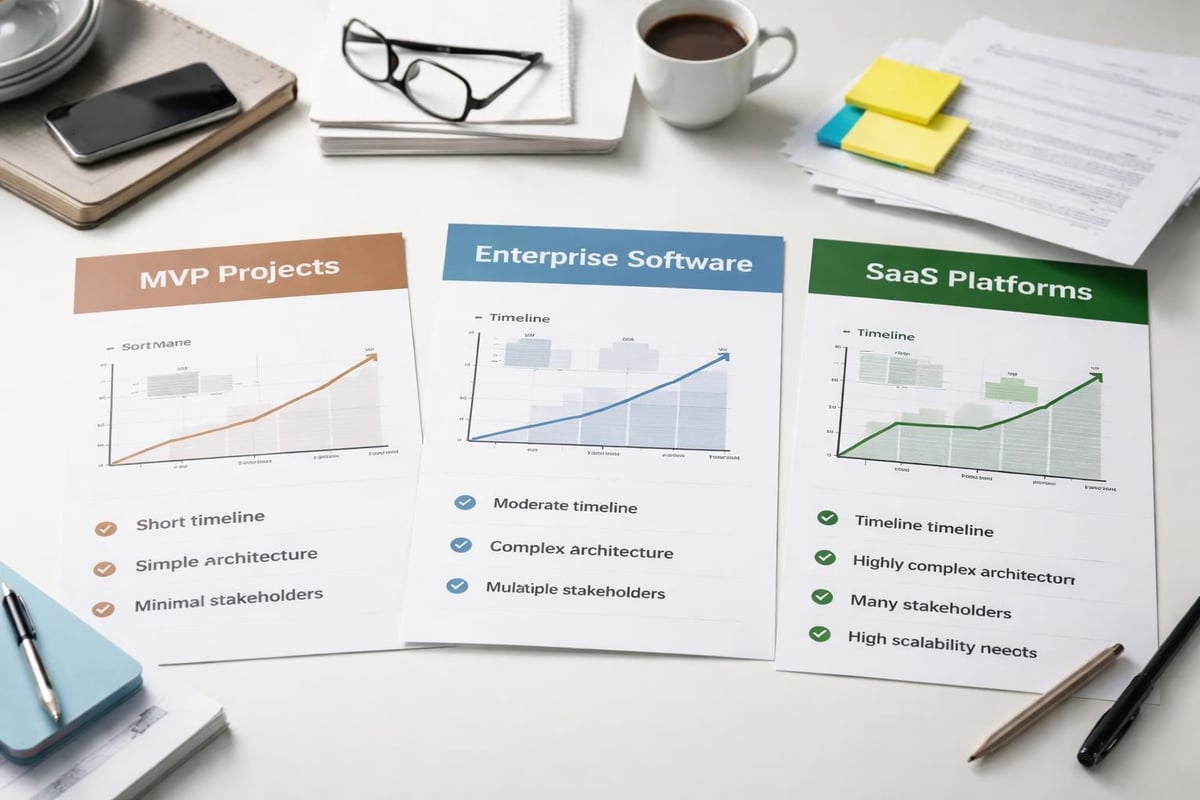
Different projects for software development serve distinct purposes and require tailored approaches. Minimum viable products represent a strategic project type for startups, allowing founders to test core hypotheses with minimal investment. These projects prioritize essential features that demonstrate value to early adopters whilst providing crucial validation data.
Enterprise software projects follow a different trajectory. They typically involve:
SaaS platform projects have emerged as particularly popular in 2026, driven by subscription-based business models and cloud infrastructure maturity. These projects demand careful attention to scalability, multi-tenancy architecture, and ongoing feature development beyond initial launch.
Traditional custom-coded projects offer maximum flexibility but require significant technical expertise and longer development cycles. Understanding whether no-code platforms can compete with traditional development approaches helps founders make informed decisions about their project methodology.
No-code and low-code projects have transformed the landscape for non-technical founders. These approaches dramatically reduce time-to-market whilst maintaining professional-grade functionality. The trade-offs involve platform constraints and potential migration considerations as projects scale.
Successful projects for software development begin with comprehensive planning that establishes clear objectives and realistic expectations. The discovery phase involves identifying the problem worth solving, researching target users, and analysing competitive solutions. This groundwork prevents costly pivots later in development.
Requirements gathering transforms vague concepts into actionable specifications. Effective requirements documentation includes:
Scope definition creates boundaries that prevent feature creep whilst ensuring the project delivers meaningful value. Many founders struggle with distinguishing between "must-have" and "nice-to-have" features, leading to delayed launches and budget overruns.
Project timelines must balance ambition with realism. Software project management best practices emphasize the importance of buffer time for unexpected challenges, which inevitably arise during development.
Resource planning extends beyond developer hours. Successful projects account for design work, quality assurance, user testing, and post-launch support. Founders who underestimate these requirements often face rushed launches with inadequate polish.
| Project Phase | Typical Duration | Key Deliverables |
|---|---|---|
| Discovery & Planning | 1-2 weeks | Requirements document, user personas, technical specification |
| Design | 1-3 weeks | Wireframes, mockups, design system, prototype |
| Development | 4-12 weeks | Working software, integrated features, database structure |
| Testing & QA | 1-2 weeks | Test reports, bug fixes, performance optimization |
| Launch Preparation | 1 week | Deployment, documentation, training materials |
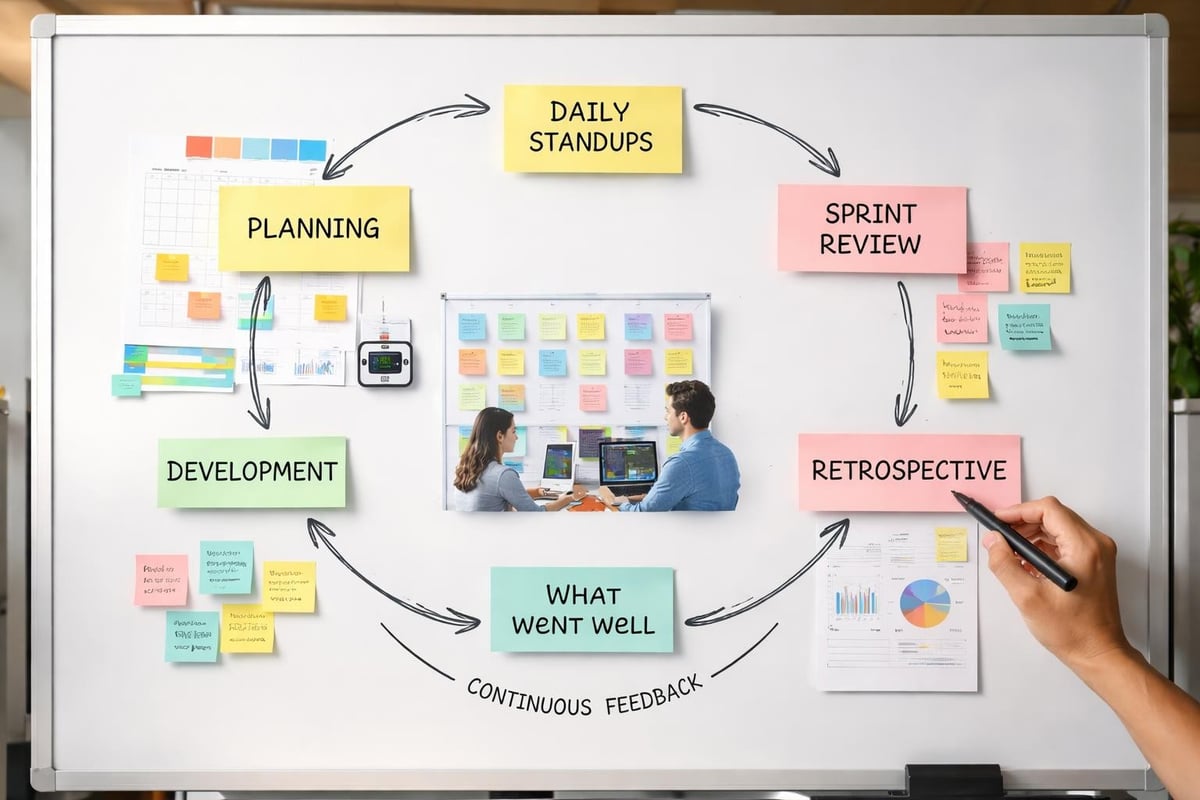
Projects for software development benefit enormously from structured methodologies that provide frameworks for collaboration and progress tracking. Scrum has become the dominant agile framework for software teams, organizing work into fixed-length sprints with regular review cycles.
The Scrum approach particularly suits MVP development. Two-week sprints allow rapid iteration based on user feedback whilst maintaining forward momentum. Daily stand-ups ensure team alignment and quickly surface blockers that could derail progress.
Kanban offers an alternative for projects requiring continuous flow rather than sprint-based delivery. Visual boards displaying work stages help teams identify bottlenecks and optimize throughput. This methodology works well for maintenance projects and ongoing feature development after initial launch.
Many successful projects for software development blend methodological elements based on specific circumstances. Startups might adopt Scrum's sprint structure whilst incorporating Kanban's visual workflow management. The Dynamic Systems Development Method provides another framework emphasizing iterative development and user involvement.
For founders working with development agencies, clear communication protocols matter more than strict methodological adherence. Weekly progress reviews, accessible project boards, and rapid feedback loops create accountability whilst allowing flexibility in execution details.
When launching an app, the chosen methodology should accommodate pre-launch marketing activities, beta testing programmes, and iterative refinement based on early user reactions.
Modern projects for software development leverage comprehensive toolsets that enhance productivity and collaboration. Project management platforms like Jira, Linear, and Notion centralize requirements, track progress, and facilitate team communication. These tools create transparency that proves invaluable when coordinating between technical and non-technical stakeholders.
Version control systems represent non-negotiable infrastructure for software projects. Git-based platforms like GitHub and GitLab enable teams to track code changes, manage multiple development branches, and coordinate contributions from distributed developers.
Communication tools have evolved beyond simple messaging. Integrated platforms combining video calls, screen sharing, and persistent chat channels keep remote teams aligned. The shift toward distributed development teams has made these tools central to project success rather than peripheral conveniences.
Choosing the right development platform fundamentally shapes project execution. Traditional coding environments offer unlimited customization but demand extensive technical expertise. For many entrepreneurs, exploring no-code web development platforms reveals faster, more accessible alternatives that still deliver professional results.
Platform decisions should consider long-term scalability alongside immediate development speed. A platform that enables rapid MVP development but cannot support growth becomes a liability rather than an asset.
| Tool Category | Purpose | Popular Options |
|---|---|---|
| Project Management | Task tracking, requirements management | Jira, Linear, Notion, Asana |
| Version Control | Code management, collaboration | GitHub, GitLab, Bitbucket |
| Design | Wireframing, prototyping, UI design | Figma, Sketch, Adobe XD |
| Communication | Team coordination, stakeholder updates | Slack, Microsoft Teams, Discord |
| Testing | Quality assurance, bug tracking | Selenium, TestRail, BrowserStack |
Every project for software development faces inherent risks that require proactive management. Technical risks include architecture decisions that limit scalability, dependency on third-party services that might change or disappear, and security vulnerabilities that expose user data. Identifying these risks early allows teams to implement mitigation strategies before problems materialize.
Scope creep represents one of the most common project killers. Well-meaning stakeholders suggest additional features that seem small individually but collectively derail timelines and budgets. Establishing a change control process prevents ad-hoc additions whilst allowing genuine improvements when justified.
Resource risks emerge when key team members become unavailable or when specialized skills prove harder to find than anticipated. Documentation and knowledge sharing reduce dependency on individual contributors, though cannot eliminate it entirely.
Budget overruns plague software projects across industries. Following established best practices for managing software development projects helps maintain financial discipline whilst delivering quality results. Regular budget reviews and milestone-based payments create checkpoints that prevent runaway spending.
Market timing risks affect particularly competitive spaces. A delayed launch might allow competitors to establish market position, whilst a rushed launch with inadequate quality damages brand reputation. This tension requires careful judgment and sometimes difficult prioritization decisions.
For startups, understanding whether platforms like Bubble remain viable choices affects both technical risk and go-to-market timing. The right platform choice accelerates development without creating technical debt.
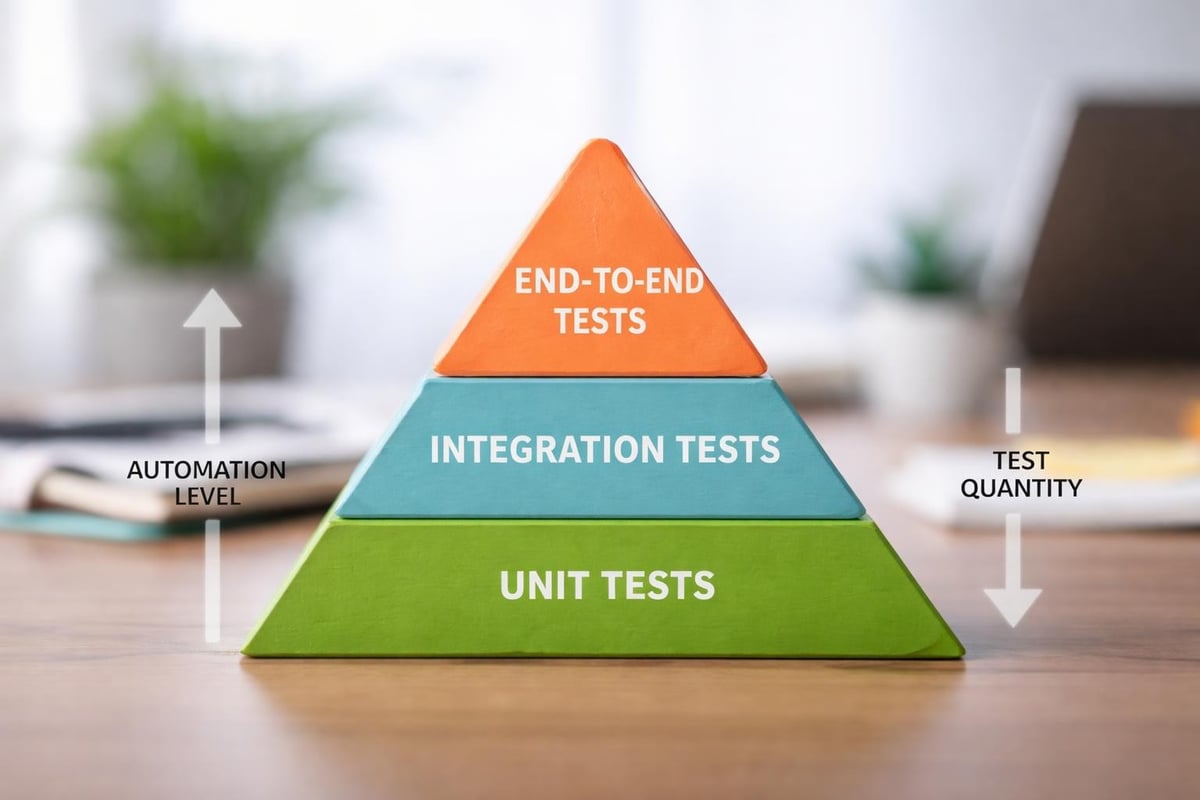
Robust projects for software development integrate quality assurance throughout the development cycle rather than treating it as a final-stage activity. Continuous testing identifies issues when they're easiest and cheapest to fix, preventing the accumulation of technical debt that hampers future development.
Unit testing verifies individual components function correctly in isolation. These automated tests run frequently during development, catching regressions before they reach users. Integration testing examines how components interact, revealing interface mismatches and data flow problems.
User acceptance testing involves actual users evaluating whether the software meets their needs. This qualitative feedback often reveals usability issues that purely technical testing misses. Beta testing programmes extend this validation to broader user groups before full launch.
Performance testing ensures software handles expected load without degradation. Load testing simulates multiple concurrent users, whilst stress testing identifies breaking points. These tests prove particularly crucial for SaaS projects where poor performance directly impacts customer satisfaction and retention.
Security testing has grown increasingly important as data breaches carry severe reputational and regulatory consequences. Penetration testing, vulnerability scanning, and code reviews identify weaknesses before malicious actors can exploit them. Maintaining quality through continuous testing has become a competitive differentiator rather than a mere compliance exercise.
Effective projects for software development require well-structured teams with clearly defined roles and responsibilities. Core team compositions typically include product owners who define requirements and priorities, designers who create user experiences, developers who build functionality, and quality assurance specialists who ensure standards.
Team size significantly impacts project dynamics. Small teams of three to five people communicate more easily but may lack specialized expertise. Larger teams access diverse skills but require more coordination overhead and formal processes.
Remote and distributed teams have become standard rather than exceptional in 2026. This shift demands intentional communication practices and asynchronous workflows that accommodate different time zones. Video calls, shared documentation, and regular written updates replace the informal hallway conversations of co-located teams.
Many successful projects for software development involve non-technical founders navigating app development for the first time. Clear communication bridges the knowledge gap, with technical teams explaining concepts in business terms rather than jargon.
Regular demos and prototypes help non-technical stakeholders visualize progress and provide meaningful feedback. These touchpoints prevent the disconnect that emerges when developers work in isolation for extended periods before revealing results.
Agencies specializing in MVP Development help founders and startups validate their ideas using scaleable MVPs designed, built and launched with them in weeks, providing the technical expertise whilst empowering founders to maintain strategic control.
Examining successful projects for software development reveals patterns that consistently drive positive outcomes. Software development case studies demonstrate how different approaches suit different contexts, from artificial intelligence integration to mobile-first applications.
E-commerce platforms represent a common project type requiring careful attention to payment integration, inventory management, and user experience optimization. Successful implementations prioritize mobile responsiveness and streamlined checkout flows that minimize friction.
Community and social platforms face unique challenges around user engagement, content moderation, and network effects. These projects benefit from phased launches that build critical mass within specific user segments before broader expansion.
Healthcare software projects navigate complex regulatory requirements including HIPAA compliance and data security standards. These constraints shape architecture decisions and testing protocols from project inception.
Financial services applications similarly face stringent regulatory oversight whilst demanding real-time performance and absolute reliability. Projects in this space often adopt conservative technology choices that prioritize stability over cutting-edge features.
AI automation case studies illustrate how artificial intelligence integration transforms traditional workflows, though these advanced projects require specialized expertise and careful validation to ensure reliability.
Well-planned projects for software development anticipate growth from the outset, even when launching minimal viable products. Database architecture, API design, and infrastructure choices all influence how easily applications scale to accommodate growing user bases and expanding feature sets.
Technical debt accumulates when teams take shortcuts to meet deadlines or work around platform limitations. Some debt proves acceptable in early-stage projects where speed to market outweighs perfect code quality. However, excessive debt eventually hampers development velocity and increases maintenance costs.
Refactoring addresses technical debt by improving code structure without changing external functionality. Regular refactoring prevents debt from becoming overwhelming, though it requires balancing immediate feature development against long-term sustainability.
Cloud infrastructure has become the default choice for projects for software development, offering scalability and reliability that self-hosted solutions struggle to match. Platforms like AWS, Google Cloud, and Azure provide services ranging from basic hosting to sophisticated machine learning capabilities.
Containerization through Docker and orchestration via Kubernetes enable consistent deployment across development, staging, and production environments. These technologies reduce "works on my machine" problems whilst supporting horizontal scaling as demand grows.
Continuous integration and deployment pipelines automate the path from code commit to production release. These practices reduce human error, accelerate deployment frequency, and enable rapid rollback when issues emerge.
| Scaling Dimension | Considerations | Implementation Approaches |
|---|---|---|
| Database | Query optimization, indexing, sharding | Read replicas, connection pooling, caching layers |
| Application | Stateless design, load balancing | Horizontal scaling, microservices architecture |
| Storage | Content delivery, media optimization | CDN integration, object storage, compression |
| Performance | Response times, resource utilization | Caching strategies, code optimization, monitoring |
Comprehensive documentation proves invaluable for projects for software development, enabling team members to understand systems quickly and maintaining knowledge when personnel change. Technical documentation includes API references, architecture diagrams, and deployment procedures that reduce onboarding time for new developers.
User documentation helps end-users maximize value from the software. Tutorials, help articles, and video guides reduce support burden whilst improving user satisfaction. Well-structured knowledge bases allow users to self-serve answers rather than requiring direct support contact.
Process documentation captures workflows, decision rationales, and lessons learned. This organizational knowledge prevents repeating past mistakes and provides context for future strategic decisions. Many projects lose valuable institutional knowledge when team members depart due to inadequate documentation practices.
Documentation that becomes outdated provides negative value by misleading readers. Treating documentation as a living asset requiring regular updates ensures accuracy. Integrating documentation updates into the development workflow, perhaps as pull request requirements, maintains currency without creating separate documentation sprints.
Following ISO 21500 guidance on project management provides internationally recognized frameworks for documentation standards and knowledge transfer processes.
Peopleware principles highlight that projects for software development succeed or fail primarily due to human factors rather than technical challenges. Team dynamics, motivation, and work environment significantly impact productivity and output quality.
Developer productivity depends heavily on minimizing interruptions and providing focused work time. Context switching between tasks imposes cognitive overhead that reduces effectiveness. Protecting deep work periods whilst maintaining necessary collaboration requires intentional scheduling and communication norms.
Burnout represents a serious risk in high-pressure project environments. Sustainable pace, realistic deadlines, and adequate work-life balance protect both team wellbeing and long-term project success. Short-term productivity gains through excessive hours inevitably lead to mistakes, turnover, and delayed delivery.
Regular, transparent communication with stakeholders prevents misaligned expectations and builds trust. Status reports should honestly address challenges alongside progress, enabling collaborative problem-solving rather than last-minute crisis management.
Different stakeholders require different communication approaches. Executive sponsors want high-level progress against strategic objectives, whilst end users care about specific functionality and usability. Tailoring communications to audience needs improves engagement and feedback quality.
Visual progress indicators like burndown charts and feature completion percentages provide intuitive status snapshots. These visualizations complement written updates, making progress tangible for non-technical stakeholders.
Successful projects for software development combine strategic planning, appropriate methodologies, robust quality assurance, and effective team collaboration. Whether building an MVP to validate a business concept or developing a complex enterprise platform, these foundational principles drive positive outcomes. For entrepreneurs and startups looking to transform their ideas into market-ready products efficiently, partnering with experienced specialists can accelerate the journey from concept to launch. Creator Concepts works with founders to design, build, and launch scaleable MVPs that validate ideas and establish market presence, turning software development projects from daunting challenges into achievable milestones.
© 2026 CreatorConcepts Limited
128 City Road, London EC1V 2NX